
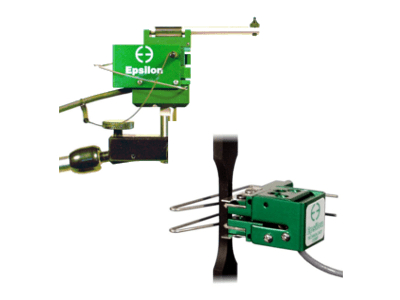
An extensometer is a device used to measure the strain or deformation of a material under load. Understanding how materials change under stress is crucial in engineering and materials science. This article covers the basics of extensometers, their types, applications, and how to choose the right one for your testing requirements.
We have a lot of extensometers to choose from, contact us for more information. We will help you get the best extensometer for your needs.
What Is an Extensometer?
Extensometers are essential tools in materials testing, providing critical data on material deformation under various loading conditions. They directly measure deformation on a material sample, offering more accurate results compared to methods relying on the testing machine's movements. This capability is crucial for evaluating material properties like elastic modulus and stress-strain relationships, foundational in engineering applications.
These devices measure strain, the change in length of a specimen divided by its original length. Attaching extensometers allows for precise readings that reflect the material’s true behavior under stress, making them vital for reliable data in various testing scenarios.
Extensometers come in two main types: contact and non-contact. Contact types, such as clip-on and sensor arm extensometers, attach to the specimen, while non-contact types, like video and laser extensometers, measure strain without physical contact. Each type offers unique advantages suited for different testing environments and requirements.
How to Select the Best Extensometer
Selecting the best extensometer for your testing needs requires considering a few key aspects. First, decide between contact and non-contact extensometers based on your testing requirements. Contact types, like clip-on and sensor arm extensometers, are great for direct strain measurement and offer high accuracy for standard tests. Non-contact versions, such as video and laser extensometers, are ideal for fragile or high-temperature specimens where touching the material isn't preferred.
Consider the gauge length, which is the distance between the initial measuring points. This is important because it impacts measurement accuracy; longer gauge lengths usually mean fewer errors. Also, think about the measurement range to ensure the extensometer can handle the strain levels in your tests, whether in tension or compression.
Environmental conditions, like test temperature, affect extensometer performance. Some are built for extreme temperatures, while others need specific conditions to stay accurate. Choose one that works well in your testing environment.
Calibration is crucial for accuracy. Many extensometers come pre-calibrated, but regular checks are needed to maintain precision. Calibration services can also ensure your entire testing setup, including other components, is working correctly.
Finally, ensure your extensometer is compatible with your testing machine. Check that the machine can handle the extensometer’s output signals, like strain gauge bridges or analog outputs. Ensuring this compatibility is key for smooth integration and accurate data collection during tests.
By evaluating these factors, you can choose the best extensometer for your needs, ensuring reliable and accurate results that help determine material properties and performance.
Ready to Select Your Extensometer?
We offer an extensive selection of extensometers, catering to a wide range of testing needs and specifications. Our diverse inventory includes both contact and non-contact types, ensuring that we have the perfect solution for any application, whether it's for tensile testing, compression tests, or cyclic loading scenarios. Given the variety and complexity of options available, it's impractical to list all our extensometers on our website. However, our team of experts is ready to assist you in selecting the most suitable extensometer for your specific requirements. Whether you need a clip-on extensometer for standard tests or a state-of-the-art laser extensometer for high-precision measurements, we can guide you through the selection process. Contact us today to discuss your testing needs, and we'll help you find the ideal extensometer to ensure accurate and reliable measurement results.
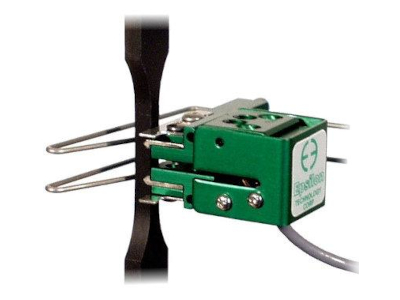
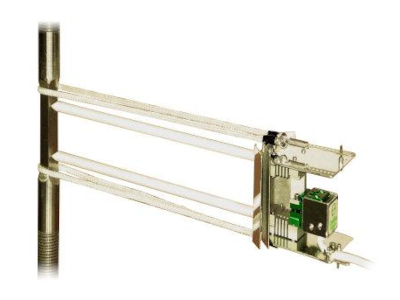
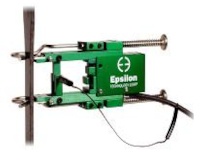
Here are some examples of available Extensometers:
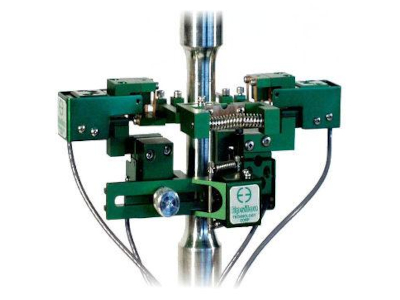
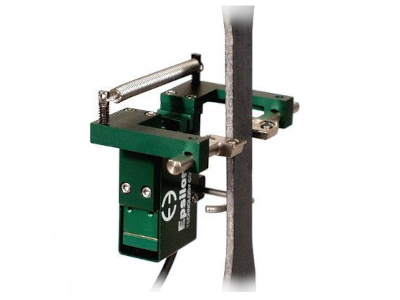
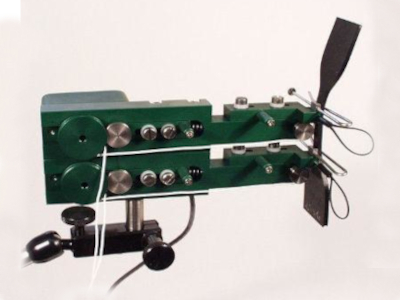
Contact Us to Order an Extensometer
Types of Extensometers
Extensometers can be broadly categorized into two types: contact and non-contact. This classification is based on whether the instrument physically touches the specimen during measurement. Understanding these types is essential for selecting the most suited extensometer for your specific testing needs.
Contact extensometers, which include clip-on and sensor arm extensometers, attach directly to the specimen to extensometers measure strain directly. These devices are known for their reliability and accuracy in providing direct strain measurements.
On the other hand, non-contact extensometers, such as video and laser extensometers, offer the advantage of not influencing the specimen’s properties during measurement, making them ideal for delicate or high-temperature materials.
Contact Extensometers
Contact extensometers are a staple in strain measurement, particularly for tensile testing. They include clip-on extensometers and sensor arm extensometers, both of which attach directly to the specimen. Clip-on extensometers are widely used due to their simplicity and cost-effectiveness, often being the go-to choice for standard testing applications.
Sensor arm extensometers, however, offer several advantages over clip-on variants. They provide more repeatable results, exert negligible influence on the specimen, and offer better linearity and reduced signal noise. This makes sensor arm extensometer technology particularly valuable in precision testing scenarios where extensometer accuracy is paramount.
Both types measure strain directly, but their suitability depends on the specific requirements of the test. Clip-on extensometers are excellent for quick, standard tests, whereas sensor arm extensometers are ideal for high-precision applications.
Non-contact Extensometers
Non-contact extensometers represent the cutting edge in strain measurement technology. These devices, which include video and laser extensometers, do not physically touch the specimen, thus eliminating any potential influence on the material’s properties.
Video extensometers use high-resolution cameras to track markers on the specimen’s surface, providing precise measurements of specimen dimensions without any physical interference. This technology is particularly useful for testing delicate specimens that might be damaged by contact.
Laser extensometers, on the other hand, use laser beams to measure strain, offering high accuracy even at elevated temperatures and without the need for physical markers on the specimen.
Advancements in non-contact extensometers have enabled highly accurate strain measurements in challenging testing conditions, ensuring material properties are assessed without external influences.
Important Considerations
The initial gauge length is vital for accurate strain measurements, as it defines the distance between measuring points on the specimen. Longer lengths typically enhance accuracy by reducing errors.
The measurement range of an extensometer, expressed in percent strain or maximum deflection, indicates its capacity to measure tension or compression. Choosing an extensometer that accommodates the expected maximum strain values ensures accurate readings.
Calibration is crucial for maintaining accuracy. Many systems are pre-calibrated, but regular recalibration is necessary to ensure precision. Some systems offer calibration services to verify the entire test setup, including extensometers and load cells, is functioning correctly.
Interfacing Extensometers with Testing Machines
Achieving accurate strain measurements requires ensuring compatibility between the extensometer and the testing machine’s electronics. This often involves checking that the machine can supply the necessary excitation voltage to strain gauge bridges or accommodate high-level analog outputs.
Extensometers typically interface with modern testing machines using strain gauge bridges or analog outputs like ±10V or 0-10V. For older machines or systems without built-in signal conditioning, stand-alone electronics or amplifier packages facilitate direct interfacing.
Sometimes extensometers employ advanced technologies such as LVDTs, quadrature-output encoders, or analog potentiometers to transmit measurement value transmission. Compatibility of these technologies with your testing machine is critical for obtaining accurate and reliable data.
Measurement Accuracy and Influences
Several factors significantly influence the accuracy of strain measurements, including the initial settings of the gauge length and environmental conditions such as temperature. Accounting for these variables is crucial for maintaining high measurement accuracy.
Environmental conditions, especially temperature, can affect both the material properties and the material characteristics and performance of the extensometer. For instance, extreme temperatures can lead to measurement inaccuracies if not properly accounted for. Aligning the temperatures of the extensometer and specimen can help mitigate these effects.
The surface conditions of the specimen, including texture and cleanliness, also play a crucial role in the accuracy of extensometer readings. Clean, smooth surfaces typically yield more accurate measurements, while rough or dirty surfaces can introduce errors. Regular maintenance and inspection of extensometers, particularly the knife edges, are crucial for maintaining accuracy.
Applications of Extensometers in Different Tests
Extensometers are essential tools in materials testing, used in tensile, compression, and cyclic tests to measure strain with precision. Their accurate strain measurement capabilities make them indispensable for evaluating material performance and characteristics.
Understanding the specific applications of extensometers helps in selecting the appropriate device. Whether assessing tensile strength, compressive deformation, or elastic limits, extensometers provide the precision and reliability needed for meaningful test results.
Tensile Testing
Tensile testing is a primary application of extensometers, as they directly measure strain on specimens to provide critical data on material properties like elastic modulus and yield strength. Sensor arm extensometers are particularly advantageous in tensile testing due to their automatic operation and minimal load impact, enhancing measurement accuracy.
Errors in displacement calculations and specimen misalignment can lead to inaccuracies in tensile tests. Regular maintenance of extensometer knife edges is crucial, especially with high-strength materials.
Accurate strain measurements from extensometers ensure reliable tensile test data, essential for evaluating material performance and meeting testing standards.
Compression Tests
Compression tests use extensometers to measure the reduction in length of materials under compressive loads as part of the test procedure. This data is essential for assessing properties such as compressive strength and modulus of elasticity, which are critical for understanding material behavior under compressive forces.
They capture precise compressive deformation, providing insights into the material’s performance and potential applications. This information is particularly valuable in industries where materials are subjected to significant compressive forces, such as construction and manufacturing.
Cyclic Tests
Cyclic tests repeatedly load and unload a specimen to evaluate its behavior under cyclic stresses. Extensometers play a vital role in these tests by monitoring the elastic range, ensuring materials stay within safe limits to prevent failure.
By capturing data on material elasticity, extensometers help avoid specimen rejection due to improper testing. This ensures cyclic tests produce reliable results, aiding in the development of materials with enhanced fatigue resistance.
Contact Us to Order an Extensometer
Advanced Extensometer Technologies
Technological advancements in extensometers have produced highly accurate and efficient strain measurement devices. Laser interferometry, for example, offers precise strain measurements for micro specimens that conventional extensometers cannot handle.
Laser-based extensometers use light waves to measure displacement, creating virtual measurement marks on the specimen’s surface. This non-contact method ensures high accuracy and is particularly useful in high-temperature environments. Automated extensometer systems further enhance efficiency by reducing setup time and minimizing human error, leading to more reliable test results.
These cutting-edge technologies offer significant advantages in materials testing, enabling more accurate and efficient strain measurements across a wide range of applications.
Common Issues and Troubleshooting
Despite their accuracy, extensometers can face issues that affect measurement reliability. Common problems include poor gauge length placement, leading to inconsistent strain readings, and calibration errors that introduce significant inaccuracies. Environmental factors, including extreme temperatures, can also impact results.
Mechanical clip-on extensometers may struggle in high-temperature settings, where non-contact systems like laser extensometers offer more reliable performance. Regular calibration and proper alignment of the extensometer with the specimen are essential for maintaining accurate and reliable measurements.
Summary
In summary, extensometers are indispensable tools in materials testing, providing precise strain measurements that are crucial for evaluating material properties. With a variety of types available, from contact to non-contact, and advanced technologies enhancing their capabilities, choosing the right extensometer for your needs is essential.
By understanding how to specify, interface, and troubleshoot extensometers, you can ensure accurate and reliable test results. Embrace these insights to enhance your materials testing processes and achieve greater precision and reliability in your work.
Frequently Asked Questions
The main types of extensometers are contact extensometers, such as clip-on and sensor arm models, and non-contact extensometers, which include video and laser types. Each type serves specific measurement needs based on the application.
To choose the right extensometer, assess factors like gauge length, measurement range, and calibration requirements, ensuring it meets the maximum strain values anticipated in your application. This will ensure accurate and reliable testing results.
Common issues with extensometers include poor gauge length placement, calibration errors, and environmental factors, such as extreme temperatures, that can adversely affect measurement results. Therefore, careful setup and regular calibration are essential for accurate performance.
Non-contact extensometers work by utilizing high-resolution cameras or laser beams to measure strain on a specimen without direct contact. This technology ensures accurate measurements while maintaining the integrity of the material.
