
Shear Testing Machines
For precision shear strength and stress testing
Shear test machines measure shear strength and maximum shear stress by applying parallel forces that slide material surfaces in opposite directions. Unlike tension or compression testing, loads are applied parallel to the contact surfaces. Common shear‑tested materials include metals, plastics, ceramics, composites, adhesives, and bonded assemblies.
Request a Quote Use Configurator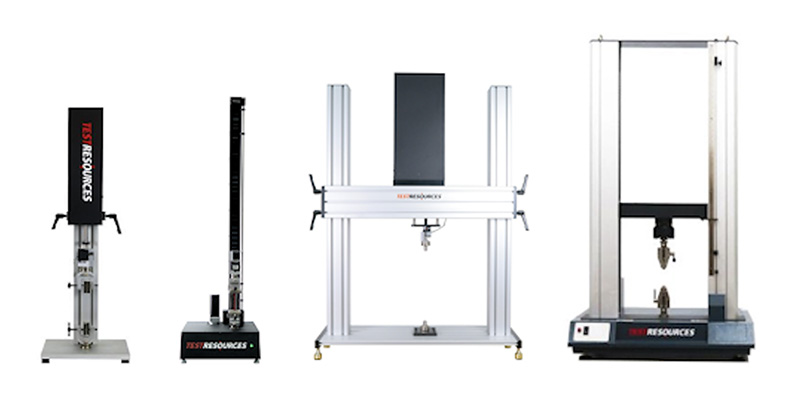
Shear Testing Systems for Metals, Plastics & Composites
Shear test machines are universal testing machines specially configured to evaluate shear strength or maximum shear stress. A shear testing is performed when shear forces cause one surface of a material to move in one direction and the other surface to move in the opposite direction so that the material is stressed in a sliding motion. Shear tests are unique because the forces applied are parallel to the two contact surfaces. In tension and compression tests the force applied is perpendicular to the contact surface. The most common materials tested in shear are metal, plastic, ceramic, composite substrates, adhesives, layered composites and glued assemblies.
Each shear tester is configured to your requirements by our application engineers with the correct controller, grips, and an extensometer if you would like to accurately measure sample shear strain. Due to our modular machine design, your shear test machine can also be equipped to perform other applications such as tensile, cyclic, compression, flexure, bend, shear, and tear by adding appropriate fixtures.
How to Choose the Correct Shear Tester for Your Needs
Your first step to choosing the correct shear tester is to determine your specimen geometry, size and strength characteristics. Armed with this information our applications engineer can identify the test machine capacity and correct fixtures needed to shear your sample. The next step is to decide the test data you want which will help confirm the best controller and test software for your test, and if you need an extensometer.
Micro
Low sub-gram forces
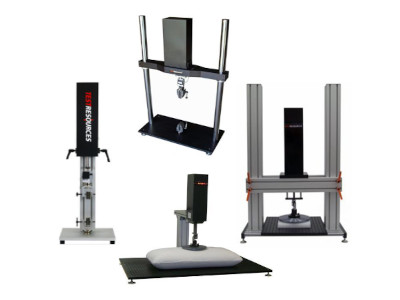
These high‑precision machines use a 32‑bit control system with an ultra‑low noise floor, engineered for delicate compression tasks. They’re ideal for biological applications like testing cell scaffolds or soft tissues, as well as micro‑electronics and specialized R&D where even the slightest resistance must be measured accurately.
Low Force
Forces up to 10 kN
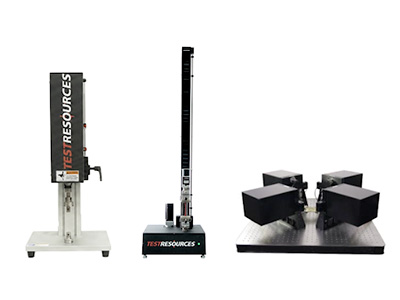
Compact and versatile, these machines are ideal for evaluating the compressive properties of low‑strength materials. Common applications include testing high‑elongation materials such as elastomers, thin‑walled medical tubing, delicate fibers, and botanical tissues. They deliver the sensitivity required for light‑load testing while maintaining the structural stability needed for repeatable results.
Mid-Range
Forces up to 300 kN
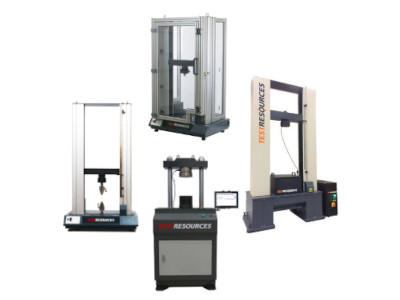
As the versatile workhorse of the materials testing lab, our mid‑range systems use a robust dual‑column design for superior axial stiffness. Optimized for rigid plastics, aerospace composites, and metals, they provide the force needed to reach ultimate compressive strength in dense materials while minimizing frame deflection to protect critical modulus measurements
Newton Universal
Newton Universal simplifies shear testing with intuitive controller software, streamlined setups, and pre-configured industry-standard methods - delivering precise, seamless results every time. From basic crushing strength tests to advanced multi-stage deformation experiments, it adapts to your needs and empowers innovation in material characterization.
With advanced reporting and analysis powered by the Newton controller, you gain access to a full range of essential compression calculations, including Shear Stress (Ultimate Shear Strength), Punch Shear Stress, Shear Strain, and Shear Modulus (Modulus of Rigidity).
Experience smarter testing with Newton Universal.
Request a Demo
Logical Workflow Design
Streamlined, intuitive interface for faster testing and analysis.

Real-Time Data Insight
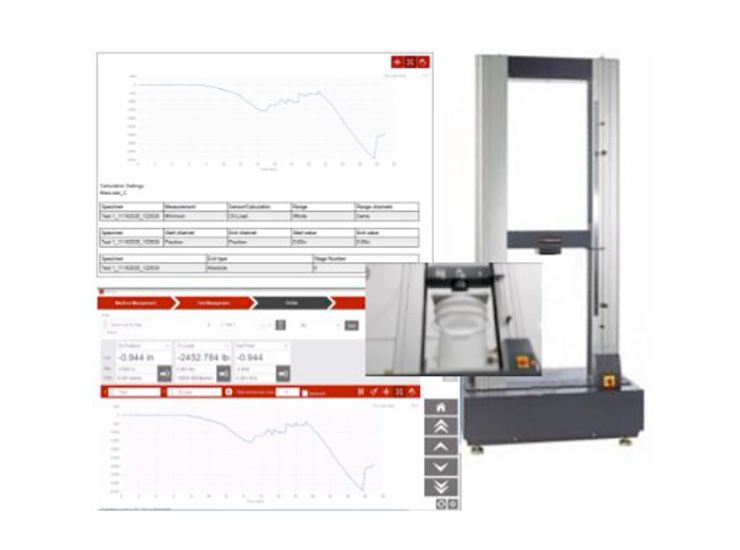
Real‑time data visualization enables instant insight into material behavior.
Simplified Test Setup
Streamlined processes boost efficiency - saving time and money.

Presaved Test Methods
Presaved test methods remove the need for manual inputs.

Comprehensive Data Export
Supports in‑depth post‑test analysis and the creation of professional reports.

Scalable & Customizable
Flexible, modular functionality you can expand over time.
Shear Test Fixtures
Complete your shear test system with our extensive range of accessories. With hundreds of options to choose from, you can easily find the perfect fixtures and sample preparation aids to complement your shear tester. We have everything you need to ensure a seamless and comprehensive testing experience.
Shop some of our popular shear test accessories.
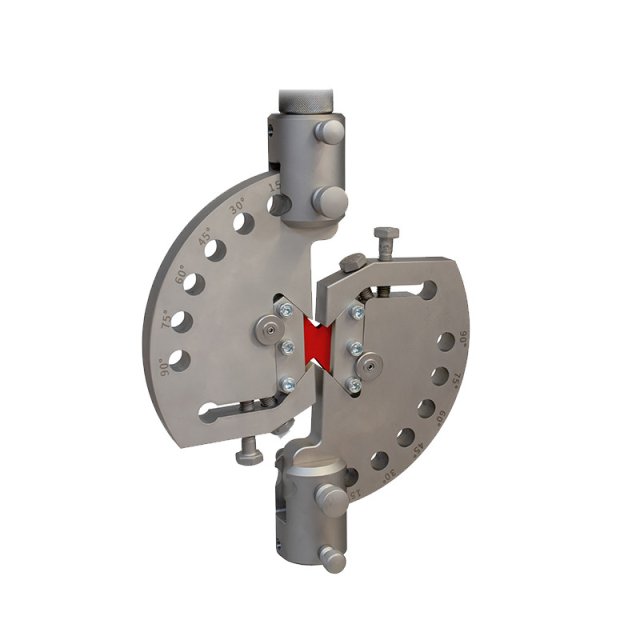
Arcan Shear Test Fixture
The G1419 Arcan Shear Test Fixture delivers controlled, near‑uniform shear stress through a notched specimen. A bolted holder secures the coupon, and adjustable load angles enable precise biaxial testing.
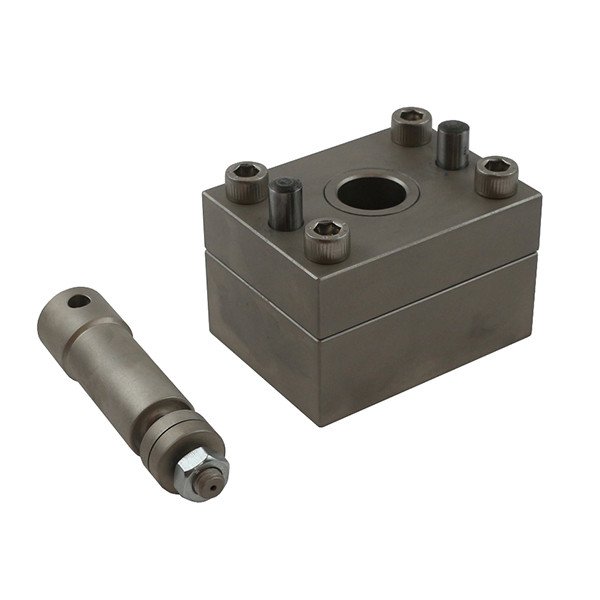
ASTM D732 Shear Strength Testing of Plastics
ASTM D732 standardizes the shear punch test used to measure the shear strength of plastic sheet and molded disk specimens from 1.27 to 12.7 mm (0.050 to 0.500 in) thick.
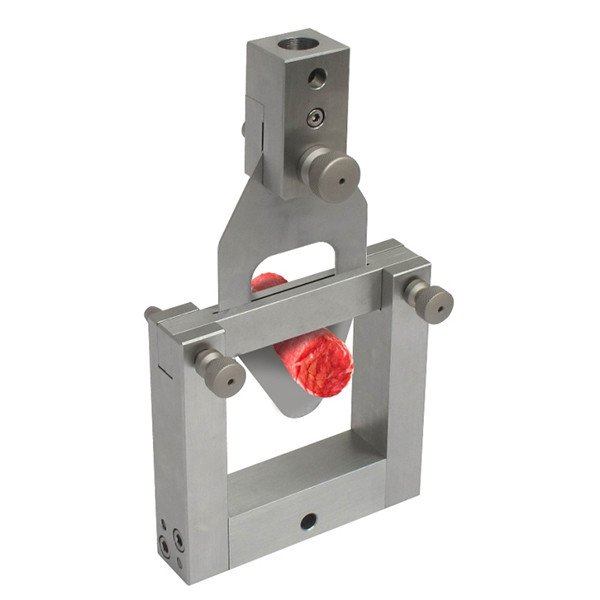
Warner-Bratzler Method for Measuring Meat Tenderness
Warner‑Bratzler fixtures measure the force needed to cut meat using a steel frame and triangular shear blade. Cooked and cooled steaks are cut into core samples for testing.
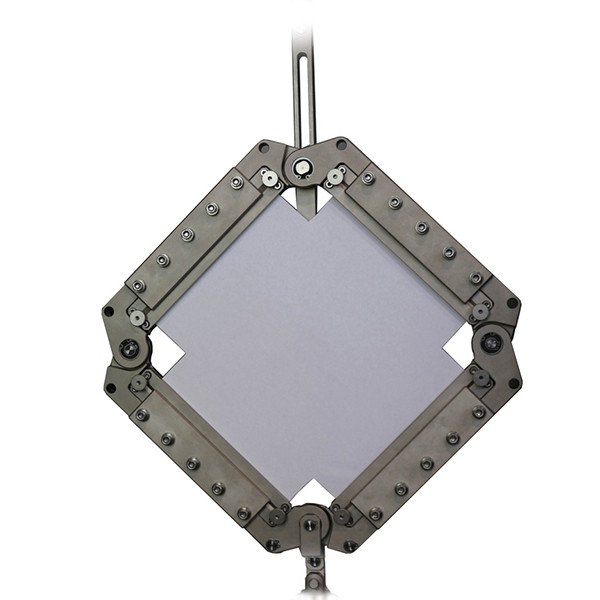
ASTM D8067 Picture Frame In-Plane Shear Test
ASTM D8067 measures the in-plane shear strength and stiffness of flat sandwich panels with composite face sheets. It applies to cores with continuous surfaces like foam or balsa and discontinuous ones like honeycomb.
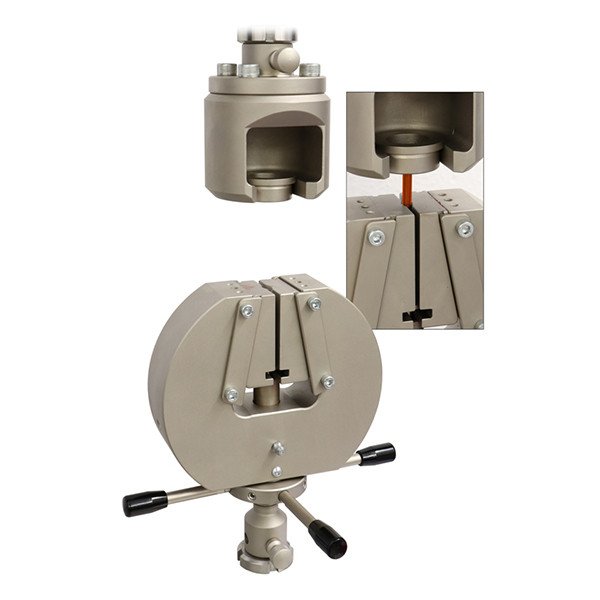
ISO 14589 Mechanical Testing of Blind Rivets
ISO 14589 defines mechanical test methods for blind rivets - including shear, tensile, mandrel head retention, mandrel push‑out (before setting), and mandrel break load - performed at 10°C to 35°C.
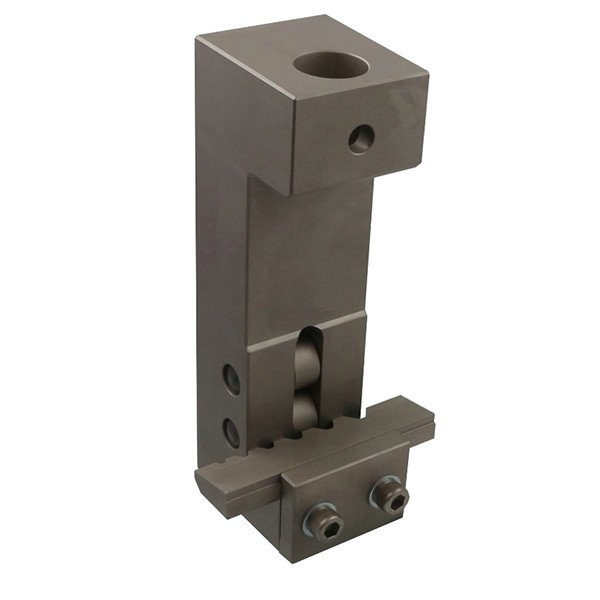
ASTM A1064 Testing of Steel and Welded Wire Reinforcements
The concrete industry relies on quality steel and welded wire reinforcement, tested to ASTM A1064 for tension, bend, and weld shear strength to ensure reliability.
Test Applications
Using some of our tensile testing accessories, you can test a wide range of tensile test applications. We have sample cutters, grips and fixtures, biobaths, extensometers, and more! These are just a few examples of what you can do with one of our tensile testers.


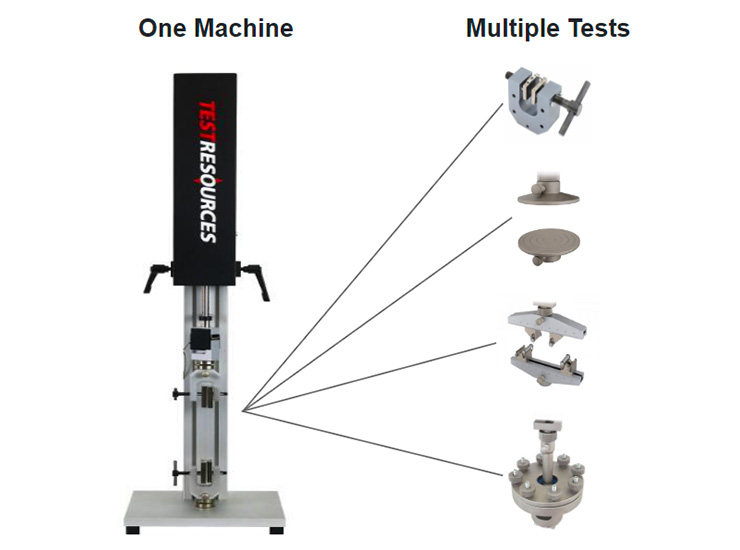
Get Exactly What You Need, Both Now and in the Future
From tensile tests to compression, bend and puncture - you name it, these machines can do it all!
Their ability to perform various types of tests makes them an invaluable tool for ensuring the quality and reliability of materials across different applications.
Get a Modified or Customized Solution
Can’t find a system that fits your needs? No problem. We give you the flexibility to co‑engineer your own solution. With our wide range of standard products and modular sub‑assemblies, we can quickly and cost‑effectively tweak an existing design - or create a completely custom system from scratch.
Whether you need a simple adjustment or a fully optimized machine for a specific application, we’ll make sure you get exactly what you need.
If you need something special, we can handle it - whether it’s custom sizes, unique grips or fixtures, high or low force static or dynamic control, position or strain control, environmental chambers, or multiaxial testing. Whatever the requirement, we can tailor a solution to fit, with possibilities that are virtually endless.
Engineering Expertise
When you work with us, you get the best engineers to solve your testing and budgetary challenges. Whether you’re new to testing or a testing expert yourself, we can help you optimize your system AND YOUR BUDGET.
- High Quality Products
- Experienced Engineers
- Exceptional Support
- Turning Innovation into a Team Sport
- Made to Go Where Others Won’t
Shear Testing Applications
Shear tests are an effective way to determine the durability of metals, rubber, plastics, and other raw materials.
With this knowledge, you can confidently identify the strongest and most reliable options for your product.
Browse typical shear testing uses across different materials.
Find Your Perfect Test Machine
Use our configuration tool to filter through our products and find the exact model for your needs.
Find Your Machine Ask an Expert
What Our Clients Say
Shear Test Machines FAQs
A shear test is a mechanical test that determines how a material behaves under shear stress. Measuring the maximum shear stress a material can withstand before failure is important for understanding its performance and integrity under applied shear forces. Shear stress occurs when two opposing forces act parallel to a surface, trying to slide one part of the material across another. Unlike tensile or compressive stresses, shear involves in-plane forces rather than forces perpendicular to the surface. Shear tests reveal how a material resists deformation or failure due to forces that could cause layers to slide or twist.
You do not necessarily need a single-purpose machine. A Universal Test Machine is the most cost-effective solution because it can be configured for shear, tensile, or compression tests simply by swapping the fixtures. TestResources offers the 100 Series (Low Force) for materials like adhesives and the 300 Series (High Force) for metals and composites.
A Universal Testing Machine (UTM) is a good test equipment solution for shear testing applications:
- Load Frame Adaptability and Versatility
A universal test machine can accommodate multiple shear test setups including single shear, double shear, and lap shear for adhesives and fasteners; Punch shear tests for thin sheet materials; and multiple composites applications. The same UTM used for shear can also conduct tensile, compressive, flexural, or other mechanical tests on a variety of materials. Obtaining accurate test results is important for reliable assessments, particularly in failure mode analysis and shear tests, where test results provide critical data for calibrating parameters and understanding the mechanics behind material performance. - Newton Controller features Precision & Control
Newton controllers offer precise control of test speed and loading rates. Measure shear deformation using clip on extensometers or digital image correlation (DIC). Program complex loading patterns, hold times, or cyclic shearing, replicating real-world conditions experienced by components. - Newton Software Data Acquisition and Analysis
Generate complete shear stress-strain curves, going beyond simple failure point data. Recorded data helps pinpoint whether the failure was cohesive, adhesive, or test setup misalignment. UTMs provide the flexibility and data output for detailed investigations into material responses, microstructural effects on shear, and validating new material models. Data from shear tests include shear strength, shear modulus (G), and shear strain. - Engineered Shear Fixtures
Achieving accurate shear testing on a universal testing machine often requires specialized fixtures that minimize unwanted bending or out-of-plane loading, which can skew the results. Sudden, brittle fractures in shear can make it difficult to capture data with standard extensometers. High-speed data acquisition and optical strain measurement might be needed.
The specific equipment needed to perform a shear test depends on your application. However, the most common equipment used for a shear test is a universal test machine configured for your specific needs. Universal test machines are extremely versatile and can perform various tests on a variety of different samples by simply switching out different grips and fixtures.
Complete Shear Test Machines can include the following:
- Shear Test Machine (Also known as a Universal Test Machine)
- Shear Grips or Fixtures
- Controls
- Load Cell
- Extensometer
- Sample Preparation Tools
- Environmental Accessories
The capacity depends on your specimen's cross-sectional area and its expected shear strength.
- Low Force (<10 kN): Best for thin adhesives, plastic films, and soft tissues.
- Mid-Range (10–300 kN): Ideal for aluminum, thick plastics, and composite lap shears.
- High Force (>300 kN): Required for structural steel, heavy fasteners, and concrete reinforcements.
Direct shear tests measure a material's shear strength by applying a shear force directly along a predefined plane within the test specimen. These are the 3 most common types of shear tests:
- Single shear tests involve samples that are clamped with a force applied, causing them to slide and fail. Applications include lap joints, sheet materials, and fasteners.
- Double shear tests involve samples that are supported at the center and force is applied at two locations, creating two shear planes. These tests are suitable for bolts, rods, and materials where a single shear could create a bending load.
- Punch shear tests involve a cylindrical punch forced through a clamped sheet material. Applications include shear tests of thin metals and plastics.
Use alignment-critical fixtures (like the V-Notched Rail Shear for ASTM D7078) and a controller with a high data acquisition rate. TestResources' Newton Software allows for high-speed sampling to capture the exact moment of fracture in brittle materials before the energy release destroys the data curve.
Yes. The Newton Software comes with pre-configured test methods for common standards, including:
- ASTM D1002: Lap Shear for adhesives.
- ASTM D732: Shear Strength of Plastics by Punch Tool.
- ASTM D2344: Short-Beam Strength of Polymer Matrix Composites.
- ISO 4587: Tensile Lap-Shear Strength of Rigid-to-Rigid Bonded Assemblies.
Yes. TestResources can integrate Environmental Chambers with the load frame. This allows you to test bond strengths or material ductility at temperatures ranging from -180°C to 350°C (or higher with specialized furnaces).
The relationship between shear stress and shear strain may be non-linear and depends on the material's behavior. For many materials, there's a proportional relationship in the initial elastic region. This proportionality constant is known as the shear modulus (G), which represents the material's stiffness in shear.
Formula: τ = Gγ (within the elastic region). Beyond the elastic limit, the material's behavior becomes more complex, and the relationship between stress and strain becomes non-linear. Some materials may experience plastic deformation or even fracture.
Contact us for more information about how Newton can help you with your application.
Shear testing applications face several challenges when it comes to test equipment:
- Achieving Accurate Alignment and Minimizing Bending
In ideal shear, the applied force acts purely parallel to the shear plane. However, slight misalignments in test fixtures or specimens can induce unwanted bending stresses. Bending introduces a mix of shear and tensile/compressive stresses, corrupting the measurement of true shear properties. This makes it difficult to compare results between labs or to use the data for materials modeling. Our shear fixtures are carefully designed to minimize non-shear stresses. Talk to us about solutions. - Precise Measurement of Shear Strain
Shear deformation before failure may be small in the case of brittle samples, making use of standard clip-on extensometers. TestVE is not only a video based extensometer that measures the displacement of two gage points, but also features use of digital image correlation software which makes it possible to track tiny surface displacements or deformations. Additionally, Newton data acquisition rates are high, making it possible to capture peak stresses and failure behavior of brittle materials. Contact us to learn more about TestVE. - Failure Modes
Shear failure rarely occurs in isolation. It may combine with tensile, compressive, or fracture modes in complex ways, especially in anisotropic materials such as wood or composites. - Brittle Materials
Brittle materials fail abruptly in shear. Capturing accurate data requires high-speed acquisition or optical strain monitoring. Brittle materials undergo minimal deformation before fracture, making precise strain measurements even more critical for extracting useful information.
