
A Biaxial Test Machine evaluates material properties under multi-directional stress. Essential in fields like biomedical engineering and aerospace, these testers ensure material reliability. This article covers how they work, key components, types of tests, and choosing the right model.
How to Choose a Biaxial Test System
These systems are perfect for low-force biaxial test applications, commonly used in mechanical, biomedical, and materials engineering research. This all-electric dynamic modular testing machine is versatile and can be deployed for a variety of applications, including hard foam, glass fabrics, textiles, sheet metal fastening, silicone elastomers, orthotropic plates, and biological samples such as fibrous tissues, arterial walls, spinal disc tissues, skin, and heart valves. They excel in testing the mechanical properties of directionally oriented microstructures.
Our biaxial test systems can be customized with either contacting extensometers or a precisely configured DIC (Digital Image Correlation) video camera, enabling accurate strain measurement control.
Begin configuring your test system by selecting a frame based on the maximum force capacity needed for your application:
Can't find exactly what you need? Reach out to us! We're here to help you find the ideal machine for your testing requirements.


Key Components of a Biaxial Test Machines
A biaxial testing machine is a sophisticated piece of equipment designed to accurately apply and measure forces in two perpendicular directions. Key components include motor stages, load cells, and a gripping system. The motor stages allow for independent load applications, providing precise control over the forces exerted on the specimen. This setup is crucial for replicating the complex loading conditions that materials encounter in real-world scenarios.
Load cells are another critical component, as they measure the forces applied during the test. These cells are designed to operate independently or in coordination, ensuring accurate load application and measurement.
Additionally, the gripping system must securely hold the specimen without interfering with the gauge area, which is vital for obtaining reliable data. Comprehending these components and their interactions guarantees accurate and reliable results in biaxial tensile testing.
Biaxial Test Fixtures
Biaxial test fixtures are designed to apply loads in two principal directions simultaneously, a fundamental requirement for accurate biaxial testing. These fixtures enable researchers to replicate the complex stress conditions materials encounter in real-world applications.
Biaxial test fixtures, which apply forces concurrently in two directions, offer a comprehensive understanding of material behavior under multi-directional stresses.
Load Cells and Actuators
Load cells play a crucial role in biaxial tensile tests by measuring the forces exerted on the specimen in two orthogonal directions. Actuators, on the other hand, adjust the load direction and intensity by modifying rod and crank lengths, allowing for precise control over the applied forces.
This configuration ensures precise capture of the material’s response to multi-directional stresses. Additionally, load cells and actuators are essential in fatigue testing, where they help simulate real-world conditions by applying both axial and torsional loads.
Talk to one of our Engineers to help you navigate the vast selection of testing accessories to find the perfect fit for your testing application.
Specimen Mounting Systems
Specimen mounting systems are essential for accurate biaxial tensile testing. Cruciform specimens, which have four attachment points, are commonly used to ensure secure loading and avoid interference with the gauge area. The biaxial tensile test is a specialized procedure used to determine the deformation properties of materials under two-axis tension. The BioRake sample mounting system, for example, provides consistent and accurate mounting of tissue samples, with electrochemically sharpened tines for effective piercing.
Custom clamp designs are tailored to meet the specific requirements of various tissues, ensuring proper alignment and secure gripping during testing. Additionally, a two-stage stainless steel pulley mechanism is often used to hold sutures at consistent tension, further enhancing the accuracy of the test.
Control and Measurement Software
Control and measurement software are critical for ensuring precise control and accurate data collection during biaxial tensile tests. Automated testing protocols significantly streamline the testing process, enhancing mid point control and precision. Real-time monitoring of strain and stress allows for immediate adjustments and accurate data collection, which is essential for reliable results.
Advanced control software often includes features for managing multiple test parameters, ensuring comprehensive data collection across different testing scenarios. Non-contact strain measurement tools provide precise strain data without influencing the specimen, further improving the quality of results.
The integration of real-time imaging systems also enhances visualization and analysis, facilitating better assessment during testing.
Newton Test Controller
From simplified test setups to an intuitive controller software interface and pre-configured methods for industry standards - this innovative technology ensures that your test application are conducted seamlessly and with precision.
Accurate & Repeatable Test Results
- Simple test setup, operation, and reporting
- Flexible and scalable software packages - Get what you need now with room to grow!
- Prebuilt test methods for many of the most common application-specific testing standards
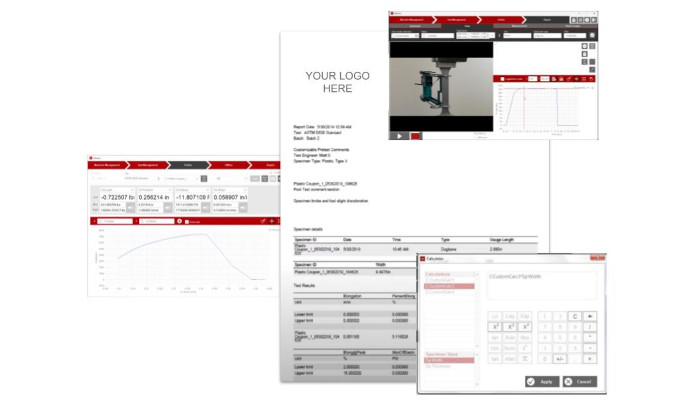
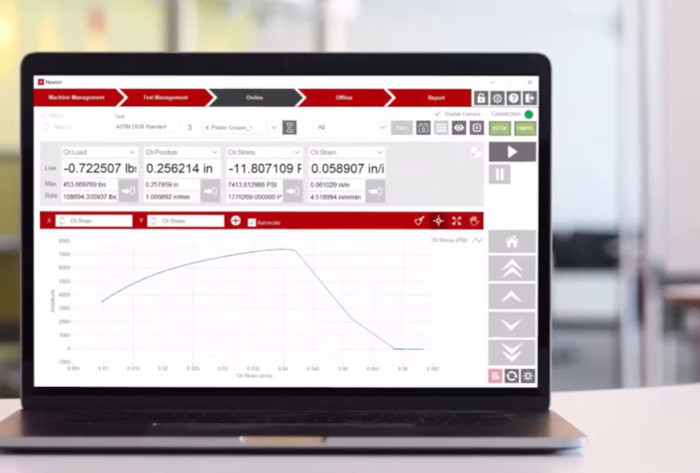
High-performance and easy-to-use controller with logical workflow design
With an intuitive interface, Newton makes it easy for users to navigate through various options and settings, ultimately enhancing the overall user experience. By streamlining complex procedures into user-friendly steps, this software serves both experienced test engineers and beginners alike to conduct tests with confidence and accuracy.
Specimen Geometry and Preparation
The geometry of the specimen plays a fundamental role in biaxial testing. Proper specimen design ensures uniform strain distribution and accurate stress measurements, which are crucial for reliable test results. The specimen geometry should be carefully selected to ensure that the material is subjected to a uniform stress field. This careful preparation is vital for obtaining accurate and reliable data, which in turn informs material performance and suitability for specific applications.
Common Specimen Shapes
Cruciform specimens are the most common shape used in planar biaxial testing due to their ability to achieve uniform strain distribution across the test area. These specimens are designed with arms extending in two perpendicular directions, facilitating the application of biaxial loads. The unique design of cruciform specimens helps in minimizing shear stress and ensuring that the material’s response to biaxial loading is accurately captured.
Other common specimen shapes include rectangular and square specimens, which are often used for testing metallic materials. These shapes are selected based on the specific requirements of the test and the material being evaluated. The choice of specimen shape is critical for ensuring that the test results are both accurate and representative of the material’s behavior under real-world conditions.
Preparing for Biaxial Tensile Tests
Proper preparation is vital for obtaining reliable and accurate biaxial tensile test results. This process includes selecting appropriate test samples, setting up the testing machine, and calibrating the equipment.
Successful biaxial tensile testing demands meticulous preparation, as any errors in these steps can significantly affect the test outcomes.
Selecting Appropriate Test Samples
Choosing the right test samples involves considering material properties, dimensions, and the geometry of the specimen to ensure accurate results. The selection process should be tailored to the specific test requirements since the accuracy of the results heavily depends on the suitability of the samples used.
Materials Suitable for Biaxial Testing
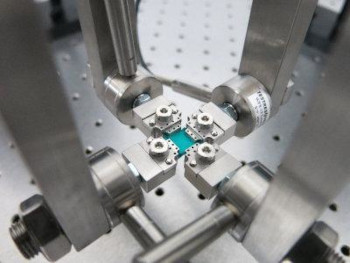
Biaxial testing is suitable for a wide range of materials, including biological tissues, composites, and metals. This method is particularly valuable for assessing the anisotropic behavior of materials under multi-directional stress. Understanding how different materials respond to biaxial loads is essential for developing high-performance components in various industries.
In the context of material science research, biaxial testing provides critical insights into the mechanical properties of advanced materials. This information is crucial for designing materials that can withstand complex loading conditions, thereby enhancing their performance and reliability in practical applications.
Soft Biological Tissues
Soft biological tissues exhibit complex mechanical behaviors, making biaxial testing an essential tool for evaluating their properties under realistic loading conditions. The inherent anisotropy and non-linearity of these tissues pose significant challenges, requiring careful replication of physiological conditions during testing. Biaxial testing of soft biological tissues provides valuable insights into their mechanical properties, which is crucial for developing biomaterials and medical devices.
Understanding the mechanical behavior of soft tissues under biaxial loads helps in designing implants and other medical devices that mimic natural tissues more accurately. This leads to improved patient outcomes and the development of more effective medical treatments.
Setting Up the Testing Machine
Setting up the testing machine correctly involves configuring the alignment of fixtures and settings for load application, which is essential for conducting a biaxial tensile test to determine the deformation properties of materials under two-axis tension. The positioning of hydrostatic actuator bearings, for instance, is enhanced by reduced friction, which improves accuracy. Proper setup guarantees accurate and consistent load application, which is crucial for reliable test outcomes.
Calibration and Alignment
Calibration and alignment of the testing machine are critical steps that help minimize errors and improve the reliability of biaxial test measurements. Accurate calibration ensures correct force application in both directions, and proper alignment of the specimen within the machine is crucial for precise measurements.
These steps are essential for avoiding premature specimen failure and ensuring reliable results.
Conducting Biaxial Tensile Tests
Conducting biaxial tensile tests involves several steps, from specimen preparation to data analysis. The biaxial tensile test is a specialized procedure used to determine the deformation properties of materials under two-axis tension. The process requires careful preparation, machine setup, and precise data analysis to ensure accurate results.
Tension-compression-torsion methods, for example, provide a comprehensive understanding of material performance under different stress conditions.
Applying Multi-Directional Loads
In biaxial tensile testing, controlled loads are applied simultaneously in two directions to evaluate material behavior under multi-directional stresses. Automation increases efficiency by ensuring more consistent test procedures and reducing human error. Precise control is crucial in fatigue testing to accurately simulate real-world conditions and ensure reliable results.
Automated testing systems execute predefined protocols without operator intervention, minimizing manual errors and increasing throughput.
Monitoring Strain and Stress
Monitoring strain and stress in real-time is crucial for accurate biaxial tensile test results. Software interfaces facilitate easy adjustment of test parameters and provide real-time updates on critical parameters like force and temperature. An extensometer is commonly used to record changes in a material’s dimensions during the application of stress.
Non-contact strain measurement tools provide precise strain data without affecting the specimen, enhancing data accuracy.
Data Collection and Analysis
Data collection during biaxial tensile tests is essential for understanding how materials behave under applied loads. Accurate data on tensile strength, deformation, and other mechanical properties are collected for detailed post-test analysis. This data is crucial for interpreting the outcomes of the tests and making informed decisions about material performance and suitability for specific applications.
Comprehensive reporting involves rigorous analysis of the raw data to ensure precise material characterization. Insights from this analysis help develop more accurate constitutive models and improve material design and performance. Effective data collection and analysis are pivotal for advancing material science and engineering.
Analyzing Results from Biaxial Tensile Tests
Analyzing the results from biaxial tensile tests provides a comprehensive assessment of a material’s mechanical properties, particularly its behavior under multi-directional stresses. These tests are crucial for determining mechanical characteristics and predicting how materials will perform in real-world applications. Comprehending material response under complex loading conditions is essential for accurate performance predictions.
The analysis often involves generating detailed reports that include stress-strain curves and other critical data. Real-time monitoring and advanced imaging techniques enhance the accuracy of this analysis by providing immediate insights into material behavior during tests.
This comprehensive approach to data analysis ensures reliable and precise material characterization.
Strain Distribution Analysis
Advanced tools like Digital Image Correlation (DIC) are crucial for accurately analyzing strain distribution across test specimens in biaxial tensile testing. These non-contact measurement tools provide precise data on strain distribution without physically touching the specimen, thereby enhancing the quality of the results.
Real-time imaging systems integrated into the testing setup further improve the visualization and analysis of strain patterns.
Stress-Strain Curves
Stress-strain curves generated from biaxial tests offer a comprehensive view of a material’s mechanical properties and performance under applied loads. These curves are essential for evaluating how materials respond to varying stress states and for identifying critical properties such as yielding behavior and elastic limits.
In material science research, biaxial testing helps develop accurate models for material behavior by analyzing stress-strain relationships under multi-directional stresses. This analysis provides valuable insights into the elastic and plastic properties of materials, contributing to the development of stronger and more reliable materials.
Reporting Findings
Accurate reporting of findings from biaxial tensile tests is essential for deriving meaningful insights and making informed decisions about material performance. Continuous monitoring of strain and stress during tests ensures that accurate data is collected for analysis. Advanced techniques like Digital Image Correlation (DIC) are used to analyze strain distribution, providing detailed and precise data. Accurate test results are also crucial in fatigue testing with features such as unlimited torsion actuator rotation and high loading frequencies, are used to ensure comprehensive testing.
The generation and interpretation of stress-strain curves provide critical information on the mechanical properties of materials tested. Comprehensive reports that include these curves and other data help in characterizing materials accurately and enhancing their performance in various applications.
Biaxial Testing Applications
Biaxial tensile testing, including the specialized biaxial tensile test, is vital for evaluating how materials respond when subjected to stresses in two perpendicular directions simultaneously. Testing is crucial in industries that deal with complex loading conditions. This includes fields like biomedical engineering, aerospace, and automotive. By providing insights into material behavior under multi-directional stresses, biaxial tensile tests ensure the reliability and performance of materials in real-world applications.
In addition to these sectors, biaxial tensile testing is also utilized in material science research to develop new materials and improve existing ones. Recognizing the applications of biaxial tensile testing highlights its significance in advancing technology and innovation across various fields.
Biomedical Engineering
In biomedical engineering, biaxial tensile tests are crucial for evaluating the mechanical properties of soft tissues and developing medical implants. These tests ensure that biomaterials perform well under physiological conditions, which is essential for the safety and effectiveness of medical devices. Accurate test results in fatigue testing are also vital to ensure the reliability and longevity of these medical devices.
Understanding the mechanical behavior of tissues allows researchers to design implants that mimic natural tissues more accurately, improving patient outcomes.
Aerospace and Automotive
Biaxial tensile testing plays a vital role in enhancing material performance in both the aerospace and automotive sectors. For instance, Our biaxial test systems are used to develop more durable and fuel-efficient jet engines. Evaluating how materials behave under multi-directional stresses enables engineers to design stronger and lighter components, improving vehicle performance and safety.
In the automotive industry, the biaxial tensile test is a specialized procedure used to determine the deformation properties of materials under two-axis tension. This test contributes to the creation of materials that enhance vehicle performance and safety. Comprehending material behavior under complex loading conditions is crucial for developing advanced materials that meet the stringent demands of these industries.
Material Science Research
Biaxial tensile testing is crucial for understanding the mechanical properties of advanced materials like composites and polymers. By assessing material performance under complex stresses, researchers can develop materials with enhanced properties. This testing is especially important in aerospace, where materials face rigorous stress conditions. Accurate results are vital in fatigue testing to ensure material reliability and durability.
Insights from biaxial tensile tests enhance the safety and longevity of materials across industries. Understanding material responses to multi-directional stresses enables the design of more reliable and efficient materials, driving innovation and technological advancements.
Advanced Features of Modern Biaxial Tensile Testers
Our biaxial testers come equipped with advanced features that enhance their testing capabilities. Real-time monitoring of strain and stress during tests can be achieved using methods like Digital Image Correlation (DIC) and video extensometers. These techniques allow for non-contact measurement of strain and stress, providing more accurate data and preventing sample damage.
The performance of biaxial tensile tests on artificial tissues is enhanced by features such as secure specimen gripping, precise optical strain measurement, and temperature-conditioned liquid basins.
Knowing these advanced features aids in selecting the appropriate biaxial tensile tester for specific needs.
Non-Contact Strain Measurement Tools
Non-contact tools for strain measurement offer significant benefits, such as preventing sample damage and allowing for real-time data capture. Digital Image Correlation (DIC) is a widely used technique for non-contact measurement of strain distribution during biaxial tensile tests.
This method captures and analyzes strain distribution in test specimens, delivering precise data on material behavior. Accurate test results are crucial in fatigue testing which are designed for both axial and torsional loads.
Automated Testing Protocols
Automated testing protocols play a crucial role in modern biaxial tensile testers, providing accurate data capture and analysis. These protocols enhance testing capabilities by ensuring consistent and precise load application, which is essential for obtaining reliable results with testing machines.
Effective data collection and analysis methods facilitate real-time monitoring and streamline the overall testing workflow.
Real-Time Imaging Systems
Real-time imaging systems are crucial in biaxial tensile testing as they allow for immediate visualization of material deformation and failure. These systems improve the analysis of material behavior under stress, enabling researchers to make quicker decisions based on real-time data. Accurate test results are particularly important in fatigue testing with features such as unlimited torsion actuator rotation and high loading frequencies, are used to ensure comprehensive and reliable outcomes.
Integrating real-time imaging systems with biaxial tensile testers enhances overall testing capabilities, providing detailed insights that traditional methods may overlook.
Choosing the Right Biaxial Tensile Tester
Choosing the right biaxial testing machines is crucial to ensure accurate and reliable test results in a biaxial tensile test. Modern testers often include features such as automated load control and sophisticated software for enhanced testing accuracy. Modular designs allow for easy upgrades and adjustments, ensuring that the equipment can be tailored to meet specific testing needs.
When choosing a biaxial tensile tester, consider both the modern features available and how the equipment can be customized for specific applications. Assessing the specifications and understanding the capabilities of the tester are crucial steps in making the right choice.
Evaluating Specifications
Evaluating the specifications of a biaxial tensile tester involves considering factors such as load capacity, testing speed, and the type of control system used. Custom clamp designs are essential for adapting the clamping force to specific material types. Making sure that the specifications meet the requirements of the intended application is critical for achieving reliable and accurate test results.
Budget and Cost Considerations
Budget and cost considerations are crucial when selecting a biaxial tensile tester. Initial costs can vary widely based on the tester's specifications and features, ranging from a few thousand to tens of thousands of dollars. Investing in high-quality testers ensures durability and accuracy, potentially reducing long-term expenses.
Operational costs, such as maintenance, calibration, and running expenses, should also be factored in. Effective vendor support and training can help minimize these costs and enhance testing efficiency.
Calculating the return on investment (ROI) involves weighing the financial benefits from accurate testing against cost savings from improved material performance.
