
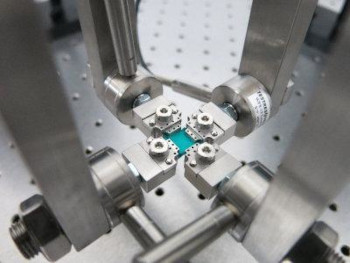
A biaxial test measures how materials respond to stresses in two perpendicular directions. This type of testing is crucial for industries like aerospace, automotive, and biomedical, where materials face complex forces. Understanding biaxial test results ensures that materials perform reliably in real-world conditions.
Key Takeaways
-
Biaxial testing provides a comprehensive understanding of material behavior under multi-directional stresses, crucial for industries like biomedical, automotive, and aerospace.
-
The geometry of specimens, particularly cruciform shapes, is vital for achieving uniform strain distribution and accurate stress measurements in biaxial tests.
-
Effective analysis of biaxial test results, including strain distribution and comprehensive reporting, is essential for accurate material characterization and application.
Understanding Biaxial Tests
A Biaxial test is indispensable for understanding the mechanical behavior of materials under complex, multi-directional stresses. Unlike uniaxial tests that apply force in a single direction, biaxial tests provide a more realistic simulation of real-world conditions by applying forces in two perpendicular directions. This method is essential for industries where materials are subjected to complex loading conditions, such as biomedical, automotive, and aerospace sectors.
Analyzing the stress-strain relationship in biaxial tests allows researchers to develop accurate constitutive models, enhancing material performance and reliability in practical applications.
Purpose of Biaxial Testing
The primary purpose of a biaxial test is to determine the mechanical properties of materials under complex stress states, which is increasingly relevant as material demands grow. Single-axis stress states, typical of uniaxial tests, often fail to capture the full range of material behaviors, especially for anisotropic materials like composites. Biaxial testing helps reveal these behaviors, providing a more accurate picture of how materials will perform under real-world conditions.
Monitoring loading conditions during biaxial tests prevents premature failure, ensuring reliable and reproducible results.
Types of Biaxial Tests
Biaxial tests can be broadly categorized into tensile and compression tests, including the biaxial tensile test. Each type serves a unique purpose, examining materials under different loading conditions to provide comprehensive insights into their mechanical properties.
Tensile tests, for example, are used to determine how materials stretch under multi-directional loads, while compression tests assess how materials compress and deform. These tests are vital for applications where materials must withstand complex stress states, ensuring durability and performance in practical uses.
Specimen Geometry for Biaxial Testing
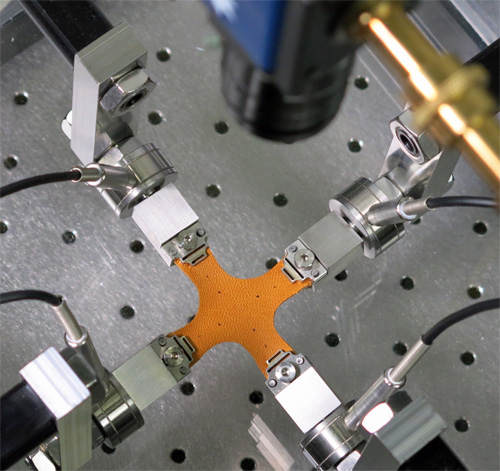
The geometry of the specimen plays a fundamental role in biaxial testing. Proper specimen design ensures uniform strain distribution and accurate stress measurements, which are crucial for reliable test results. Cruciform specimens are often used due to their ability to create a uniform tensile stress field at their center, where the loading occurs.
Common specimen shapes and techniques for managing stress concentration are explored to ensure the validity and reproducibility of biaxial test results.
Common Specimen Shapes
Cruciform specimens are the most common shape used in planar biaxial biaxial testing due to their ability to achieve uniform strain distribution across the test area. These specimens are designed with arms extending in two perpendicular directions, facilitating the application of biaxial loads.
Another prevalent shape is the In-Plane Tension Test (IPTT) specimen, which also helps in optimizing strain distribution during testing. Choosing the appropriate specimen shape ensures accurate and reliable biaxial test results.
Managing Stress Concentration
Managing stress concentration is crucial in biaxial testing to prevent premature failure and ensure accurate results. Techniques such as incorporating curved arms and slits in specimen designs help mitigate stress concentrations. These design modifications distribute stress more evenly, reducing the likelihood of localized failures.
Effective stress concentration management enhances the reliability and validity of biaxial test results.
Materials Suitable for Biaxial Testing
Biaxial testing is suitable for a wide range of materials, including biological tissues, composites, and metals. This method is particularly valuable for assessing the anisotropic behavior of materials under multi-directional stress. Understanding how different materials respond to biaxial loads is essential for developing high-performance components in various industries.
The suitability of different materials for biaxial testing, particularly soft biological tissues, composites, and metallic materials, is explored.
Testing Soft Biological Tissues
Soft biological tissues exhibit complex mechanical behaviors, making biaxial testing an essential tool for evaluating their properties under realistic loading conditions. The inherent anisotropy and non-linearity of these tissues pose significant challenges, requiring careful replication of physiological conditions during testing.
Biaxial testing provides comprehensive insights into the stress-strain behavior of soft biological tissues, aiding in the development of medical devices and treatments.
Evaluating Composites and Metals
Biaxial testing provides valuable insights into the mechanical properties of composites and metals, which are often used in high-performance applications. This method allows for the assessment of materials under simultaneous stresses in two directions, offering a more accurate representation of real-world conditions.
The Young’s Modulus of anisotropic materials, for instance, changes with direction along the specimen, highlighting the importance of biaxial testing in material evaluation.
Equipment and Techniques for Biaxial Testing
The accuracy and reliability of biaxial test results heavily depend on the equipment and techniques used. Biaxial tensile machines, equipped with independent motor stages and load cells, are designed to apply varied loading conditions. These machines can perform both tensile and compression tests, often enhanced by torsion capabilities, making them versatile for comprehensive material testing.
Specialized equipment and techniques necessary for conducting accurate planar biaxial tests are discussed.
Biaxial Test Machines and Load Cells
Biaxial test machines come in various load capacities, suitable for different test sequences. These machines are equipped with independent drives for each axis, allowing for flexibility in testing configurations. Load cells are used to measure forces in both orthogonal load directions during the test, ensuring precise and reliable data collection.
Using the appropriate testing machines and load cells ensures accurate and reproducible biaxial tests.
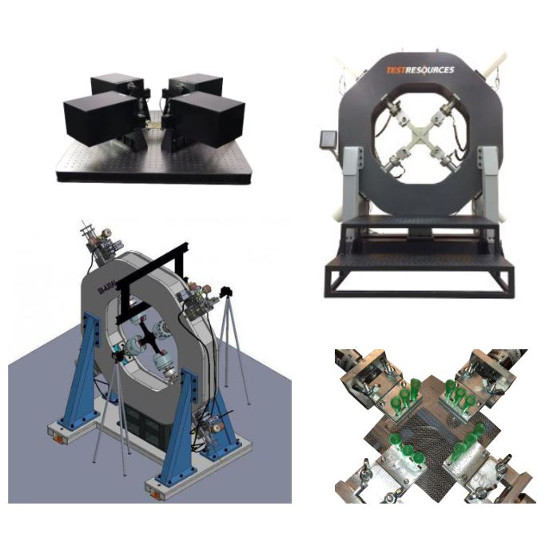
Biaxial Test Machines
Type: Electromechanical, Electrodynamic or Static Hydraulic
Force Range: 50 kN (11,250 lbf) to 2 MN (450 kip)
Biaxial test machines are designed to generate in-plane stresses that replicate multiaxial real-world stress states. Each biaxial system includes four actuators mounted opposite of each other on two axes with each actuator independently controlled by a four-channel servo controller that ensures independent and synchronized control of motion, strain or load. Each actuator is controlled to work with the other three actuators to replicate desired biaxial stresses.
Shop Biaxial Test Machines
Biaxial Testing Accessories
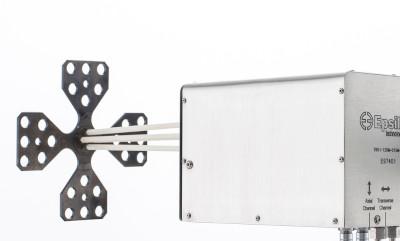
Accessories play a crucial role in enhancing the accuracy and efficiency of biaxial testing. Optical measuring systems, for instance, are essential for precise strain measurements, particularly when using cruciform specimens. These systems track displacements across multiple axis directions, providing detailed insights into material behavior during testing.
Key accessories that support biaxial testing and ensure reliable and comprehensive results are highlighted.
Optical measuring systems, such as video extensometers, provide non-contact strain measurements, enhancing precision during biaxial testing. These systems capture data without direct contact with the material, minimizing interference and improving testing efficiency.
Synchronizing measurement data with visual recordings provides better insights into material behavior. Advanced optical systems can also control the midpoint of the specimen, further enhancing testing accuracy.
Talk to one of our Engineers to help you navigate the vast selection of testing accessories to find the perfect fit for your testing application.
Newton Test Controller
From simplified test setups to an intuitive controller software interface and pre-configured methods for industry standards - this innovative technology ensures that your test application are conducted seamlessly and with precision.
Accurate & Repeatable Test Results
- Simple test setup, operation, and reporting
- Flexible and scalable software packages - Get what you need now with room to grow!
- Prebuilt test methods for many of the most common application-specific testing standards
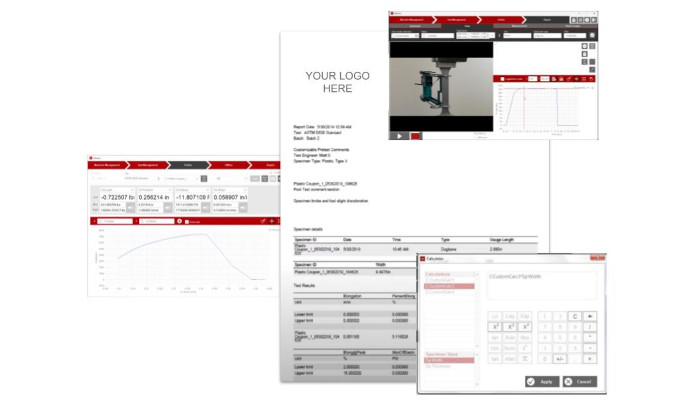
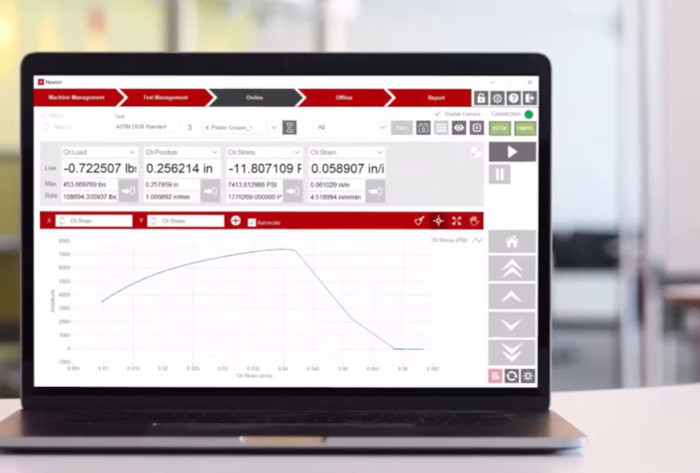
High-performance and easy-to-use controller with logical workflow design
With an intuitive interface, Newton makes it easy for users to navigate through various options and settings, ultimately enhancing the overall user experience. By streamlining complex procedures into user-friendly steps, this software serves both experienced test engineers and beginners alike to conduct tests with confidence and accuracy.
Analyzing Biaxial Test Results
Analyzing the results of biaxial tests is crucial for understanding material behavior under complex stress conditions. These tests provide insights that uniaxial tests may overlook, revealing orthogonal stress-strain fields and other critical properties. Detailed analysis helps identify material behaviors under complex loading states, ensuring accurate characterization and application.
This section will explore methods for analyzing biaxial test results, focusing on strain distribution analysis and generating comprehensive test reports.
Strain Distribution Analysis
Strain distribution analysis involves monitoring changes in the dimensions of the specimen under load to determine material behavior. Techniques such as Digital Image Correlation (DIC) and video extensometers are commonly used to capture displacement and strain fields without physical contact. These methods provide detailed insights into the mechanical properties of materials, ensuring accurate and reliable analysis.
Quantifying homogeneous deformations using fiducial markers enhances the precision of strain distribution analysis.
Generating Comprehensive Test Reports
Generating comprehensive test reports is crucial for ensuring accurate data interpretation in biaxial testing. These reports should include raw data, analysis of stress-strain behavior, and findings to support material characterization. Detailed reporting enhances the reliability and validity of findings, facilitating better material design and application.
Documenting variations in test conditions and specimen geometry ensures the reproducibility of results.
Steps to Conduct a Successful Biaxial Test
Conducting a successful biaxial test requires a structured approach that encompasses specimen preparation, equipment setup, and thorough data analysis. This section provides a step-by-step guide to ensure reliable and accurate test results.
Following these steps effectively captures the material’s response under different stress conditions, leading to meaningful insights and applications.
Preparing Test Samples
Proper preparation of test samples is crucial for biaxial testing. This includes material selection, ensuring proper alignment of the specimen in the testing machine, and accurate calibration of the machine to apply forces in both x and y directions. Securing two opposite sides of the specimen first helps maintain alignment and achieve reliable results.
Following these preparation steps ensures accurate and reproducible biaxial test results.
Setting Up the Testing Machine
Setting up the testing machine correctly is essential for obtaining accurate biaxial test results. Biaxial testing machines are equipped with multiple actuators that can operate simultaneously or independently to apply varied forces. Configuring the machine with either four independent drive axes or two in a master-slave configuration ensures precise control during testing.
Properly setting up the testing machine ensures reliable and accurate biaxial tests.
Performing the Test
Performing the biaxial test involves controlled loading to accurately capture the material’s response under different stress conditions. Mid-point control of the cruciform specimen is vital for accurate strain measurement and to ensure even loading across the specimen.
Following a structured approach during the test ensures reliable data on material performance, leading to meaningful insights and applications.
Applications of Biaxial Testing
Biaxial testing has a wide range of applications across various industries. It provides a more realistic simulation of the conditions materials face in practical applications, ensuring durability and performance.
The applications of biaxial testing in the biomedical and industrial sectors are explored, highlighting its importance in material development and evaluation.
Biomedical Applications
In the biomedical field, biaxial testing is crucial for evaluating biomaterials and medical devices. This method assesses the mechanical properties of biological tissues, ensuring that implants can withstand physiological conditions. Biaxial tests simulate real-life mechanical loading conditions, providing insights into the durability and performance of implants in biological environments.
Common types of biaxial testing systems in biomedical applications include combined axial and torsion systems, simple biaxial systems, and fatigue systems, each tailored to specific testing needs.
Industrial Applications
In industrial applications, biaxial testing is essential for evaluating materials under complex stress conditions, which is critical for various sectors, including aerospace, automotive, and manufacturing. These tests help in understanding material behavior under multidirectional loads, leading to enhanced design and performance.
For instance, biaxial tests are employed in developing more durable and fuel-efficient jet engines. The insights gained from biaxial testing significantly contribute to improving material durability and performance in various industrial applications.
Summary
Biaxial testing is a powerful tool for understanding the mechanical behavior of materials under complex, multi-directional stresses. It provides insights that uniaxial testing cannot, making it essential for developing high-performance materials for various applications. By carefully preparing test samples, setting up the testing machine, and analyzing the results, researchers can achieve reliable and accurate biaxial test results. From biomedical to industrial applications, the knowledge gained from biaxial testing drives innovation and ensures the durability and performance of materials in real-world conditions. As we continue to push the boundaries of material science, biaxial testing remains a cornerstone of advanced material evaluation and development.
Frequently Asked Questions
Biaxial testing is essential as it offers a more thorough understanding of material behavior under complex stress conditions, surpassing the limitations of uniaxial testing. This comprehensive insight is vital for developing materials that satisfy the rigorous demands of contemporary applications.
Common shapes used for test specimens in biaxial testing are cruciform and In-Plane Tension Test (IPTT) specimens, which facilitate uniform strain distribution and accurate stress measurements.
Biaxial testing is suitable for a variety of materials, such as biological tissues, composites, and metals, each demonstrating unique mechanical properties under biaxial loads. This method is essential for obtaining accurate evaluations of these materials.
Optical measuring systems significantly enhance biaxial testing by offering non-contact strain measurements that improve precision while minimizing interference. The ability to synchronize measurement data with visual recordings further aids in gaining deeper insights into material behavior.
Biaxial testing is essential in the biomedical field as it assesses the mechanical properties of biomaterials and medical devices, ensuring that implants can endure physiological conditions for optimal durability and performance. This evaluation is crucial for the reliability of medical implants in biological environments.
