
Compression Test Machines
For Accurate Compressive Strength and Material Performance Testing
Compression test machines are specialized universal testing systems designed to measure the static compressive strength of materials, products, and components. Our range of compression testing equipment accurately evaluates performance characteristics such as ultimate compressive strength, yield strength, deflection, and modulus to ensure reliable quality and structural integrity.
Request a Quote Use Configurator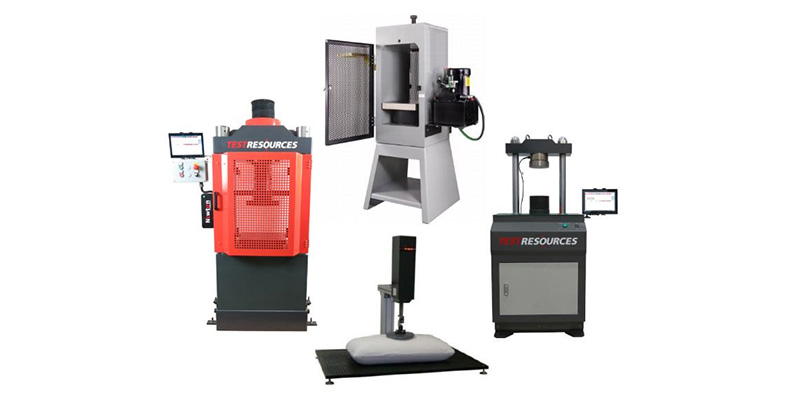
Why Choose Our Compression Test Machines
Choosing a TestResources machine means investing in an engineered solution rather than just a piece of hardware. We avoid the "one size fits all" because our application engineers work directly with you, configuring a system that matches your exact test requirements so you never pay for unnecessary features. Our modular platform is inherently future-proof, allowing you to start with a dedicated compression setup and later expand into tensile, cyclic, or flexure testing simply by adding fixtures or software modules. With the widest range of force capacities available from sub-grams to 2 MN and the backing of decades of experience serving over 2,500 global customers, we provide the expertise needed to navigate even the most complex material behaviors.
Key Features
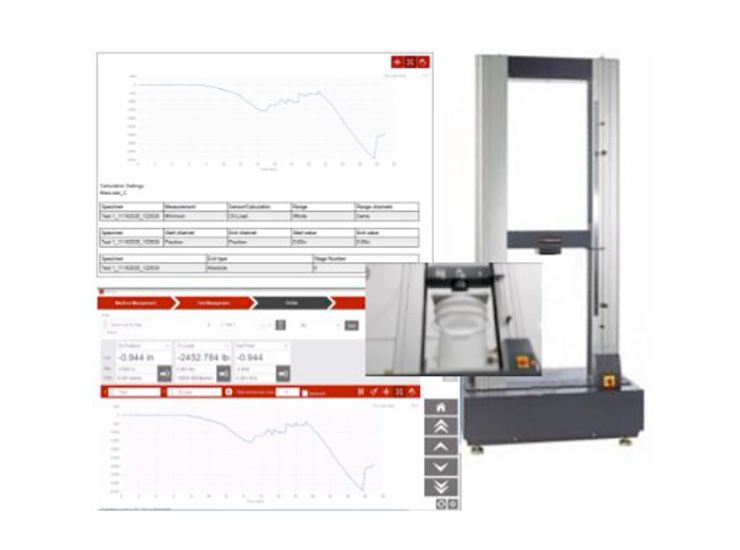
- Advanced Newton Controllers: Experience intuitive operation with our Newton software, featuring pre-built test methods for common standards, real-time data graphing, and automated report generation.
- High-Stiffness Load Frames: Engineered for minimal frame deflection, ensuring that the displacement data you measure is a true reflection of your specimen's behavior.
- Precision Load Cells: Equipped with high-accuracy strain-gauged transducers that maintain linearity and precision even at the lower ends of their force ratings.
- Extensive Fixture Library: Choose from fixed platens, self-aligning spherical seated platens, high-temperature plates, and specialized sub-presses designed for a variety of sample geometries.
- Safety First: Systems include integrated safety limits, emergency stops, and optional interlocked safety enclosures to protect operators from debris during high-force failure tests.
Top Benefits of Our Compression Test Machines
Our machines deliver accuracy that meets or exceeds ASTM E4 and ISO 7500 standards, ensuring repeatable, audit-ready results. With a smart-design approach, they offer high-end performance at a lower cost than traditional systems, reducing overall testing expenses. One-touch test starts and fast crosshead return speeds boost lab throughput by enabling more samples per hour. They also capture full stress–strain curves for detailed material insights, while pre‑configured software templates support global compliance with standards such as ASTM D695, ASTM C39, and ASTM D575.
Request a Free Consultation Use ConfiguratorHighly Accurate
Engineered for precise, repeatable results - ensuring material quality and safety across a wide range of applications.
Exceptional Quality
Deliver higher‑quality results by improving test efficiency and identifying issues early in the process.
Efficient and User-Friendly
Our compression testing software automates setup, data capture, and analysis - saving time and lowering operational costs.
Extremely Versatile
Our compression test machines replace multiple machines by handling a wide range of tests, making them a cost-effective choice.
Compression Test Systems Overview
Our compression test machines are high-performance universal testing systems specifically configured to evaluate the static compressive strength characteristics of materials, components, and finished products. Whether you are testing high-strength concrete, rigid plastics, aerospace composites, or delicate medical devices, our machines provide the precision and reliability required for critical data.
Each system is engineered using a modular design approach, allowing our application engineers to tailor the controller, load frame, and fixtures to your specific ASTM, ISO, or EN standard requirements. From compact tabletop models for low-force applications to high-capacity floor-standing systems, we provide the tools to measure ultimate compressive strength, yield strength, deflection, and modulus with absolute confidence.
Selecting Your Compression Test Machine
Choose between ultimate flexibility or streamlined specialization.
Universal Test Machines (UTM)
The Most Flexible & Versatile Option.
Configured for compression today, but ready for anything tomorrow. Thanks to a modular design, your machine can be adapted for a wide variety of applications by simply adding the appropriate fixtures.
- Tensile & Cyclic
- Shear & Flexure
- Bend, Peel, & Tear
Best for: R&D, educational labs, and evolving product lines.
Compression Only Machines
The Most Affordable & Easy-to-Use Option.
Designed to eliminate unnecessary features, these machines focus strictly on the task at hand. They provide a streamlined, user-friendly experience without the cost of unneeded capabilities.
- High-efficiency workflow
- Simplified controls
- Lower initial investment
Best for: Dedicated Quality Control (QC) and high-volume crushing tests.
Universal Test Machines Configured for Compression Testing
This type of test machine offers the greatest flexibility and versatility. It’s the ideal choice if you need a system capable of performing more than just compression tests. Thanks to its modular design, the machine can easily accommodate additional applications - such as tensile, cyclic, shear, flexure, bend, peel, and tear testing - simply by adding the appropriate fixtures.
Micro
Low sub-gram forces
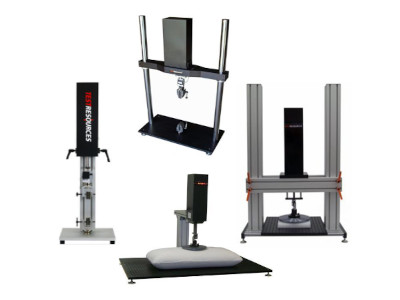
These high‑precision machines use a 32‑bit control system with an ultra‑low noise floor, engineered for delicate compression tasks. They’re ideal for biological applications like testing cell scaffolds or soft tissues, as well as micro‑electronics and specialized R&D where even the slightest resistance must be measured accurately.
Low Force
Forces up to 10 kN
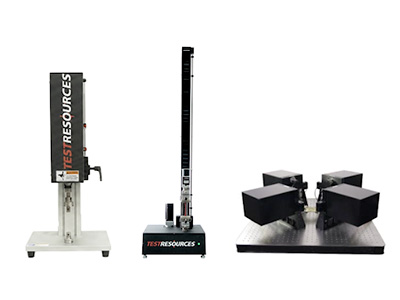
Compact and versatile, these machines are ideal for evaluating the compressive properties of low‑strength materials. Common applications include testing high‑elongation materials such as elastomers, thin‑walled medical tubing, delicate fibers, and botanical tissues. They deliver the sensitivity required for light‑load testing while maintaining the structural stability needed for repeatable results.
Mid-Range
Forces up to 300 kN
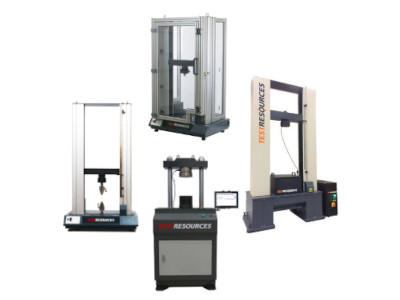
As the versatile workhorse of the materials testing lab, our mid‑range systems use a robust dual‑column design for superior axial stiffness. Optimized for rigid plastics, aerospace composites, and metals, they provide the force needed to reach ultimate compressive strength in dense materials while minimizing frame deflection to protect critical modulus measurements.
High Force
Forces up to 3 MN
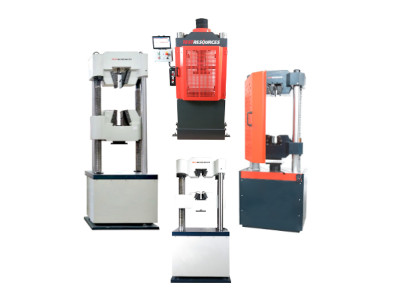
These rugged, high‑capacity systems are built to handle the extreme energy released when heavy industrial components fail. They’re the industry standard for compression testing steel rebar, high‑strength fasteners, concrete cylinders, and large structural members. Even at maximum force, they deliver the precision required to meet strict global construction and manufacturing standards.
Compression Only Machines
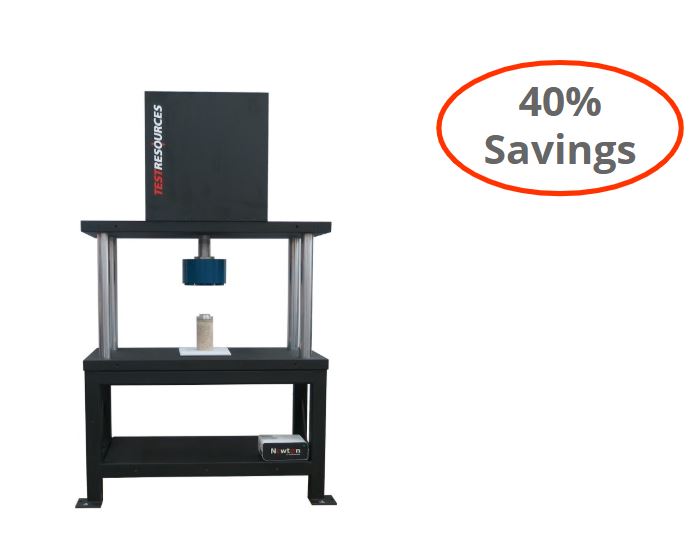
This type of test machine is configured to eliminate unnecessary features and is the most affordable and easy to use option.
300 kN (67500 lbf)
Compression Test Machines
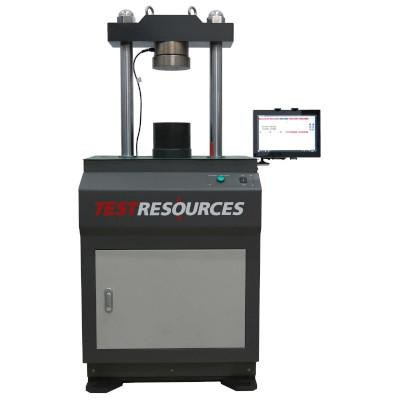
The 326-300 electromechanical compression test machine is an affordable solution to high capacity compression, flexural bend and shear testing applications.
Model: #326-300
500 kN (112500 lbf)
Compression Test Machines
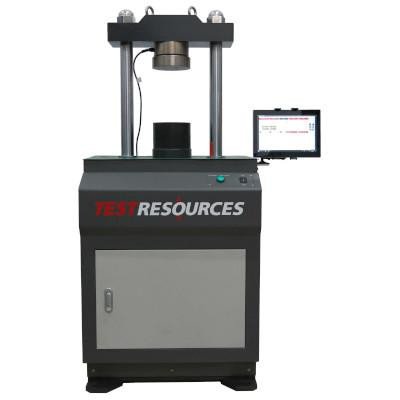
The 326-500 electromechanical compression test machine is an affordable solution to high capacity compression, flexural bend and shear testing applications.
Model: #326-500
2 MN (450000 lbf)
Compression Test Machines
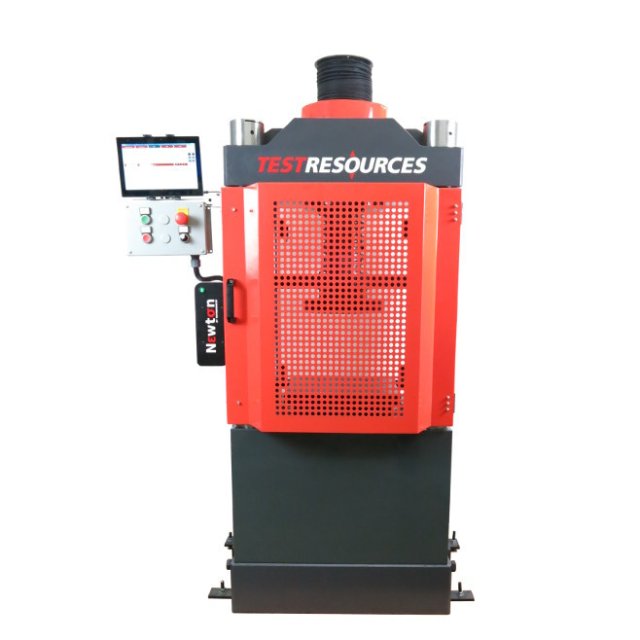
The 639H‑2000 compression test machine is ideal for high‑force static compression testing on materials like metals, concrete, bricks, asphalt, wood, soil, and more.
Model: #639H-2000
Quick Comparison
Newton Universal
Newton Universal simplifies compression testing with intuitive controller software, streamlined setups, and pre-configured industry-standard methods - delivering precise, seamless results every time. From basic crushing strength tests to advanced multi-stage deformation experiments, it adapts to your needs and empowers innovation in material characterization.
With advanced reporting and analysis powered by the Newton controller, you gain access to a full range of essential compression calculations, including Ultimate Compressive Strength, Compressive Modulus, Yield Strength, Deflection, and Percent Reduction.
Experience smarter testing with Newton Universal.
Request a Demo
Logical Workflow Design
Streamlined, intuitive interface for faster testing and analysis.

Real-Time Data Insight
Real‑time data visualization enables instant insight into material behavior.
Simplified Test Setup
Streamlined processes boost efficiency - saving time and money.

Presaved Test Methods
Presaved test methods remove the need for manual inputs.

Comprehensive Data Export
Supports in‑depth post‑test analysis and the creation of professional reports.

Scalable & Customizable
Flexible, modular functionality you can expand over time.
Compression Testing Fixtures
We offer hundreds of standard compression testing products along with fully custom solutions. While standard compression platens and plates meet about 75% of testing needs, our modular platform allows us to tailor designs for any application. Because every test is unique, we provide custom‑engineered fixtures designed to match your specimen and any required test force.
When you're ready to complete your system, contact us, and an application expert will help you optimize your system to your test requirements and budget.
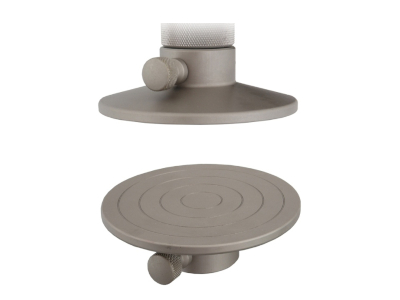
Fixed Platens
Our compression fixtures deliver simple, accurate testing. Each rigid, stable fixed platen resists off‑center loading to maintain precise parallelism throughout the test.
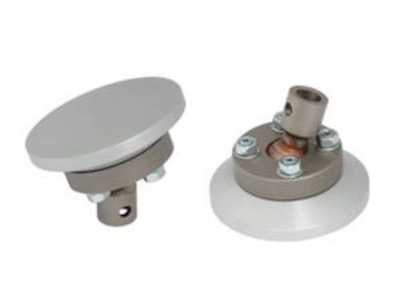
Self Aligning Spherical Platens
Self‑aligning spherical platens automatically adjust to ensure concentric, even loading on specimens that aren’t perfectly perpendicular to the platen surface.
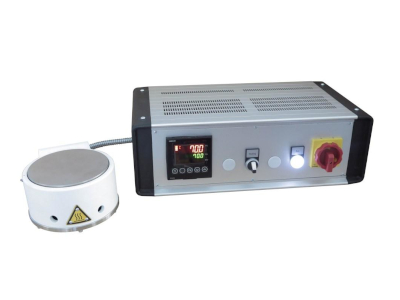
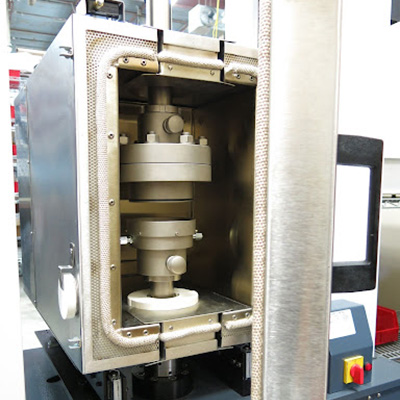
High Temperature Platens
Precision‑controlled (±0.1°C) compression platens engineered for high‑temperature strength and thermal performance testing.
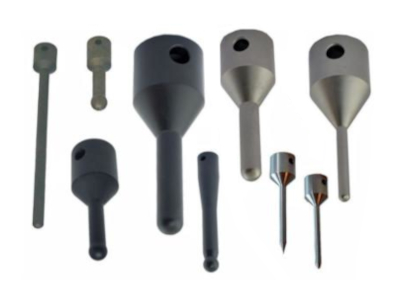
Compression Probes
Our compression indentation probes are custom‑made to meet specific testing requirements, including designs with a 2.5 mm radius tip and a 10 mm ball tip for precise material indentation and compression testing.
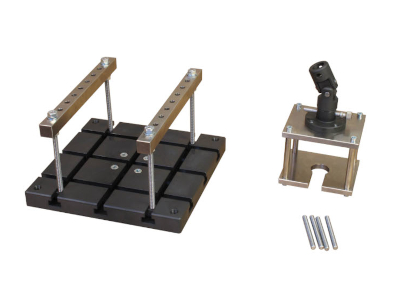
T Slot Test Plates
T‑slot tables and component test plates securely mount components and products for tensile, compression, flexural, peel, and puncture testing, providing a stable extended work area for universal testing machines.
Test Applications
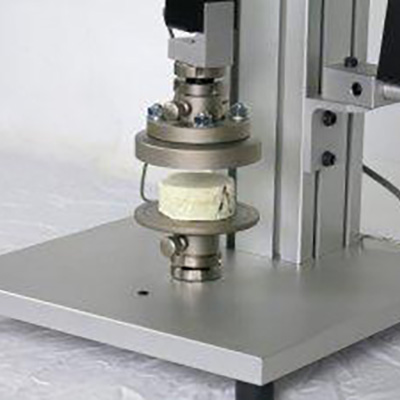
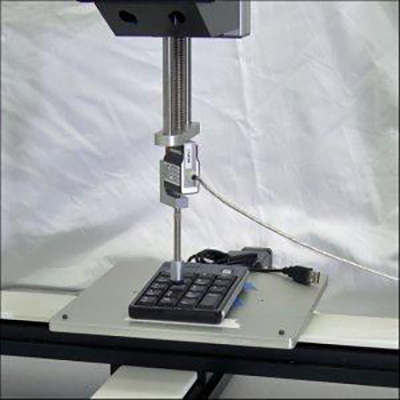
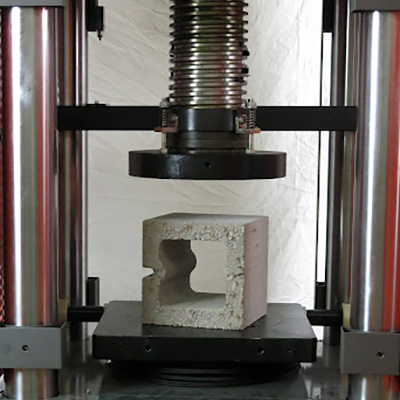
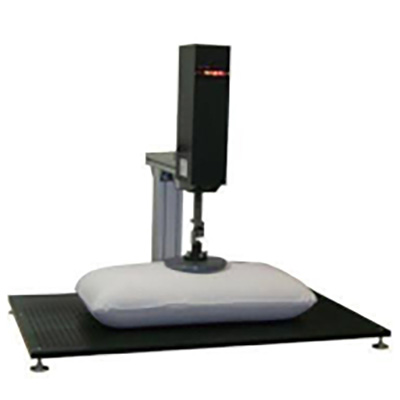
Using some of our tensile testing accessories, you can test a wide range of tensile test applications. We have sample cutters, grips and fixtures, biobaths, extensometers, and more! These are just a few examples of what you can do with one of our tensile testers.
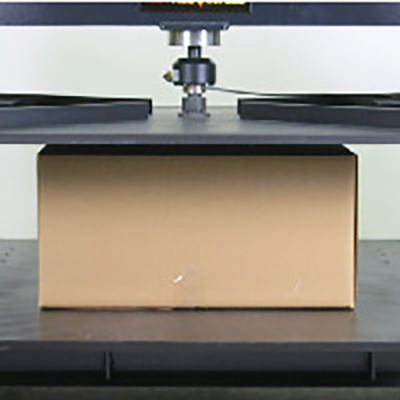
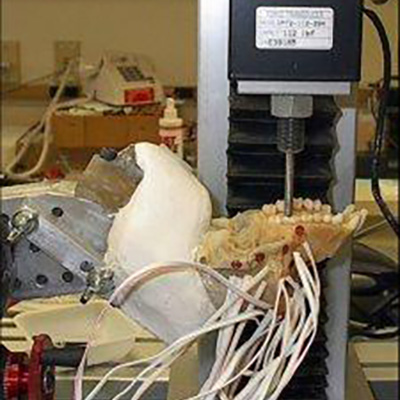
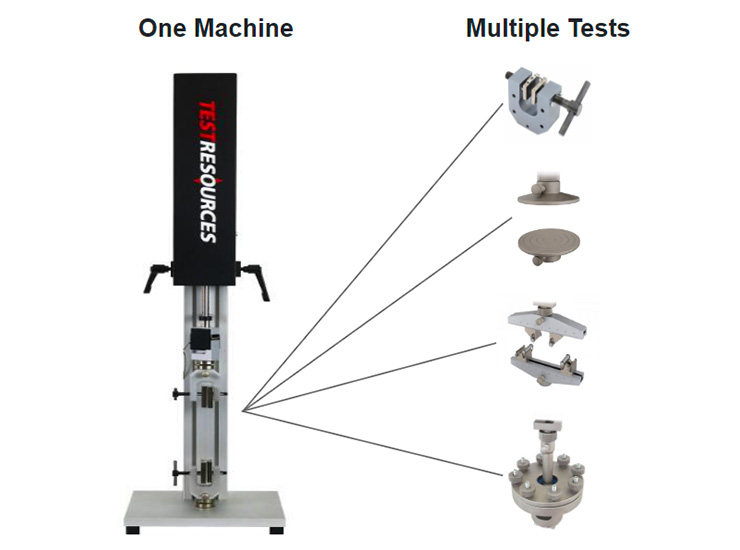
Get Exactly What You Need, Both Now and in the Future
From tensile tests to compression, bend and puncture - you name it, these machines can do it all!
Their ability to perform various types of tests makes them an invaluable tool for ensuring the quality and reliability of materials across different applications.
Get a Modified or Customized Solution
Can’t find a system that fits your needs? No problem. We give you the flexibility to co‑engineer your own solution. With our wide range of standard products and modular sub‑assemblies, we can quickly and cost‑effectively tweak an existing design - or create a completely custom system from scratch.
Whether you need a simple adjustment or a fully optimized machine for a specific application, we’ll make sure you get exactly what you need.
If you need something special, we can handle it - whether it’s custom sizes, unique grips or fixtures, high or low force static or dynamic control, position or strain control, environmental chambers, or multiaxial testing. Whatever the requirement, we can tailor a solution to fit, with possibilities that are virtually endless.
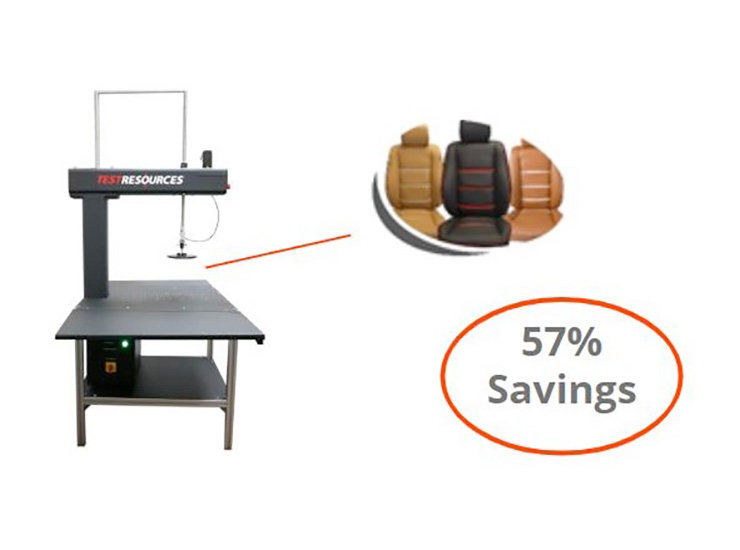
Engineering Expertise
When you work with us, you get the best engineers to solve your testing and budgetary challenges. Whether you’re new to testing or a testing expert yourself, we can help you optimize your system AND YOUR BUDGET.
- High Quality Products
- Experienced Engineers
- Exceptional Support
- Turning Innovation into a Team Sport
- Made to Go Where Others Won’t
Electric Car Component Tester
Technical Challenges
- Volatile or explosive test specimens that could ignite, fragment, leak corrosive fluids, or explode during testing
- Needed to be able to contain the sample in a chamber
- Co-engineered the containment chamber
- Needed 600 kN compression system
- The budget was ridiculously tight
Compression Test Applications
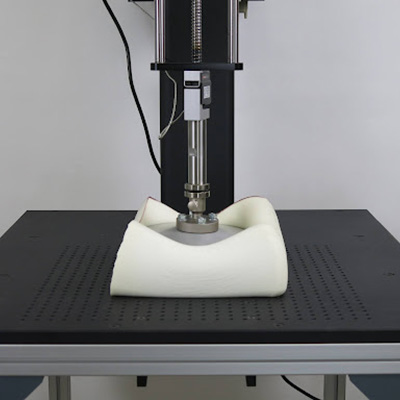
A compression test is used to check the quality of different materials based on their properties such as compressive strength, modulus of elasticity, yield strength, etc. When selecting materials for a final product or prototype, you need to know if they will stand up to real-world use. Every material has a breaking point, so knowing how strong your materials are can alert you if you are using something that won’t hold up well under stress. When choosing composites, metals, rubber and other raw materials, a compression test can help you select the strongest available option for the job.
Browse typical compression testing uses across different materials.
Find Your Perfect Test Machine
Use our configuration tool to filter through our products and find the exact model for your needs.
Find Your Machine Ask an Expert
What Our Clients Say
Compression Test Machines FAQs
While tensile testing pulls a material apart to find its breaking point, compression testing applies an inward, crushing force to determine how a material behaves under a load that squeezes it. The primary challenge in compression is ensuring the sample remains aligned; unlike tensile tests where the specimen naturally centers itself as it is pulled, a compression specimen can easily buckle or "barrell" if not perfectly centered.
Barrelling occurs when the friction between the machine’s platens and the specimen surfaces prevents the ends of the sample from expanding laterally, while the center of the sample bulges outward. This creates a non-uniform stress state. Engineers often mitigate this by using high-quality lubricants on the platens or by ensuring the specimen has an ideal aspect ratio (usually a height-to-diameter ratio of 2:1).
The "correct" standard depends entirely on your material. Some of the most frequently cited include:
- ASTM D695: The standard for rigid plastics.
- ASTM C39: The benchmark for the compressive strength of cylindrical concrete specimens.
- ASTM E9: General compression testing of metallic materials at room temperature.
- ASTM D575: Specifically for the compression properties of rubber and elastomers.
A standard compression test provides several critical data points beyond just the point of failure:
- Compressive Yield Strength: The stress level at which a material exhibits a specified permanent deformation.
- Compressive Modulus (Modulus of Elasticity): The measure of the material's stiffness or resistance to elastic deformation.
- Ultimate Compressive Strength: The maximum compressive stress the material can withstand before complete failure or crushing.
Platen choice is the most underestimated part of the setup. Fixed platens are used when the specimen surfaces are perfectly parallel. However, if there is even a slight irregularity in the specimen, spherical seated (self-aligning) platens are necessary. These tilt slightly to ensure full surface contact, preventing premature failure caused by edge loading or "point loading."
In compression testing, the machine frame itself undergoes a small amount of deformation under high loads. If the frame is not "stiff" enough, the displacement data you see on the screen might include the bending of the machine rather than just the compression of your sample. High-quality machines, like those using the Newton controller, use "compliance correction" to subtract the frame's movement from your final data.
