
Bend Test Machines
Bend & Flexure Testing for Metals, Plastics and Composites
Bend test machines are universal testing systems designed to measure material ductility, bend strength, and fracture resistance. Commonly used for ductile metals, this equipment operates similarly to flexure testing machines and uses comparable test methods.
Request a Quote Use Configurator
Bend Test Systems Overview
Bend test machines are typically universal testing machines specifically configured to evaluate material ductility, bend strength, fracture strength, and resistance to fracture. Bend tests tend to be associated with ductile metals and metal products. Bend test equipment and test procedures are similar to flexure test equipment. Flexure tests are commonly associated with brittle materials including plastics, polymers, composites, glass and ceramics. "Bend test" and "flexure test" terms are used interchangeably in the testing industry.
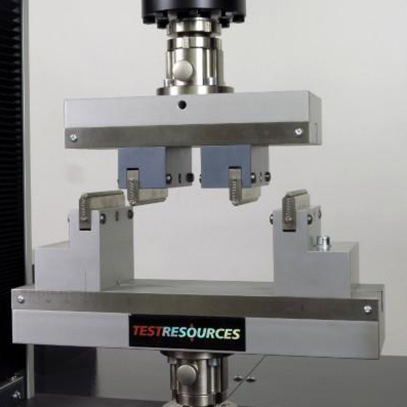
A bend tester is configured to your requirements by our application engineers with a three or four point bend test fixture, the correct controller, and a deflectometer if you would like to measure sample deflection directly and accurately.
Universal Test Machines Configured for Bend Testing
Start configuring your bend test machine by selecting a universal testing machine series matched to the maximum force required for your application.
Micro
Low sub-gram forces
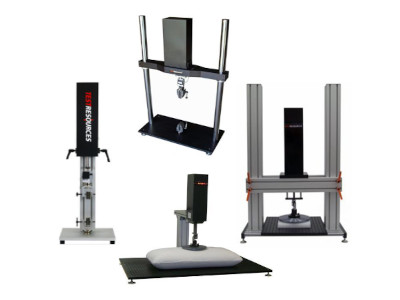
These high‑precision machines use a 32‑bit control system with an ultra‑low noise floor, engineered for delicate compression tasks. They’re ideal for biological applications like testing cell scaffolds or soft tissues, as well as micro‑electronics and specialized R&D where even the slightest resistance must be measured accurately.
Low Force
Forces up to 10 kN
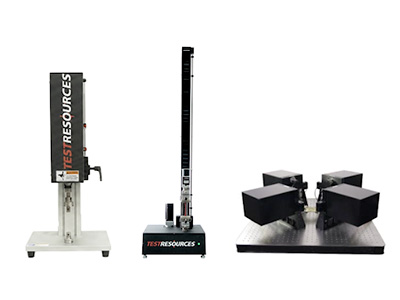
Compact and versatile, these machines are ideal for evaluating the compressive properties of low‑strength materials. Common applications include testing high‑elongation materials such as elastomers, thin‑walled medical tubing, delicate fibers, and botanical tissues. They deliver the sensitivity required for light‑load testing while maintaining the structural stability needed for repeatable results.
Mid-Range
Forces up to 300 kN
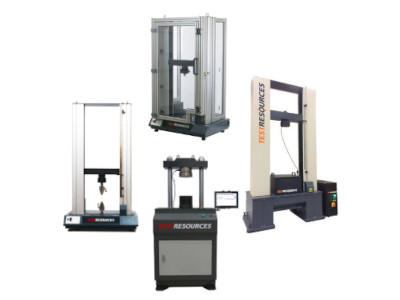
As the versatile workhorse of the materials testing lab, our mid‑range systems use a robust dual‑column design for superior axial stiffness. Optimized for rigid plastics, aerospace composites, and metals, they provide the force needed to reach ultimate compressive strength in dense materials while minimizing frame deflection to protect critical modulus measurements.
High Force
Forces up to 3 MN
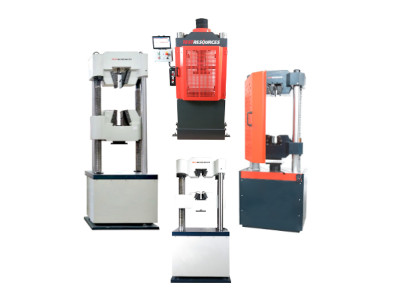
These rugged, high‑capacity systems are built to handle the extreme energy released when heavy industrial components fail. They’re the industry standard for compression testing steel rebar, high‑strength fasteners, concrete cylinders, and large structural members. Even at maximum force, they deliver the precision required to meet strict global construction and manufacturing standards.
Newton Universal
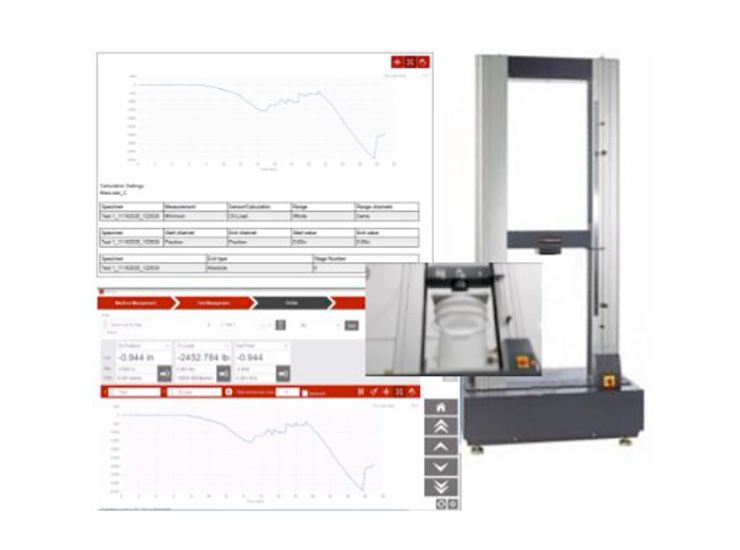
Newton Universal simplifies bend testing with intuitive controller software, streamlined setups, and pre-configured industry-standard methods - delivering precise, seamless results every time. From basic crushing strength tests to advanced multi-stage deformation experiments, it adapts to your needs and empowers innovation in material characterization.
With advanced reporting and analysis powered by the Newton controller, you gain access to a full range of essential compression calculations, including Flexural Stress (Flexural Strength or Modulus of Rupture), Flexural Strain, Flexural Modulus (Modulus of Elasticity in Bending), and Springback Calculation (Common in Sheet Metal).
Experience smarter testing with Newton Universal.
Request a Demo
Logical Workflow Design
Streamlined, intuitive interface for faster testing and analysis.

Real-Time Data Insight
Real‑time data visualization enables instant insight into material behavior.
Simplified Test Setup
Streamlined processes boost efficiency - saving time and money.

Presaved Test Methods
Presaved test methods remove the need for manual inputs.

Comprehensive Data Export
Supports in‑depth post‑test analysis and the creation of professional reports.

Scalable & Customizable
Flexible, modular functionality you can expand over time.
Bend Test Fixtures
Complete your bend test system with our extensive range of accessories. With hundreds of options to choose from, you can easily find the perfect grips, cutting dies, environmental chambers, and extensometers to complement your bend tester. We have everything you need to ensure a seamless and comprehensive testing experience.
Shop some of our popular bend test accessories.
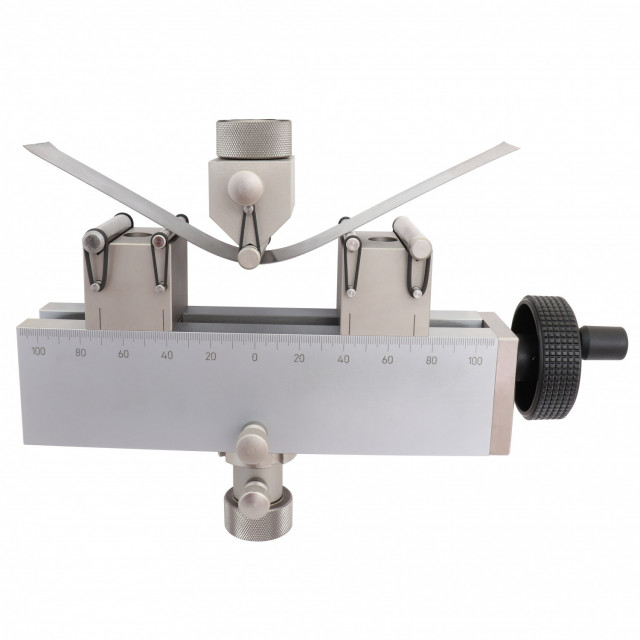
G103X-3P-CR Three Point Bend Fixture
Compact 3‑point bend fixture with interchangeable rollers and centering anvils. A manual hand crank aligns the base anvils for quick, easy setup.
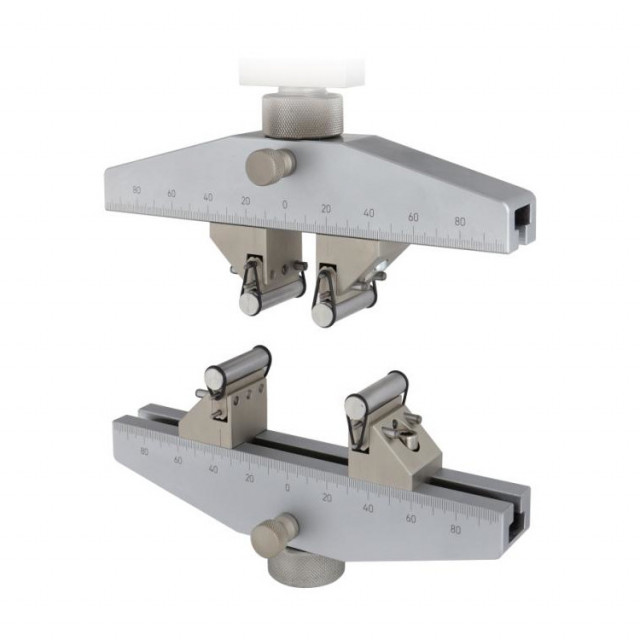
G238W-300-4P-S Four Point Articulating Bend Fixture
Includes a base with articulating anvils, one upper loading anvil, two lower supporting anvils, and two sets of three rollers; machine adapter sold separately.
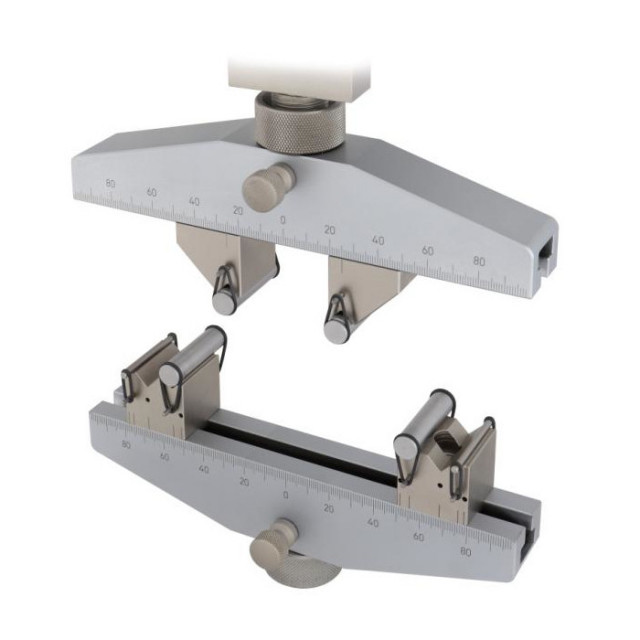
G238-5P Five Point Bend Fixture
Includes two bases, three upper loading anvils, two lower support anvils, and two sets of three rollers. Machine adapter sold separately.
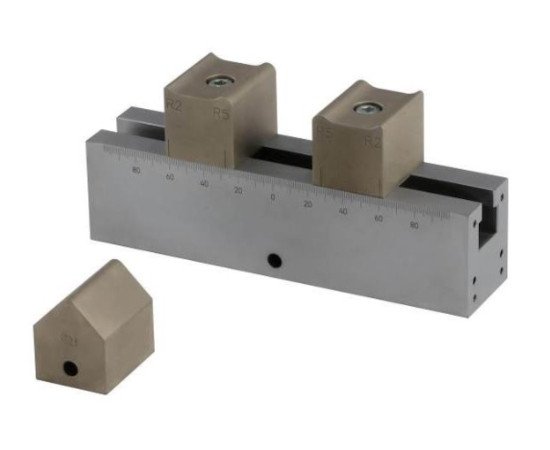
G103 Bend Fixtures
G103 bend fixtures are universal testing fixtures designed to perform both 3‑point and 4‑point flexural bend tests.
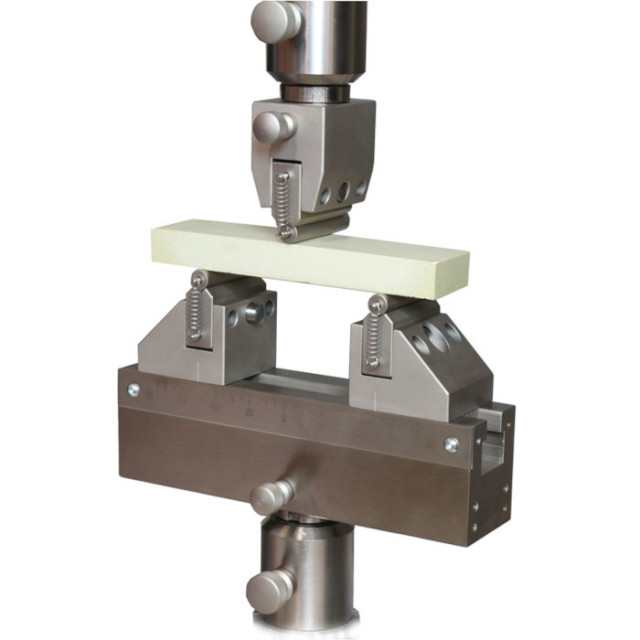
G103XW-3P-CR Three Point Articulating Bend Fixture
Compact 3‑point bend fixture with 4–10 mm interchangeable articulating rollers and an anvil‑centering crank. The manual hand crank aligns the base anvils for faster, easier setup.
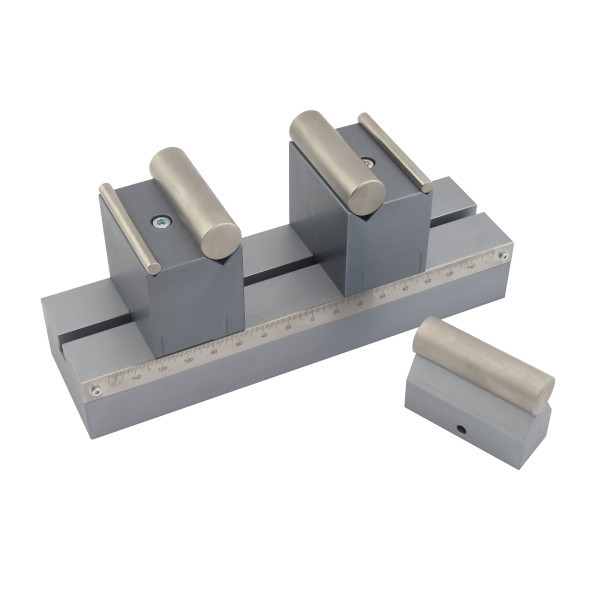
G22-400 Three Point Bend Fixture
Base includes articulating anvils, one upper loading anvil, two lower support anvils, and two sets of three rollers. Machine adapter sold separately.
Test Applications
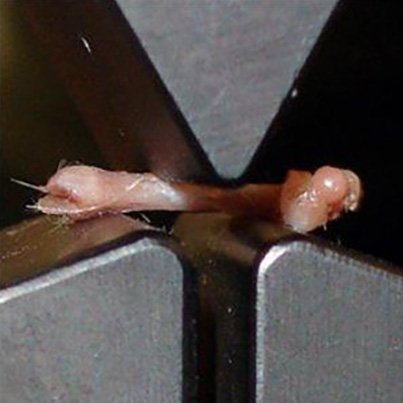
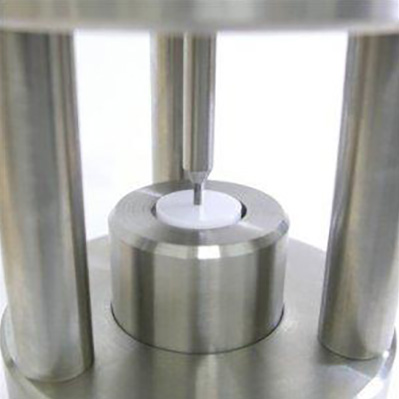
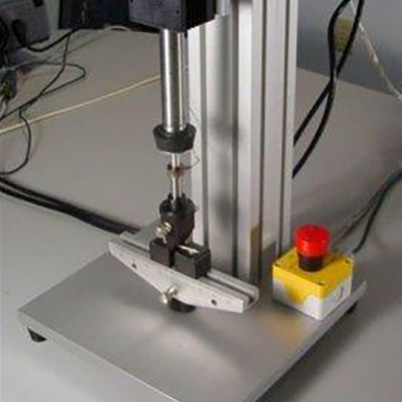
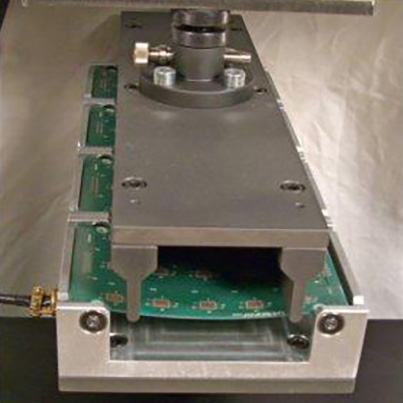
Using some of our tensile testing accessories, you can test a wide range of tensile test applications. We have sample cutters, grips and fixtures, biobaths, extensometers, and more! These are just a few examples of what you can do with one of our tensile testers.
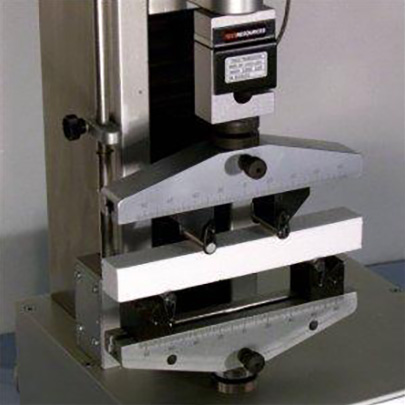
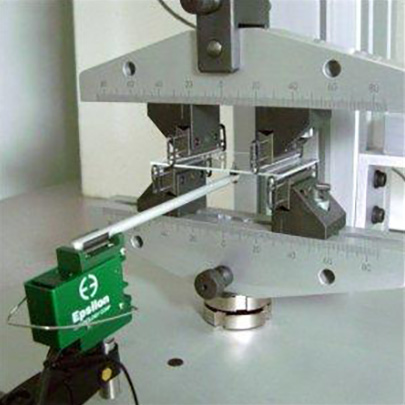
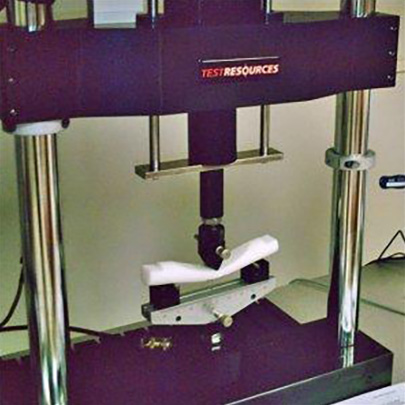
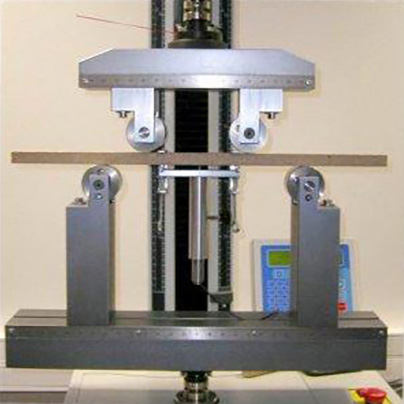
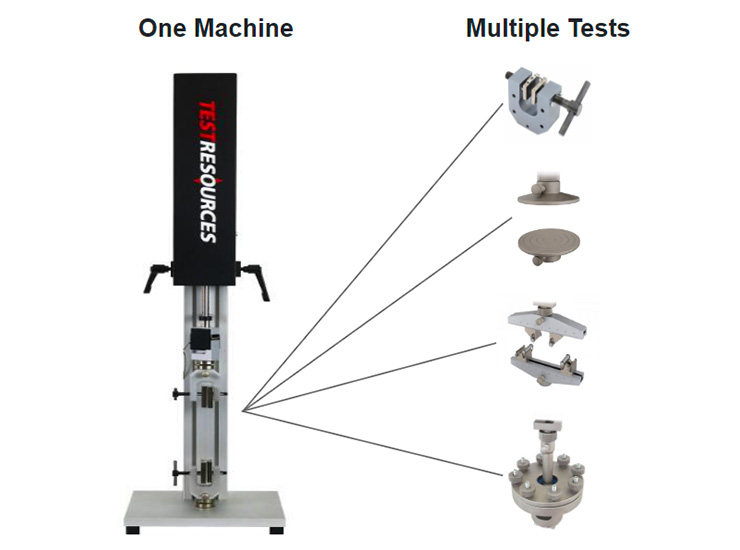
Get Exactly What You Need, Both Now and in the Future
From tensile tests to compression, bend and puncture - you name it, these machines can do it all!
Their ability to perform various types of tests makes them an invaluable tool for ensuring the quality and reliability of materials across different applications.
Get a Modified or Customized Solution
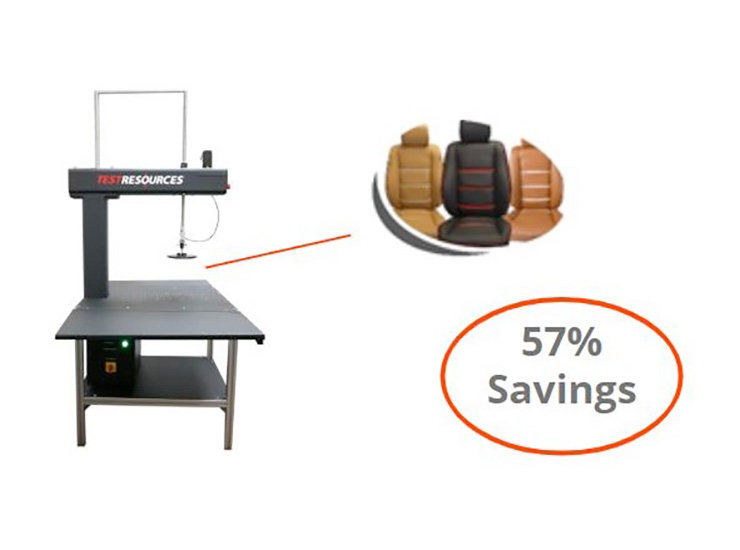
Can’t find a system that fits your needs? No problem. We give you the flexibility to co‑engineer your own solution. With our wide range of standard products and modular sub‑assemblies, we can quickly and cost‑effectively tweak an existing design - or create a completely custom system from scratch.
Whether you need a simple adjustment or a fully optimized machine for a specific application, we’ll make sure you get exactly what you need.
If you need something special, we can handle it - whether it’s custom sizes, unique grips or fixtures, high or low force static or dynamic control, position or strain control, environmental chambers, or multiaxial testing. Whatever the requirement, we can tailor a solution to fit, with possibilities that are virtually endless.
Engineering Expertise
When you work with us, you get the best engineers to solve your testing and budgetary challenges. Whether you’re new to testing or a testing expert yourself, we can help you optimize your system AND YOUR BUDGET.
- High Quality Products
- Experienced Engineers
- Exceptional Support
- Turning Innovation into a Team Sport
- Made to Go Where Others Won’t
Bend Test Applications
Bend tests are an effective way to determine the durability of wood, concrete, plastics and other raw materials. With this knowledge, you can confidently identify the strongest and most reliable options for your product.
Browse typical bend testing uses across different materials.
Find Your Perfect Test Machine
Use our configuration tool to filter through our products and find the exact model for your needs.
Find Your Machine Ask an Expert
What Our Clients Say
Bend Test Machines FAQs
This is the most common technical hurdle. While both involve placing a beam on two supports and applying a load, the stress distribution differs significantly:
- 3-Point Bend: The load is applied at a single point in the center. The maximum stress occurs directly under the loading nose. It is simpler to set up but can be influenced by local stress concentrations.
- 4-Point Bend: The load is applied at two points. This creates a region of constant bending moment between the two inner loading noses. This is generally preferred for brittle materials or when you want to test a larger volume of the material without "crushing" the center point.
While tensile tests are the "gold standard," bend tests are frequently preferred for specific scenarios:
- Brittle Materials: Ceramics or tool steels often snap in the grips of a tensile machine. Bending allows for a more controlled fracture.
- Weld Qualification: It is the industry standard for checking the integrity of a weld (e.g., "Face Bend" or "Root Bend" tests). It reveals cracks or inclusions that a tensile test might miss.
- Simplicity: It doesn't require complex specimen machining (like "dog-bone" shapes).
In industrial applications (like AWS or ASME welding codes), a bend test isn't necessarily about a number; it’s about visual integrity.
- Pass: The specimen is bent to a specific angle (usually 180°) without any cracks or surface discontinuities exceeding a certain size (often 3mm or 1/8 inch).
- Fail: Any sign of tearing, cracking, or "opening up" of the material beyond the allowable limit.
Depending on your industry, you'll likely be following one of these "rulebooks":
- ASTM E190: Standard Test Method for Guided Bend Test for Ductility of Welds.
- ASTM D790: Standard Test Methods for Flexural Properties of Unreinforced and Reinforced Plastics.
- ISO 7438: Metallic materials — Bend test.
No. While TestResources sells specific bend test machines (like the 100 Series or high-capacity 600 Series), most users perform bend tests by adding a flexure fixture to a standard Universal Testing Machine (UTM).
The Benefit: A single TestResources UTM can perform tensile, compression, and bend tests simply by swapping the grips.
Yes. Many of our fixtures are designed as "a base." You can start with a 3-point setup and later purchase a 4-point conversion kit (adding two upper loading anvils) rather than buying an entirely new fixture.
Yes. TestResources fixtures will fit your existing non-TestResources machines. We provide a wide range of mechanical adapters (e.g., Clevis pin to threaded stud) that allow our bend fixtures to be mounted on almost any brand of testing frame.
Most of our bases feature a T-slot or scale-marked rail that allows you to slide the lower supports to match the specific Span-to-Depth ratio required by your standard (e.g., the 16:1 ratio in ASTM D790).
- Custom Solutions: For oversized parts like concrete beams or large pipes, we offer wide-span bases and high-capacity hydraulic frames (up to 2MN).
