
Compression Testing Machine - Biomedical Hydrogels | Research Spotlight
Hydrogels are water-swollen networks of hydrophilic polymers exhibiting complex liquid-like and solid-like properties.
While their liquid-like characteristics result from water being the primary constituent, cross-linked polymers provide their solid-like structural behavior. This manifests as a distinct shear modulus that becomes evident upon deformation. Synthetic hydrogels are widely researched for muscle and tendon replacements, fluid pumps, valves, and general soft biological material applications.
Other vital biomedical applications include artificial spinal disks, tissue engineering scaffolding, cartilage, muscle development, intelligent stimuli-sensitive systems, and targeted drug delivery mechanisms.
TestResources equipment has long aided in advanced biomedical hydrogel research. For example, researchers at the University of Toronto utilized a TestResources 840L testing machine to perform compression testing and mechanical stimulation, proving that arrayed tissue constructs could be successfully cultured in a specially microfabricated bioreactor system.
Recommended Test Machines
100 Series Universal Test Machines
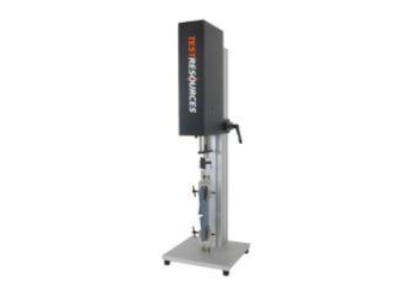
Force capacities up to 10 kN (2,250 lbf). Highly precise, low-force tabletop systems featuring a modular series of five distinct frame options with an adjustable test envelope. An exceptionally affordable and flexible layout for static tension, compression, bend, and peel tests.

800 Series Fatigue Test Machines
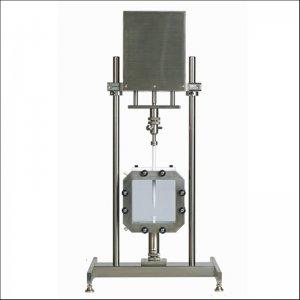
Static and dynamic fatigue forces up to 50 kN (11,250 lbf) with operational frequencies up to 75 Hz. Uses a clean, oil-free, all-electric actuator ideal for cleanrooms and biological environments. Significantly minimizes acquisition, operation, and ongoing maintenance overhead compared to hydraulic equivalents.
Recommended Testing Accessories
Biomedical Fluid Bath
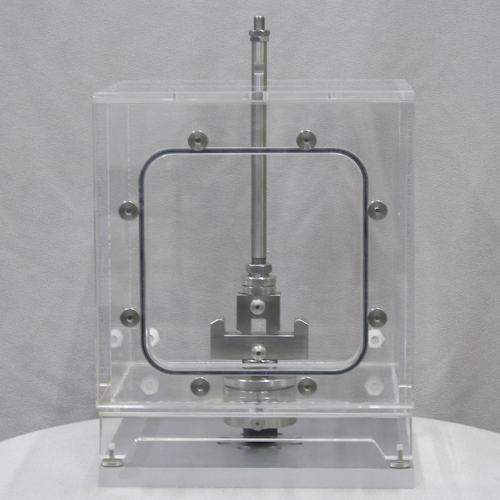
Enables targeted static and cyclic mechanical evaluation submerged directly in temperature-controlled water or saline solutions. Features a high-accuracy PID temperature controller regulated up to 45°C (113°F) to accurately replicate in-vitro physiological environments. Optimized sizing configurations are available alongside custom sub-miniature compression fixtures.
