
Rigid Cellular Plastic Compression Properties (ISO 844 and ASTM D1621)
ISO 844, ASTM D1621, and EN 826 establish clear testing guidelines to evaluate the compressive performance profiles of expanded rigid cellular plastics.
These methodologies determine critical engineering properties, including compressive strength, stress at predefined deformation levels, compressive modulus, and overall stress/strain relationships. While these regulatory standards govern similar characteristics, please note that their specific setup and compliance metrics are distinct.
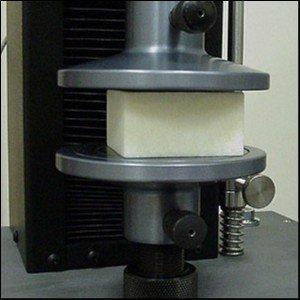
During testing, specimens are placed precisely between two parallel compression platen anvils, which advance at a constant rate of displacement until the specimen deforms to a specified percentage of its initial height. Maintaining strict parallelism across the platen faces is essential; therefore, articulating spherical seated, self-aligning platens are typically paired with a fixed platen baseline.
Alternatively, two rigid fixed compression platens can be employed. However, utilizing a dedicated deflectometer or deflection gauge is strongly recommended in this configuration to isolate and minimize experimental data errors caused by underlying load frame system compliance.
Applicable Testing Standards
Recommended Test Machines
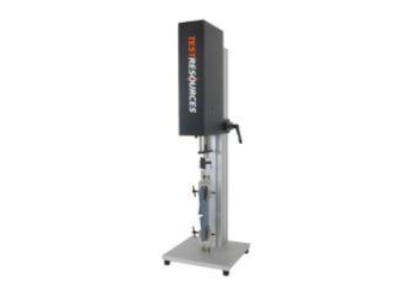
100 Series Universal Test Machines
Force capacities up to 10 kN (2,250 lbf). These precision, low-force tabletop systems feature a modular selection of five frame variants with an adjustable testing envelope. An exceptionally affordable and reliable configuration optimized for high-stiffness compression, tension, bend, and peel profiles.
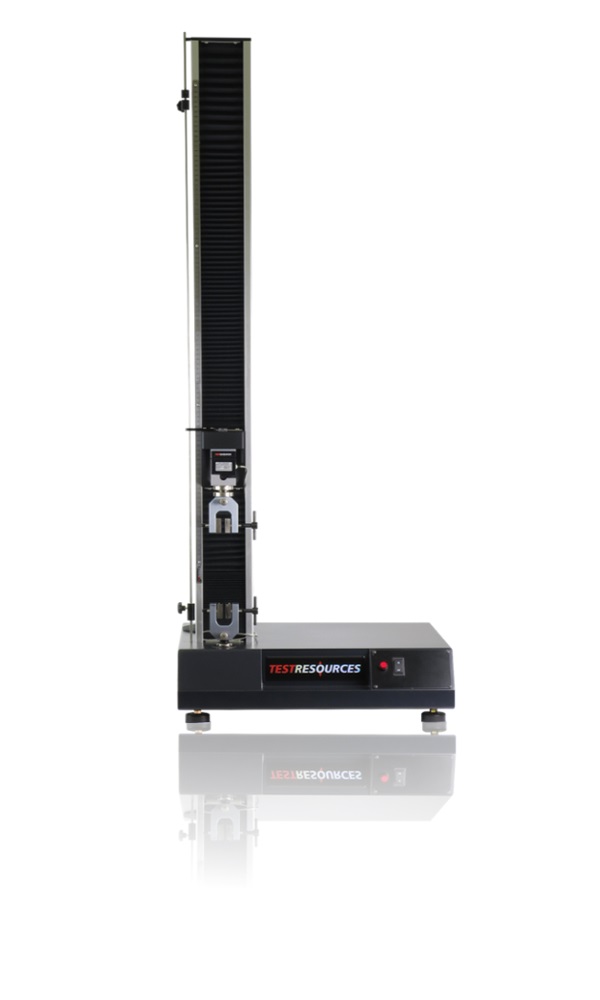
200 Series Electromechanical Universal Test Machines
Force capacities up to 5 kN (1,125 lbf). Highly responsive tabletop frames capable of operational speeds up to 2,500 mm/min (100 in/min). Specifically designed to accommodate high-travel or high-elongation specimen matrices.
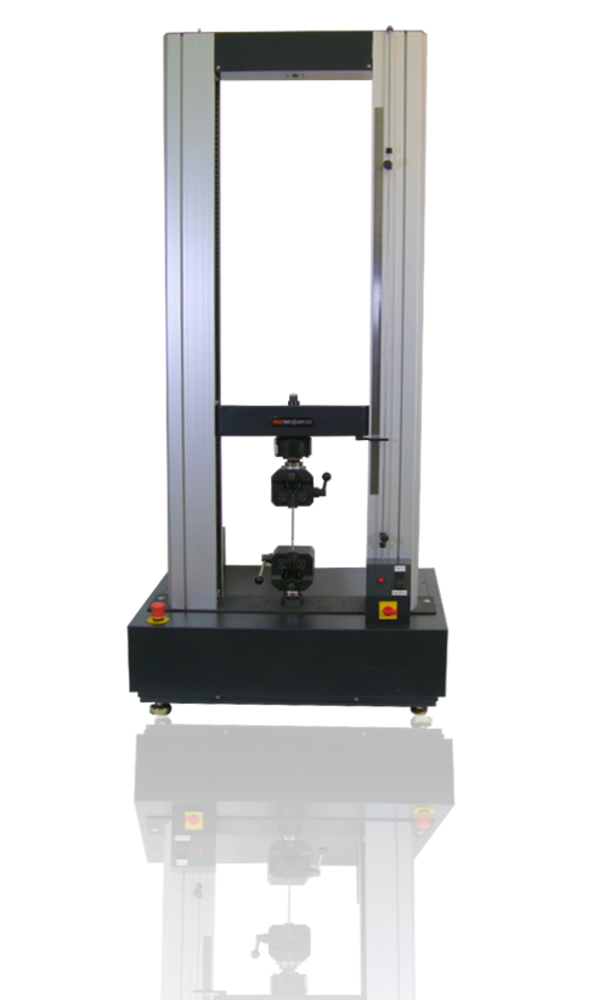
300 Series Electromechanical Universal Test Machines
Comprehensive force window ranging from 5 kN to 600 kN (1,125 lbf to 135,000 lbf). Featuring fully adaptable test space, these rugged dual-column configurations represent our most popular architecture for high-capacity static tension and compression applications. Available in tabletop and structural floor-standing models.
Recommended Testing Accessories
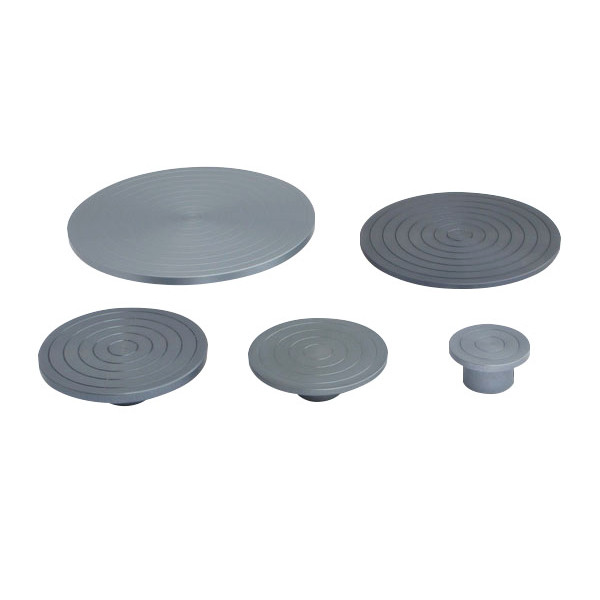
G23 Compression Platens
Standard force capacities rated up to 300 kN (67,500 lbf), with customized higher capacities engineered on request. Diameters are available from 56 mm to 346 mm (2.2 in to 13.6 in). Constructed in steel, stainless steel, aluminum, or Delrin with a high-precision machined finish for flat interface alignment.
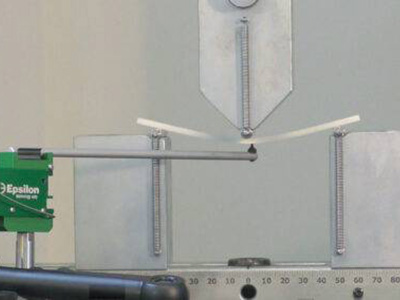
Deflection Gauge
Available in targeted measurement windows scaling from 1 mm up to 25 mm (0.04 in to 1.0 in). This highly versatile deflection gauge comes complete with a magnetic, fully adjustable positioning base. Standard modules fully satisfy Class B-1 criteria of ASTM E83 and Class 0.5 parameters of ISO 9513.
