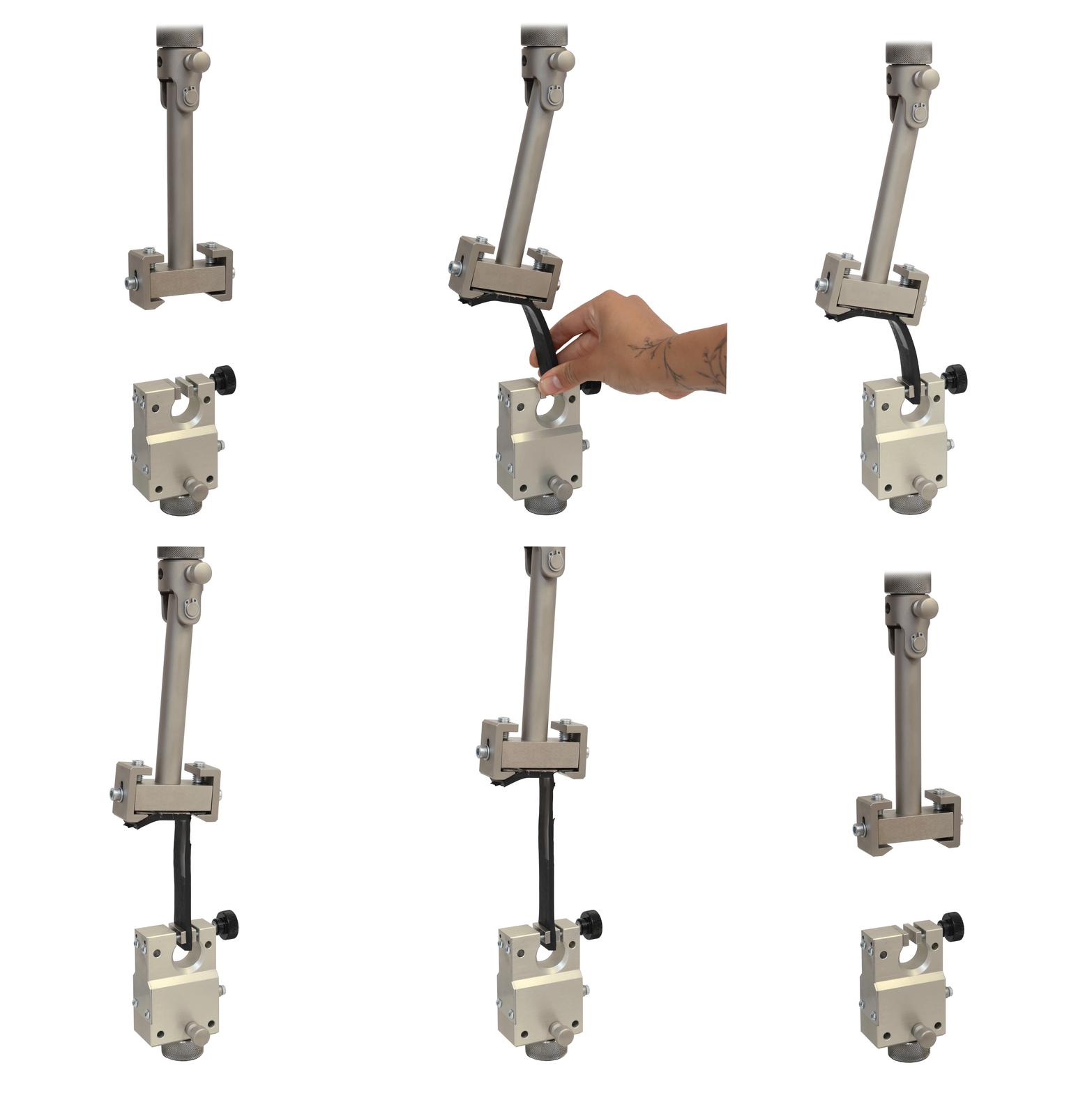
ASTM C297 Tensile Testing for Sandwich Panels
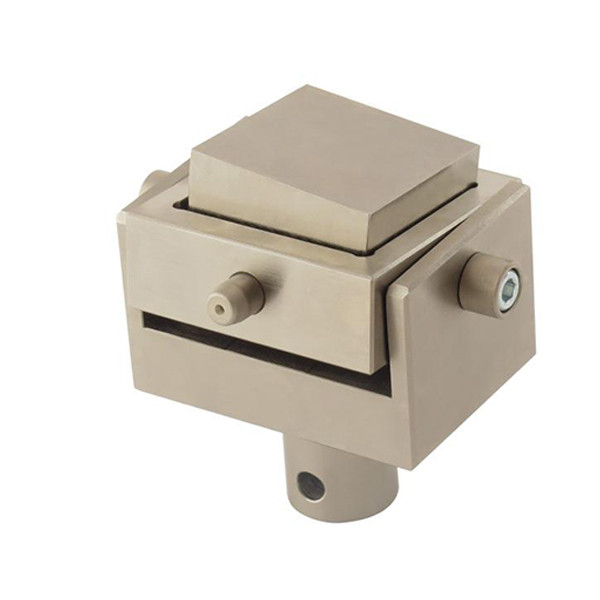
Sandwich panels are a composite material created by attaching two thin skins to a lightweight but thick core. They are preferred for their high bending stiffness and overall low density, but tend to be weaker materials in regard to tensile strength. Therefore, they can be tested for their flatwise tensile strength using ASTM C297.
Flatwise tensile strength of sandwich panels is a measure of the strength between the substrate and the core material, or the bond between core and facings of an assembled sandwich panel. Core material forms included in ASTM C297 can include those with continuous bonding surfaces (such as balsa wood and foams) as well as those with discontinuous bonding surfaces (such as honeycomb).
In general, poor material fabrication practices, lack of control of fiber alignment, and damage induced by improper specimen machining are known causes of high data scatter in composites. When it comes to preparing sandwich composite specimens in particular, watch out for incomplete or nonuniform core bonding to facings, misalignment of core and facing elements, the existence of joints, voids or other core and facing discontinuities, out-of-plane curvature, facing thickness variation, and surface roughness.
The test consists of subjecting a sandwich construction to a tensile load normal to the plane of the sandwich, such load being transmitted to the sandwich through thick loading blocks bonded to the sandwich facings or directly to the core. When watching for a rupture, the only acceptable failure modes for flatwise tensile strength are those which are in the internal sandwich construction. Failure of the loading block-to-sandwich bond is not an acceptable failure mode.
What are Sandwich Construction Materials in Sandwich Construction?
Sandwich construction materials are composite structures consisting of at least two distinct materials. These materials typically feature a core sandwiched between two face plates, with optional adhesive layers. Collectively, these components are known as core and facing elements.
Due to their high strength, stiffness, and low density, sandwich construction materials are highly versatile and are commonly utilized in industries such as aerospace, marine, and construction.
Mechanical Properties of Sandwich Construction Materials
Sandwich construction materials boast a high strength-to-weight ratio, high stiffness-to-weight ratio, and low density, making them resistant to corrosion. The combination of face plates and core material enhances flexural rigidity, while the core itself provides adequate shear strength and increased stiffness. These materials can be tailored from various facing and core materials to suit specific applications. Depending on the intended use, the chosen materials will exhibit different properties, allowing for customization to meet diverse performance requirements.
Historical Context and Development of ASTM C297
ASTM C297, the standard test method for flatwise tensile strength of sandwich constructions, has a rich history dating back to the 1970s. The development of this standard was driven by the growing demand for sandwich panel materials in various industries, including aerospace, marine, and construction. The need for a standardized test method to evaluate the flatwise tensile strength of these materials became increasingly important to ensure their performance and safety.
The first edition of ASTM C297 was published in 1976, and it has undergone several revisions since then. The standard has been updated to reflect advances in testing technology, changes in industry requirements, and the need for more precise and accurate test methods. Today, ASTM C297 is widely recognized and adopted as the standard test method for evaluating the flatwise tensile strength of sandwich constructions.
ASTM C297 Test Method
ASTM C297 is a standard test method for determining the core flatwise tension strength or the bond between core and facings of an assembled sandwich panel. The test method involves preparing test specimens that are subjected to tensile loads to evaluate the bond between core and facings. The test consists of subjecting a sandwich construction to a tensile load normal to the plane of the sandwich, transmitted through thick loading blocks bonded to the sandwich facings or directly to the core. The test method covers the determination of the flatwise tensile strength of sandwich core materials with continuous or discontinuous bonding surfaces.
Get a Complete Test System for Your Test Application
Completing your material test system is easy. Simply start by choosing a test machine, choose your accessories, and select your controller software. We are your one-stop shop for all your application testing needs.
Request a QuoteCore Material Evaluation
The test data is used to specify materials, design parts to withstand application forces, and serve as a quality control check of materials. Testing at elevated or reduced temperatures can be conducted to simulate the intended end-use environment, providing essential insights into the material's behavior under different conditions. Additionally, the test provides valuable information on core-to-face bonding stability, load transfer, and flatwise tensile strength of sandwich core materials, ensuring that the materials meet the necessary performance requirements for their intended applications.
Test Configurations and Versatility
The test setup involves bonding the skins to loading blocks and pulling them apart perpendicular to the sandwich panel. The assembly is subjected to a tensile load at a standard head displacement speed of 0.50 mm/min (0.020 in/min) until failure occurs. This method can accommodate various specimen sizes, including those with discontinuous cellular bonded surfaces and continuous bonding surfaces, providing flexibility in evaluating different sandwich panel configurations.
Comparison with Other Testing Standards
ASTM C297 is one of several testing standards used to evaluate the mechanical properties of sandwich panel materials. Other relevant standards include ASTM C273, ASTM C393, and ASTM D1781, which cover core shear, bending, and adhesive bond testing, respectively. While these standards are related to ASTM C297, they serve distinct purposes and are used to evaluate different aspects of sandwich panel performance.
ASTM C297 is unique in its focus on flatwise tensile strength, which is a critical property for sandwich panel materials. The standard provides a comprehensive framework for testing and evaluating the flatwise tensile strength of sandwich constructions, making it an essential tool for industries that rely on these materials.
Applications of ASTM C297
ASTM C297 is a widely used standard test method in the aerospace, marine, and construction industries for evaluating sandwich panels and sandwich panel construction. This test method is crucial for assessing the mechanical properties of composite sandwich panels. By determining the flatwise tensile strength, core-to-face bonding stability, and load transfer of sandwich core materials, ASTM C297 provides essential insights into the performance and safety of these materials. The results from this test method are integral for ensuring that sandwich core materials can withstand the various stresses and loads they encounter in their respective applications, ultimately contributing to improved design and performance in sandwich panel construction.
Advantages of Using ASTM C297
ASTM C297 provides a standardized test method for evaluating the mechanical properties of sandwich core materials, making it widely accepted and used across various industries. The insights gained from this test method are instrumental in enhancing the design and performance of sandwich panels and sandwich panel construction, ensuring that these materials meet the necessary performance requirements for their intended applications.
Limitations and Considerations
The test method has limitations, including the requirement for specialized equipment and expertise, and the test results may not be representative of the actual performance of the sandwich panel in service. Additionally, the test method should be used in conjunction with other test methods to provide a comprehensive understanding of the mechanical properties of sandwich core materials.
Future Trends in Tensile Testing
The field of tensile testing is constantly evolving, driven by advances in technology, changes in industry requirements, and the need for more precise and accurate test methods. Several trends are expected to shape the future of tensile testing, including:
-
Increased use of digital technologies, such as digital image correlation and machine learning algorithms, to enhance test accuracy and efficiency.
-
Growing demand for testing of advanced materials, such as composites and nanomaterials, which require specialized test methods and equipment.
-
Increased focus on sustainability and environmental considerations, leading to the development of more eco-friendly test methods and materials.
-
Greater emphasis on standardization and harmonization of test methods across industries and regions, to facilitate global trade and collaboration.
As the field of tensile testing continues to evolve, ASTM C297 is expected to remain a critical standard for evaluating the flatwise tensile strength of sandwich constructions. Its widespread adoption and recognition ensure that it will continue to play a vital role in ensuring the performance and safety of sandwich panel materials in various industries.
Conclusion
ASTM C297 serves as an essential guide to tensile testing for panels, offering a standardized test method to evaluate the mechanical properties of sandwich core materials. This widely-used method across various industries provides crucial insights into the flatwise tensile strength, core-to-face bonding stability, and load transfer of sandwich core materials. By comprehending the test method and its applications, manufacturers and engineers can enhance the design and performance of sandwich panels and sandwich panel construction.