ASTM D412 Tension Testing Rubber & Elastomers
The ASTM D412 tensile test for rubber and elastomers is a standard test that was designed to provide a way of evaluating the performance of rubber and elastomeric materials. The test provides a quantitative measure of the elongation or change in length that occurs in samples when they are subjected to an applied external force.
What Is ASTM D412?
ASTM D412 describes the test equipment and test methods needed to test the tensile (tension) properties of vulcanized thermoset rubbers and thermoplastic elastomers. This standard includes a pre-written test procedure, which simplifies the testing process by guiding users through the necessary steps and calculations.
ASTM D412 Test Method Summary
Determining tensile properties begins with sample preparation and testing of the specimens. Specimens are in the shape of dumbbells, rings or straight pieces of uniform cross-sectional area.
Key properties measurements include tensile stress, tensile stress at a given elongation, tensile strength, yield point, and ultimate elongation, with all measurements done on specimens that have not been prestressed. ASTM D412 details two distinct testing methods: Method A and test method B. Method A focuses on testing 'dumbbell' or 'dogbone' shaped specimens, while test method B is specific to 'cut ring' specimens, highlighting the differences in procedures and findings between the two methods. Tensile stress, yield point, and tensile strength are based on the original cross-sectional area of a uniform cross-section of the specimen. Measurement of tensile set is made after a previously unstressed specimen has been extended and allowed to retract by a prescribed procedure.
Get a Complete Test System for Your Test Application
Completing your material test system is easy. Simply start by choosing a test machine, choose your accessories, and select your controller software. We are your one-stop shop for all your application testing needs.
Request a QuoteTensile Testing Machine for Rubber Tensile Testing
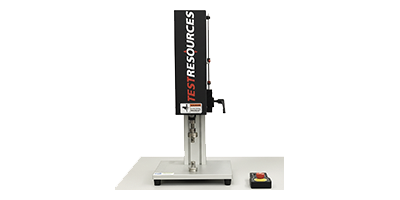
Long travel universal test machines serve multiple rubber and plastic testing applications and are also capable of performing all quasi static tension/compression tests, such as tensile, peel, adhesion, and flexural testing.
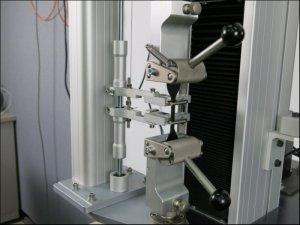
Our single column 240 family machines and dual column 310 family machines exceed travel and speed requirements and force measurement accuracy that is required by the ASTM D412 test standard. Maximum speed of both models is more than 1000 mm/min (40 in/min). Force measurement complies with ASTM E4. Note that the standard requires a grip separation of 750 mm (30 in) minimum, which is also satisfied in the case of the two machines. Talk to an application engineer to make sure you get the right machine.
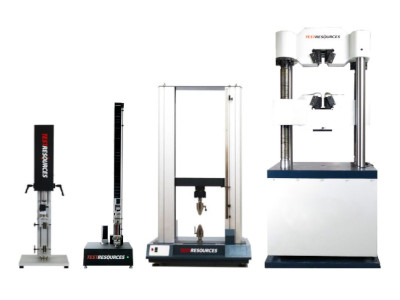
Tensile Test Machines
Get the Highest Value Tensile Testers
Choose form 38 different models and two different technologies with 100's of configurations which allows you to optimize your testing capabilities and pick exactly what you need.
Select Tensile Test Machines
Newton Test Controller
From simplified test setups to an intuitive controller software interface and pre-configured methods for industry standards - this innovative technology ensures that your test application are conducted seamlessly and with precision.
Accurate & Repeatable Test Results
- Simple test setup, operation, and reporting
- Flexible and scalable software packages - Get what you need now with room to grow!
- Prebuilt test methods for many of the most common application-specific testing standards
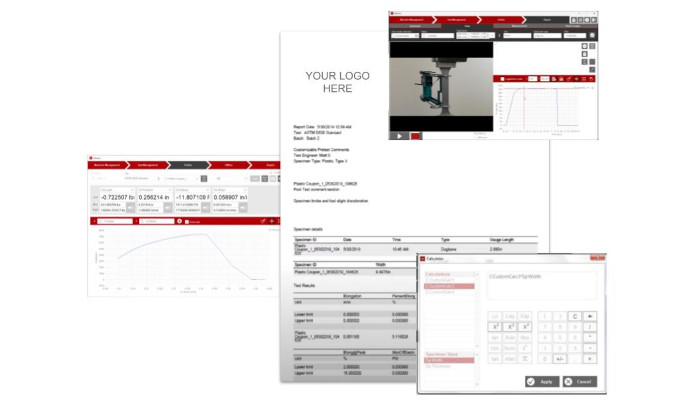
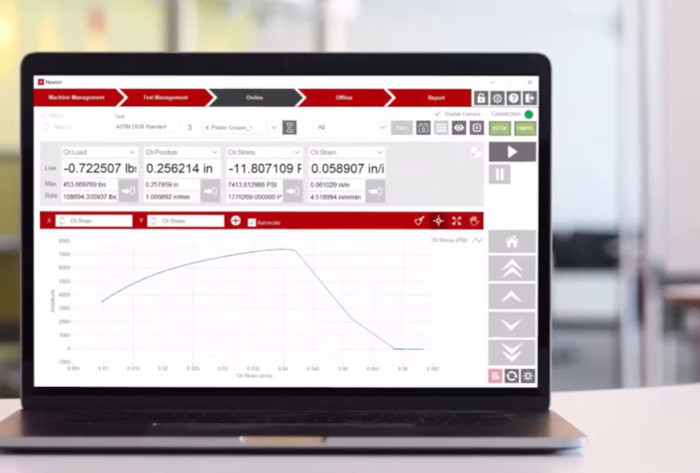
High-performance and easy-to-use controller with logical workflow design
With an intuitive interface, Newton makes it easy for users to navigate through various options and settings, ultimately enhancing the overall user experience. By streamlining complex procedures into user-friendly steps, this software serves both experienced test engineers and beginners alike to conduct tests with confidence and accuracy.
ASTM D412 Tensile Properties Test Data
Tensile tests of rubber play an important role in both quality control and commercial specification processes. These tests provide valuable data on the tensile properties of rubber and elastomeric materials, allowing manufacturers to ensure that their products meet stringent quality standards. By evaluating properties such as tensile strength, elongation at break, and tensile modulus, these tests help determine the suitability of materials for various applications.
Tensile Properties Measured
ASTM D412 measures various tensile properties of rubber and elastomeric materials, providing critical insights into their mechanical behavior. Key properties include:
-
Tensile Strength: This is the maximum tensile stress a material can withstand without failing. It is a crucial indicator of a material’s durability and performance under stress.
-
Elongation at Break: This measures the percentage of elongation a material can endure before breaking, reflecting its flexibility and ductility.
-
Modulus: This property indicates a material’s stiffness and resistance to deformation, essential for applications requiring specific rigidity.
-
Maximum Tensile Stress: The highest stress a material can withstand during a tensile test, providing a benchmark for its strength.
-
Tensile Stress: The stress applied to a material during a tensile test, helping to understand how it behaves under different loads.
These tensile properties are essential for evaluating the suitability of rubber and elastomeric materials for various applications, ensuring they meet the required performance standards.
Test Fixtures for ASTM D412?
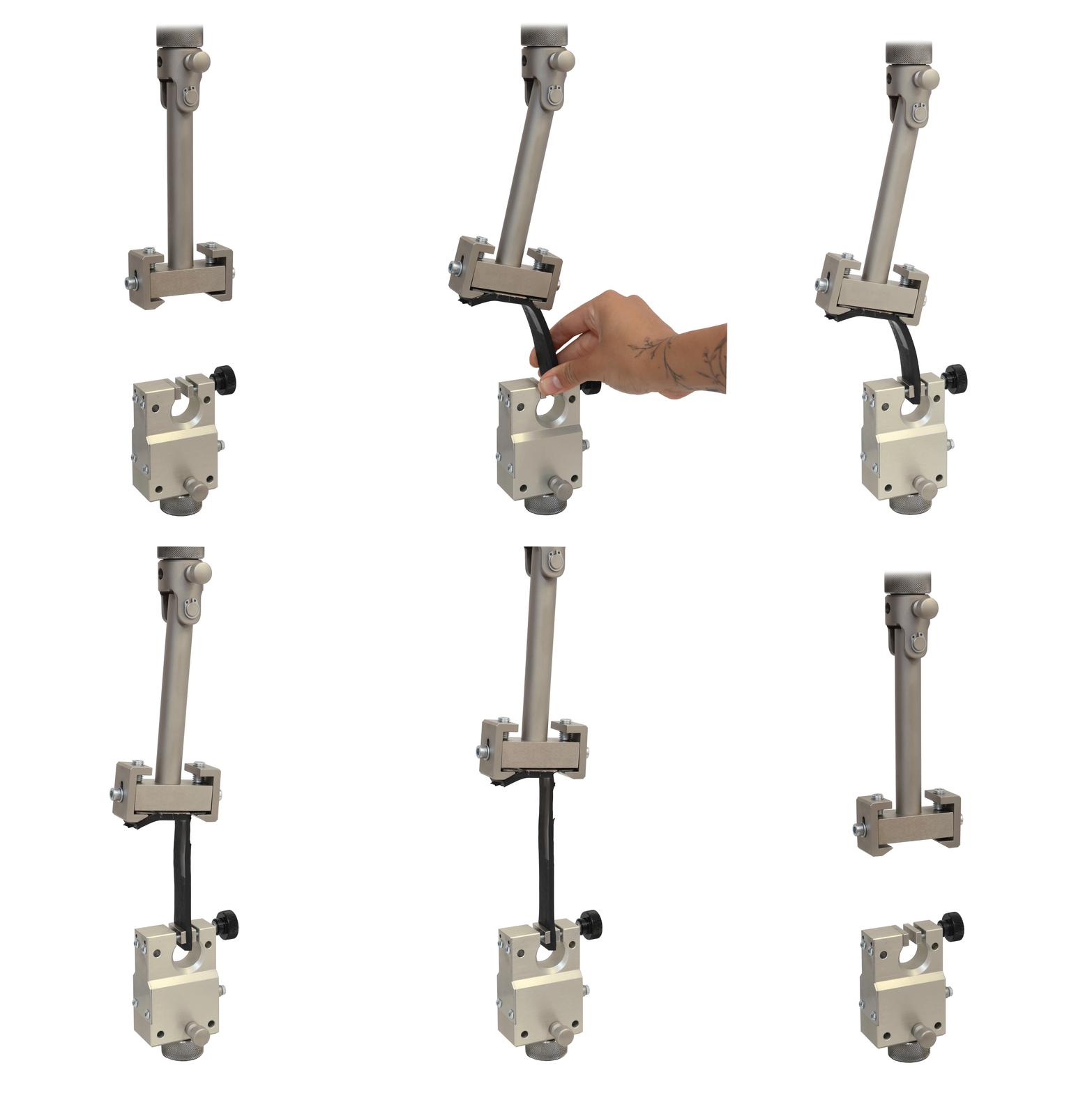
Our G7 spring loaded eccentric rollers are simple grips that are popular. They feature a wide jaw with spring loading that adjusts to sample shrinkage automatically.
Pneumatic vise grips are also popular because the sample shrinks as it is pulled, requiring the jaws to adjust automatically. They offer ease of sample loading, consistent clamping force, self alignment, and interchangeable jaws with smooth, serrated, and corrugated (wave) surfaces. For ASTM D412, consider our G229 and G149 pneumatic vise grips.
Important Considerations when Testing According to ASTM D412
Tensile properties are highly dependent on the material formulation and test conditions which including variables such as test speed, temperature, humidity, specimen geometry, and pretest conditioning. An important aspect of specimen geometry is the gauge length, as defined in the ASTM D412 testing specifications, which ensures accurate measurement of tensile properties across different types of specimens. Rubber materials should be compared only when tested under the exact same conditions such as outlined in the ASTM D412 standard. Temperature and test speed can have substantial effects on properties and must be controlled. Of course, effects vary depending on the type of material being tested. Also, periods of extension and recovery must be controlled to obtain comparable results.
Cutting die conditioning tip - The condition of the die can be determined by investigating the rupture point on any series of broken specimens. Remove the specimens from the grips of the testing machine, stack the joined-together specimens on top of each other, and determine if there is a tendency for tensile breaks to occur at the same position on each of the specimens. A consistent rupture location indicates that the die may be dull, nicked, or bent.
ASTM D412 Specimens
ASTM D412 provides two methods:
Method A is most common and uses a dumbbell or dogbone shaped specimen. There are six types of dogbone specimens in Method A. The most common specimen type of all is method A type C dogbone specimen.
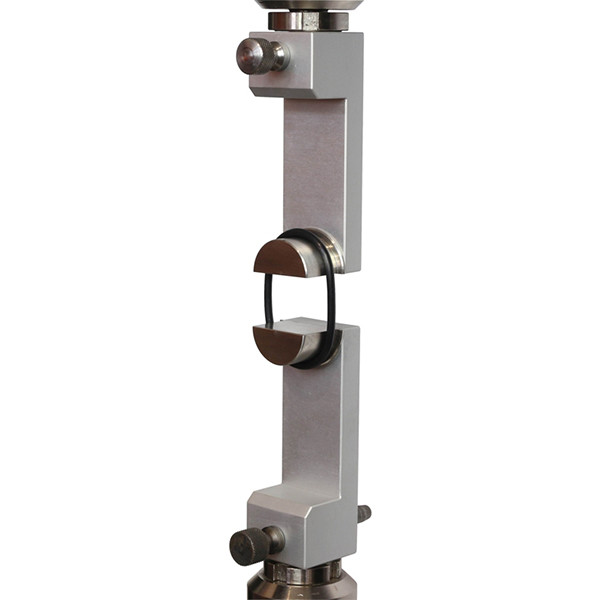
Method B employs a ring-shaped specimen. There are two cut ring specimens in Method B. Method B results will not be similar to method A.
Thermal Chamber for ASTM D412
Our G2700 test chamber is an integral part of our testing system, making it possible to test at elevated (up to 280C° (535F°)) and low (down to -80C° (-112F°)) temperatures. A calibrated temperature sensor is located near the grips for measuring the actual test temperature.
The G7 spring fast action grips suitable for manipulation at high or low temperatures permit loading dumbbells or straight specimens in the grips. This grip is preferred because it offers the shortest time possible to switch out samples, thus minimizing change in temperature of the chamber.
ASTM D412 plays a vital role across multiple industries by evaluating the tensile properties of rubber and elastomeric materials. Some key applications include:
-
Automotive: Testing the tensile properties of materials used in vehicle components such as tires, belts, and hoses ensures they can withstand the stresses of everyday use.
-
Aerospace: Evaluating materials used in aircraft and spacecraft components, such as seals, gaskets, and insulation, is crucial for safety and performance in extreme conditions.
-
Medical Devices: Ensuring the tensile properties of materials used in medical devices like tubing, catheters, and implantable devices is essential for patient safety and device reliability.
-
Consumer Products: Assessing the tensile properties of materials in consumer products such as footwear, sporting goods, and toys helps ensure durability and user satisfaction.
By understanding the tensile properties of materials, industries can optimize product design and performance, ensuring safety and reliability.
Talk to one of our Engineers to help you navigate the vast selection of testing accessories to find the perfect fit for your testing application.
Importance of Accurate Testing
Accurate testing is paramount for ensuring the reliability and performance of rubber and elastomeric materials. ASTM D412 provides a standardized test method for evaluating tensile properties, which is essential for:
-
Ensuring Product Quality and Safety: Accurate tensile testing helps verify that materials meet the required standards, ensuring the final products are safe and reliable.
-
Optimizing Material Selection and Design: Understanding tensile properties allows for better material selection and design optimization, leading to improved product performance.
-
Reducing Material Waste and Costs: Accurate testing helps identify the best materials for specific applications, reducing waste and associated costs.
-
Improving Product Performance and Lifespan: By selecting materials with the right tensile properties, products can achieve better performance and longer lifespans.
ASTM D412 ensures that materials are tested consistently and accurately, providing reliable data for making informed decisions.
Limitations and Precautions
While ASTM D412 is a widely accepted and reliable test method, there are some limitations and precautions to consider:
-
Environmental Factors: Test results can be affected by temperature, humidity, and testing speed. It’s crucial to control these variables to ensure accurate results.
-
Material Suitability: The test method may not be suitable for all types of rubber and elastomeric materials. It’s important to verify the compatibility of the test method with the material being tested.
-
Sample Preparation: Test samples must be carefully prepared and handled to avoid introducing errors that could affect the results.
-
Equipment Calibration: Testing machines and equipment must be properly calibrated and maintained to ensure accurate and reliable results.
By understanding these limitations and taking necessary precautions, users can ensure that their test results are accurate and meet the requirements of ASTM D412.
Applications of ASTM D412
ASTM D412 plays a vital role across multiple industries by evaluating the tensile properties of rubber and elastomeric materials. Some key applications include:
-
Automotive: Testing tensile properties of materials in vehicle components like tires, belts, and hoses ensures they meet safety and performance standards, resulting in safer and more reliable vehicles.
-
Aerospace: Evaluating materials for aircraft and spacecraft components, such as seals and gaskets, is crucial for safety in extreme conditions. ASTM D412 aids in selecting materials that endure high-altitude and space travel demands.
-
Medical Devices: Ensuring tensile properties of materials in devices like tubing and catheters is vital for patient safety. ASTM D412 provides data that helps prevent device failures, safeguarding health.
-
Consumer Products: Assessing tensile properties in products like footwear and toys ensures durability and user satisfaction. ASTM D412 guarantees products withstand regular use, boosting consumer confidence.
-
Construction: ASTM D412 tests materials like sealants and gaskets, ensuring structural integrity and leak prevention. This contributes to the longevity and safety of buildings under various conditions.
-
Electronics: Tensile testing of materials in components like flexible circuits is crucial. ASTM D412 ensures materials withstand stresses without compromising device functionality or safety.
ASTM D412 FAQs
What is the difference between ASTM D638 and ASTM D412? ASTM D638 is used for testing the tensile properties of plastics, whereas ASTM D412 is specifically designed for testing rubber and elastomeric materials. The specimen shapes and testing procedures differ between the two standards.
What is the ASTM standard for tensile testing of rubber? ASTM D412 is the standard for tensile testing of rubber, providing a comprehensive methodology for assessing the tensile properties of rubber and elastomeric materials.
What types of specimens are used in ASTM D412 testing? ASTM D412 testing uses dumbbell-shaped specimens for Method A and ring-shaped specimens for Method B. These different specimen types help evaluate various tensile properties effectively.
These FAQs address common questions related to ASTM D412, helping users understand the standard and its applications better.
Videos All Videos (1)

Specialized Test Machines
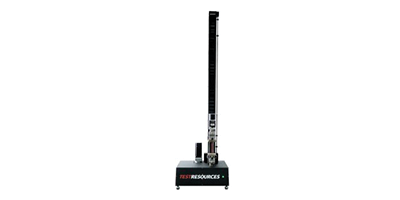
Static Universal
Static and Dynamic