ASTM D882 Tensile Testing of Thin Film & Sheet Plastics
ASTM D882 is a standard used for determining the tensile properties of plastic film or sheeting. The packaging industry uses it to ensure films for wrappers, bags, and liners have the strength and flexibility to withstand everyday use. Manufacturers of packaging, medical devices, and automotive components also use ASTM D882 to guarantee their thin plastic films meet performance requirements. Even the electronic industry utilizes this standard to test plastic films used in electronic components, packaging, and insulation ensuring they have the necessary strength and tear resistance for optimal performance.
What Is ASTM D882?
ASTM D882 applies specifically to plastic films and sheets with a thickness of less than 1 mm. This includes a wide range of materials, from packaging films to thin structural components.
ASTM D882 Sample Preparation
ASTM D882 specifies precise dimensions for test specimens, typically in the shape of a dumbbell or rectangle. To ensure test consistency, the standard also outlines conditioning requirements, such as temperature and humidity.
What Accuracy Is Needed for ASTM D882 Tests?
The standard outlines accuracy requirements that must be taken into account when selecting test equipment. All of our test equipment can be configured to meet the specified accuracy requirements. This ensures that the results obtained from our machines are reliable and meet the necessary precision standards for quality control and research purposes.
Load Measurement Accuracy
The testing machine should have a force measurement accuracy of ±1% of the indicated value throughout the force range used for the test. This ensures that the applied load is measured accurately.
Crosshead Speed Accuracy
The crosshead speed should be controlled with an accuracy of ±2% of the set speed. This ensures a consistent and controlled rate of deformation during the test.
Strain Measurement Accuracy
If an extensometer is used then it should have a strain measurement accuracy of ±1% of the measured value or better. This ensures accurate measurement of the specimen's elongation during the test.
Absolute Accuracy
In the strain range used to determine the tensile modulus, the extensometer should have an absolute accuracy of 1 µm and a relative accuracy of ±1%. This is important for accurately determining the material's stiffness.
Specimen Thickness Measurement
The required accuracy for thickness measurement varies depending on the thickness of the specimen being tested.
Crosshead Movement Accuracy
The testing machine shall indicate the crosshead movement with an accuracy of ±1% of the indicated value or better.
Load Range Selection
A load range should be selected such that specimen failure occurs within the upper two-thirds of the load range.
Get a Complete Test System for Your Test Application
Completing your material test system is easy. Simply start by choosing a test machine, choose your accessories, and select your controller software. We are your one-stop shop for all your application testing needs.
Request a QuoteASTM D882 Test Machines
Choosing the best test machine for ASTM D882 depends on various factors like your budget, testing volume, and the specific types of plastics you'll be testing. Any of our universal test machines (UTMs) or tensile test machines will work best for ASTM D882.
How to Select a Test Machine for ASTM D882?
Thin film plastics does not require very high forces and ultimately all of our Universal Test Machines can be used to perform a test per ASTM D882. The biggest factor to consider when choosing a test machine is the crosshead travel.
Here's a general guideline for estimating the right machine for your travel requirements:

100-250-12 Universal Test Machine
Ideal for materials with a 50 mm gage length and an elongation at break less than 500%.
12 inches of travel

240-250 Universal Test Machine
Ideal for materials with a 250 mm gage length and more than 250% elongation.
30 inches of travel
240-250-1400 Universal Test Machine
Ideal for materials with a 250 mm gage length and with elongation at break of more than 300%.
55 inches of travel
Other Considerations When Choosing Your Test Machine
What Is the Highest Load Required for Your ASTM D882 Tests?
Thin films are generally not strong and break at relatively low forces. Usually, no more than 500 N is required. It's always important to consult with our applications expert to confirm the appropriate capacity for your specific testing needs. We can help you determine the best machine for your application based on the properties of your materials and your testing requirements.
What Crosshead Travel Is Needed for ASTM D882 Tests?
ASTM D882 covers a wide range of plastic films and sheets, with elongation at break values typically between 20% and 500%. The actual value depends on the material's composition, structure, and processing conditions. The required test machine travel depends on the expected elongation to accommodate the full specimen elongation without reaching the machine's limits.
What Crosshead Speed Is Needed for ASTM D882 Tests?
ASTM D882 test speed range needs to cover the range of 1 to 500 mm/min.
Newton Test Controller
From simplified test setups to an intuitive controller software interface and pre-configured methods for industry standards - this innovative technology ensures that your test application are conducted seamlessly and with precision.
Accurate & Repeatable Test Results
- Simple test setup, operation, and reporting
- Flexible and scalable software packages - Get what you need now with room to grow!
- Prebuilt test methods for many of the most common application-specific testing standards
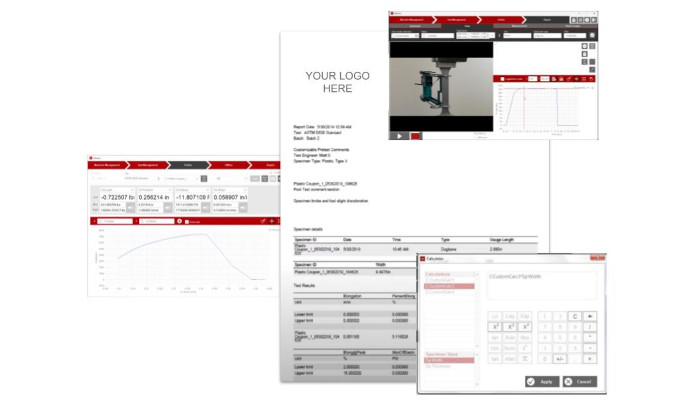
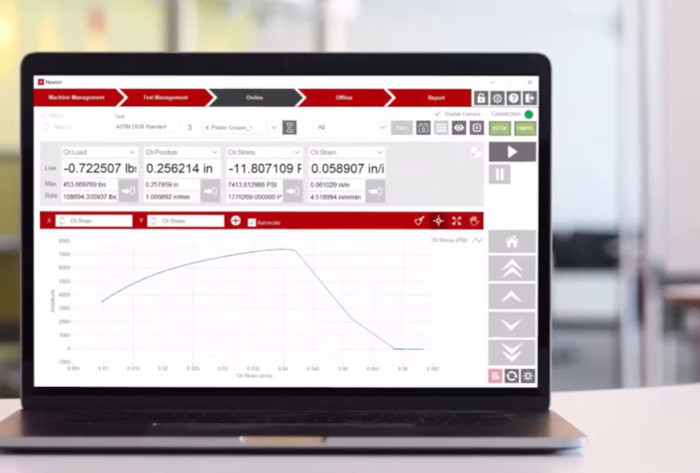
High-performance and easy-to-use controller with logical workflow design
With an intuitive interface, Newton makes it easy for users to navigate through various options and settings, ultimately enhancing the overall user experience. By streamlining complex procedures into user-friendly steps, this software serves both experienced test engineers and beginners alike to conduct tests with confidence and accuracy.
Test Results for ASTM D882
Get the right test reports and calculations with our Newton controller!
ASTM D882 outlines specific calculations that must be performed and reported to meet the standard's requirements for determining the tensile properties of plastics. The primary calculated results needed are:
- Tensile Strength - The maximum stress a material can withstand before it breaks. This defines a material's overall strength and load-bearing capacity.
- Yield Point - The point at which a material begins to deform permanently. This is important for understanding a material's elasticity and its ability to return to its original shape after stress is removed.
- Elongation at Break - The percentage increase in length of the specimen at the point of rupture.
- Young's Modulus - A measure of a material's stiffness or resistance to elastic deformation. This is important for understanding how a material will behave under load.
The specific results that are most important will depend on the intended application of the plastic film or sheet. For example, if the material will be used in a high-stress application, tensile strength, and yield point may be the most important factors. If the material needs to be flexible and tear-resistant, strain at break may be more critical.
Get all this and more with Newton!
Due to the massive selection of products that we offer, it can be difficult to narrow down what you need. Let us help you select and configure based on your testing application.
Accessories for ASTM D882
The choice of grips can significantly impact your test outcomes, as they directly affect the specimen's alignment and load distribution. Proper grip selection helps prevent slippage, premature failure, and inconsistent stress distribution, thereby enhancing the validity and reproducibility of the test results.
ASTM D882 Gripping Challenges
ASTM D882 presents unique gripping challenges due to the delicate nature and varying properties of these materials.
These are the top 5 gripping challenges:
- Specimen Slippage - Thin films and sheets tend to slip out of grips, particularly when exposed to high tensile forces. This slippage can cause inaccurate strain measurements and premature failure, compromising the validity of test results.
- Specimen Damage - Overly aggressive grips can easily damage or deform thin plastic specimens. Serrated grips, for example, might puncture or tear the film, leading to premature failure and inaccurate results.
- Non-Uniform Stress Distribution - Ensuring even stress distribution across the specimen's width is crucial for accurate results. Thin films can be difficult to align perfectly in the grips, leading to uneven loading and potential errors in the measured tensile properties.
- Grip Pressure - Finding the right grip pressure is a balancing act. Too much pressure can crush or deform the specimen, while too little pressure can lead to slippage. The optimal grip pressure depends on the material's thickness, stiffness, and surface properties.
- Material Properties - Different plastic films and sheets have varying characteristics, such as surface roughness, friction coefficient, and elasticity. These properties can affect the grip performance and require different gripping solutions.
ASTM D882 Grip Recommendations
Line Contact Grips
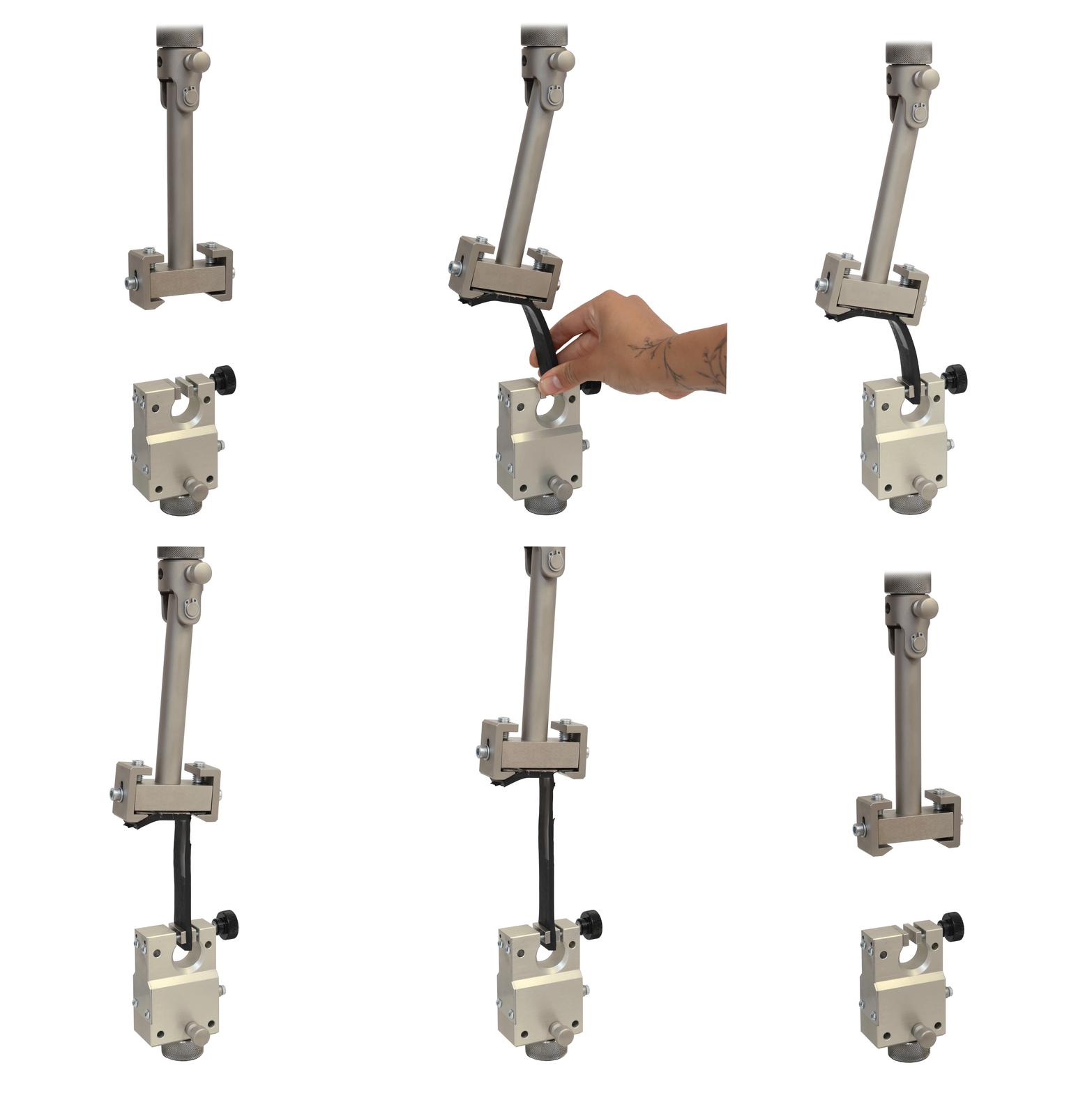
Line contact grips are specifically designed for tensile testing of thin plastic films and sheets according to ASTM D882. They are characterized by a gripping surface that make contact with the specimen along a line, rather than a point or a serrated edge.
Line contact grips offer several advantages:
- Minimize indentation on the specimen, preserving the original cross-sectional area for accurate stress calculations.
- Uniform distribution of stress across the width of the specimen, reducing the likelihood of premature failure at the grip edges.
- Versatile for various thicknesses, these grips can accommodate a wider range of film thicknesses compared to pneumatic or serrated grips. This makes them more adaptable for different types of plastic films.
- Reduced risk of slippage during testing, ensuring more reliable and consistent results.
We recommend our G7 Eccentric Roller Grips for materials with high elongation. The G7 roller grips are line contact grips that include several configurations for fragile thin film samples.
Side Action Grips
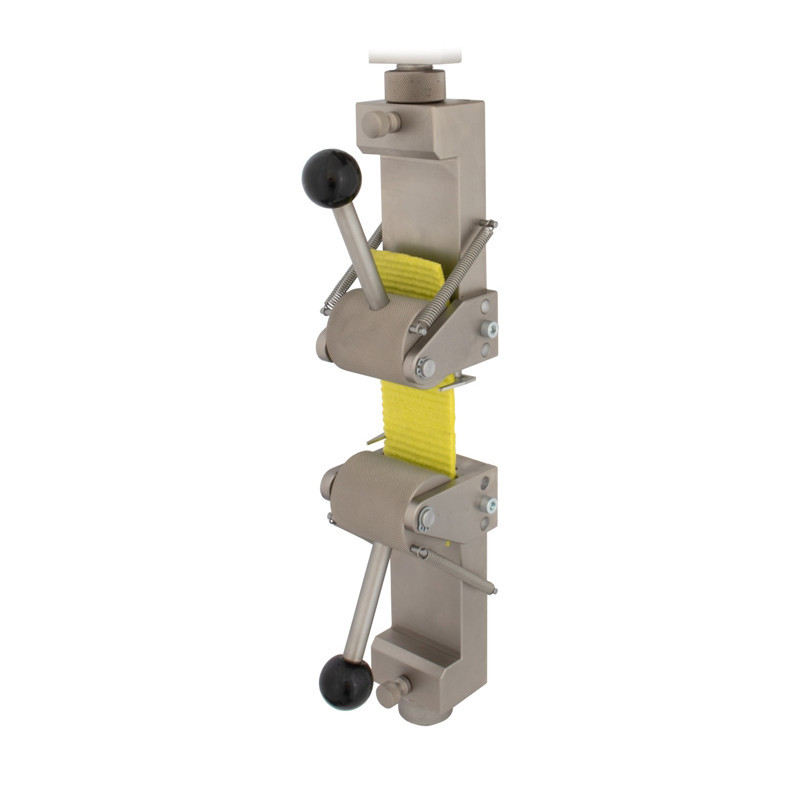
We often recommend pneumatic side-action grips for ASTM D882 due to their adjustable clamping pressure and ability to accommodate different specimen thicknesses. Carefully adjust the grip air pressure to ensure a secure hold without damaging the specimen. This may require some experimentation to find the ideal pressure for each material.
We recommend our G229 Pneumatic Grips but you could also use our G227 Mechanical Grips which are both able to be configured with line contact jaws on one side and rubber faced flat surface on the other side of the sample. Both grip solutions are able to be configured with flat jaw surfaces and are universal in nature. All of our grips and fixtures will fit any brand of test machine through the use of an adapter.
Strain Measurement for ASTM D882
ASTM D882 Strain Measurement Challenges
When conducting strain measurements on thin films and sheets, several challenges for strain measurement arise:
These are the top 5 strain measurement challenges:
- Plastic films and sheets can exhibit very high elongation at break, often exceeding several hundred percent. Traditional contact extensometers may not have a sufficient travel range to capture the full extent of deformation.
- Many plastics exhibit non-linear stress-strain behavior, especially at high strains. This means that the relationship between stress and strain is not constant, making it difficult to accurately measure strain using traditional extensometers that assume a linear relationship.
- Thin films and sheets can be prone to slippage within the grips, particularly at high loads. This can affect the accuracy of strain measurements, as the extensometer may not track the true deformation of the specimen.
- Some plastic films and sheets may undergo significant thinning during the test, especially in the necking region. This can make it difficult to obtain accurate strain measurements using contact extensometers, as the change in cross-sectional area affects the strain calculation.
- Some extensometer types, such as clip-on extensometers, can damage delicate plastic films and sheets, leading to premature failure or inaccurate results.
ASTM D882 Strain Measurement Solutions
Test Machine Displacement Encoder
The test machine displacement may be used as a direct measure of the change in length of the specimen under tensile load. This change in length, combined with the original length, allows for the calculation of engineering strain, a key parameter in determining the tensile properties of plastic materials according to ASTM D882.
Note: Crosshead displacement assumes uniform elongation of the specimen, which may not be accurate for materials exhibiting necking or other forms of localized deformation. The measured displacement includes deformation of the grips and other parts of the testing system, potentially introducing errors in strain calculation.
Non-Contact Extensometers
Video extensometers are preferred for measuring strain in ASTM D882 tests. Non-contact extensometers avoid the issues of slippage, specimen damage, and limitations in travel range associated with contact extensometers.
They can also accurately measure strain in materials with non-linear stress-strain behavior.
Non-Contact Extensometers offer several advantages, such as:
- These extensometers provide high-resolution measurements with excellent accuracy, making them suitable for capturing the subtle deformations in thin films.
- They can be used for various specimen geometries, including dumbbell, strip, and rectangular shapes.
- Video extensometers are relatively easy to set up and use, requiring minimal operator intervention.
Learn more about our extensometers
What Is the Difference Between ASTM D882 and ISO 527-3?
ASTM D882 is similar to ISO 527-3 but there are differences between the two standards.