ASTM E8 Tension Testing of Metallic Materials
ASTM E8 Tension Testing of Metallic Materials is a critical standard for testing metallic materials. ASTM E8 Tensile tests provide information on the strength and ductility of materials under uniaxial tensile stresses. From fragile wires to structural steel, from lead and copper to aluminum, steel and titanium alloys, metal alloy manufacturers face the challenge of testing their products and materials to meet advertised quality specifications and comply with required industry standards. We solve those challenges for you with a wide variety of uniaxial tensile testing solutions at the most cost-effective prices in the industry.
Metal manufacturing requires the confidence that your incoming raw materials and your outgoing product have the proper strength and ductility needed to manufacture products that meet your advertised competitive specifications. You need accurate, repeatable data you can rely on for Ultimate Tensile Strength (UTS), Percent Elongation, Offset Yield Strength and Modulus of Elasticity (Young's Modulus). A robust, reliable, low maintenance test system that consistently delivers the stress-strain tensile properties you need will go a long way in providing comfort and efficiency in your manufacturing processes. Your business counts on cost-effective solutions to simplify and standardized results. TestResources delivers affordable systems, software, control electronics, grips and fixtures.
What Is ASTM E8?
The ASTM E8 standard is a cornerstone in the field of tension testing for metallic materials. This widely accepted standard provides a detailed guide for determining the mechanical properties of metals, such as yield strength, tensile strength, elongation, and reduction of area. Covering a broad spectrum of metallic materials, including various metals and metal alloys, ASTM E8 outlines precise guidelines for specimen preparation, testing procedures, and data analysis. This standard is indispensable for ensuring the quality and reliability of metallic materials used across diverse industries like aerospace, automotive, construction, and manufacturing. By adhering to ASTM E8, manufacturers can confidently assess the mechanical properties of their materials, ensuring they meet stringent industry requirements.
ASTM E8 Tensile Testing Procedure
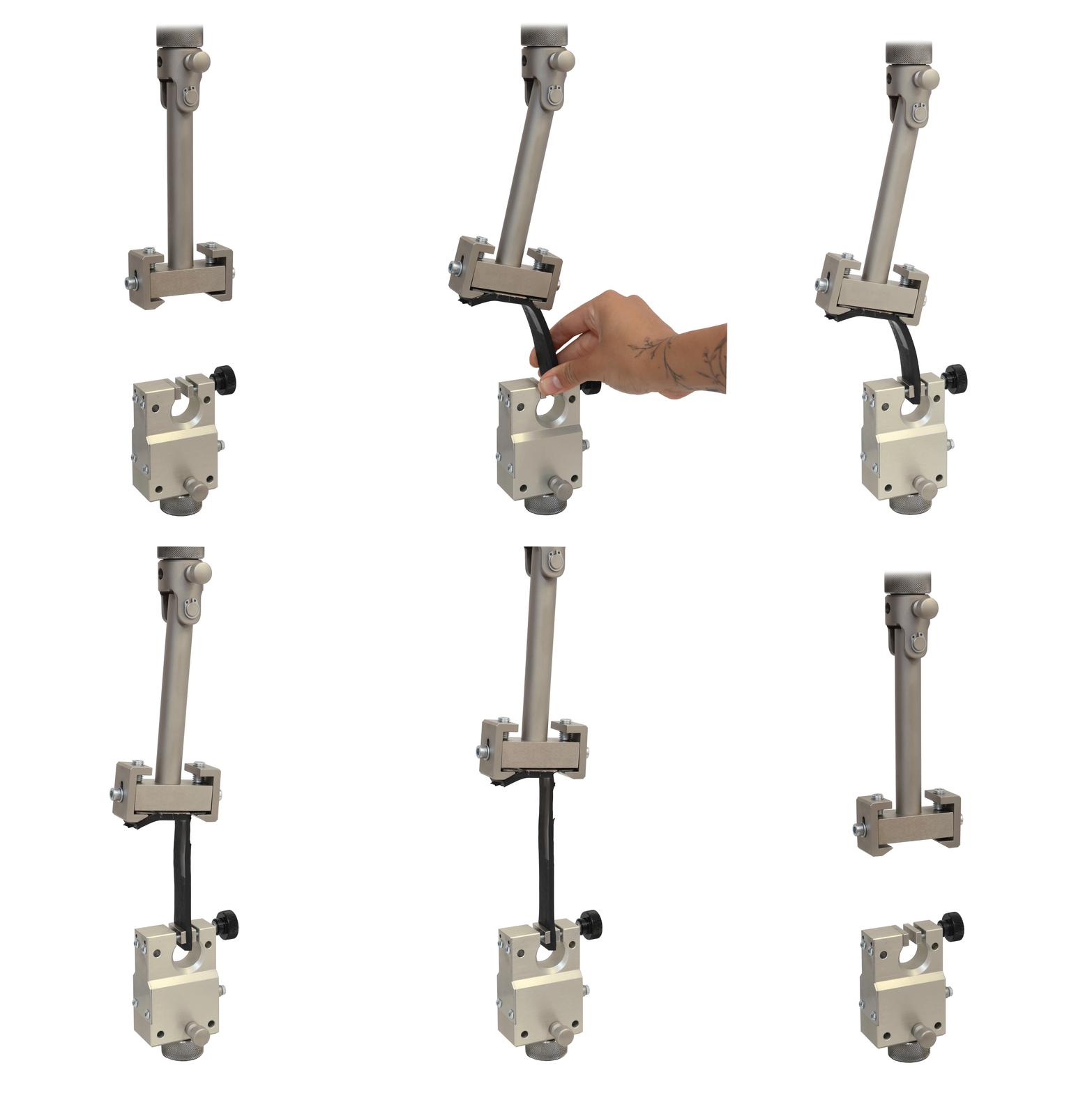
Step 1: Measure and document the specimen dimensions to determine the smallest point’s cross-sectional area. Ensure that the test specimen is prepared according to ASTM E8/E8M specifications. The original cross-sectional area is used for stress calculations.
Step 2: If not using an extensometer, place gage marks on the test samples at the appropriate gage length. The distance between the gage marks after the specimen is broken is used to determine the percent elongation at the breaking point. The gage lengths need to be the same.
Step 3: Zero the test machine.
Step 4: Install the specimen into the grips. If using an extensometer, install the extensometer on the sample and begin loading the specimen.
Step 5: Run the test until the sample either fails or fractures.
Step 6: Remove the broken sample. If using an extensometer the software will automatically calculate the elongation, yield and modulus data. If not using an extensometer, fit the fractured ends together and measure the distance between the gage marks to the nearest 0.05 mm (0.002 in).
Give our test engineers a call today for help configuring the best test machine and accessories according to ASTM E8.
Specimen Preparation
Specimen preparation is a pivotal step in tensile testing, as it directly influences the accuracy and reliability of the test results. According to the ASTM E8 standard, specimens must be meticulously prepared to represent the material being tested accurately. The standard provides comprehensive instructions on selecting the appropriate specimen shape and size, machining, and surface preparation. For instance, round specimens must be machined to a specific diameter and length, while flat specimens require precise width and thickness dimensions. Adhering to these guidelines ensures that the test results are both accurate and reliable, providing a true reflection of the material’s mechanical properties.
Recommended Test Equipment for ASTM E8
Give our test engineers a call today for help configuring the best test machine and accessories according to ASTM E8. Our equipment is designed to meet the rigorous requirements needed for performing tension tests as outlined in ASTM E8. We have the broadest range of standard and custom solutions to choose from in recommending the most cost effective systems on the market. 75% of the time we can improve on the current system you are considering.
Get a Complete Test System for Your Test Application
Completing your material test system is easy. Simply start by choosing a test machine, choose your accessories, and select your controller software. We are your one-stop shop for all your application testing needs.
Request a QuoteASTM E8 Test Machine
Selecting the right test machine for ASTM E8 tensile testing involves several key considerations to ensure precise and reliable results. Firstly, it is crucial to evaluate the material properties and dimensions of the test specimens you will be working with. The test machine must be capable of accommodating the specific size and shape of both round and flat specimens, ensuring accurate measurements of tensile strength, yield strength, and ultimate tensile strength. Additionally, consider the load capacity of the machine, as it needs to handle the maximum force expected during testing without compromising accuracy.
Consider the software capabilities of the test machine. Advanced software can automatically calculate key parameters such as percent elongation, specimen strain rate, and tensile stress, streamlining the data analysis process. The software should also provide options for generating detailed reports and graphs, which are essential for quality control and documentation purposes.
Newton Test Controller
From simplified test setups to an intuitive controller software interface and pre-configured methods for industry standards - this innovative technology ensures that your test application are conducted seamlessly and with precision.
Accurate & Repeatable Test Results
- Simple test setup, operation, and reporting
- Flexible and scalable software packages - Get what you need now with room to grow!
- Prebuilt test methods for many of the most common application-specific testing standards
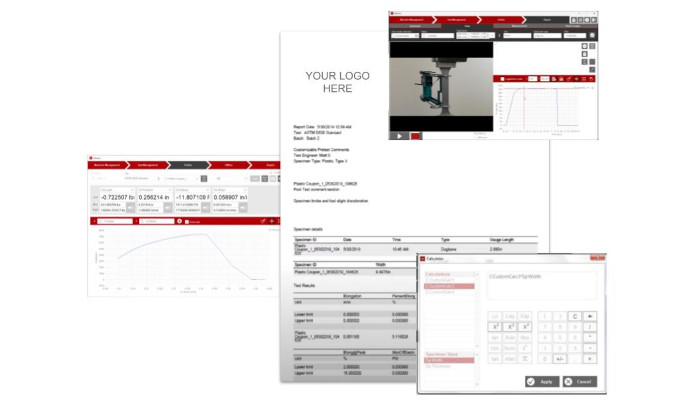
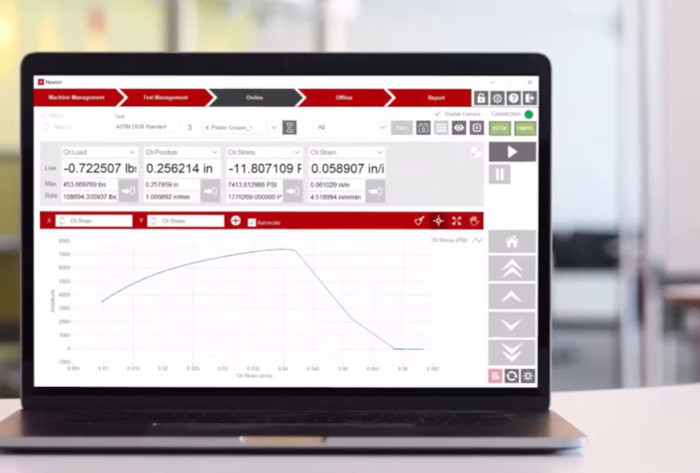
High-performance and easy-to-use controller with logical workflow design
With an intuitive interface, Newton makes it easy for users to navigate through various options and settings, ultimately enhancing the overall user experience. By streamlining complex procedures into user-friendly steps, this software serves both experienced test engineers and beginners alike to conduct tests with confidence and accuracy.
ASTM E8 Accessories
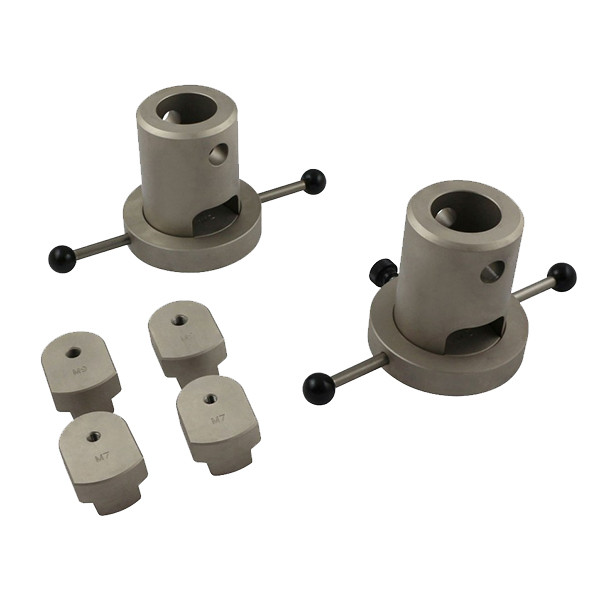
Accessories for testing according to ASTM E8 are essential components that enhance the precision and reliability of tensile testing of metallic materials. These accessories include a variety of grips, fixtures, and extensometers specifically designed to accommodate different specimen shapes and sizes, such as round and flat specimens. Grips are crucial for securely holding the test specimen in place, preventing slippage during testing, and ensuring accurate measurement of tensile strength, yield strength, and elongation.
An ASTM E8 Button Head Tensile Test Holder like this is common.
Tensile Tests and Results
Tensile tests are performed using a universal testing machine (UTM) or a tensile testing machine, which applies a controlled force to the specimen until it fails. These tests yield valuable data on the mechanical properties of the material, including yield strength, tensile strength, elongation, and reduction of area. The ASTM E8 standard offers clear guidelines for interpreting these results, including the calculation of stress-strain curves and the determination of yield and tensile strengths. This data is crucial for quality control, material selection, and design purposes, ensuring that the materials used in various applications meet the necessary performance standards.
Yield Point Elongation
Yield point elongation is a critical parameter measured during the tensile testing of metallic materials, as outlined by the ASTM E8 standard. This phenomenon occurs when a material undergoes a distinct increase in strain without a corresponding increase in stress, often observed in materials like low-carbon steel. The ASTM E8 standard provides detailed guidelines for determining yield point elongation, ensuring accurate assessment of this mechanical property. Understanding yield point elongation is essential for evaluating the ductility and formability of materials, which is crucial in applications where materials undergo significant deformation.
Other Relevant Standards
In addition to the ASTM E8 standard, there are several other relevant standards that play a crucial role in the tensile testing of metallic materials. These standards provide complementary guidelines and specifications that ensure comprehensive evaluation and quality assurance in various testing scenarios.
One such standard is ASTM A370, which is often compared with ASTM E8. While ASTM E8 focuses on the tension testing of metallic materials, ASTM A370 provides detailed procedures for testing the mechanical properties of steel products. It encompasses a range of tests, including tension, bending, and impact tests, making it a comprehensive standard for assessing steel's mechanical characteristics.
Another important standard is ISO 6892, which serves as the international equivalent to ASTM E8. This standard outlines methods for tensile testing of metallic materials at ambient temperature, ensuring consistency in testing procedures across different countries and industries. ISO 6892 is widely recognized and used globally, facilitating international trade and collaboration in the testing of metallic materials.
Best Practices and Applications
Adhering to best practices in tensile testing is essential for obtaining accurate and reliable results. This includes ensuring that the testing machine is properly calibrated and maintained, using high-quality specimens, and following the ASTM E8 standard guidelines. Tensile testing is extensively used in industries such as aerospace, automotive, construction, and manufacturing for quality control, material selection, and design purposes. The test results help evaluate the mechanical properties of metallic materials, including yield strength, tensile strength, elongation, and reduction of area. Additionally, tensile testing plays a vital role in research and development, helping to assess the impact of different processing conditions on material properties.
Common Industries |
Common Material Types |
Common Samples |
|
|
|
Conclusion
In conclusion, the ASTM E8 standard is a fundamental and widely used guideline for tension testing of metallic materials. It provides a thorough framework for determining the mechanical properties of metals, including yield strength, tensile strength, elongation, and reduction of area. Proper specimen preparation, adherence to testing procedures, and accurate data analysis are crucial for ensuring the reliability of test results. Tensile testing is a critical tool in various industries for quality control, material selection, and design purposes, and it is essential for evaluating the mechanical properties of metallic materials.
Why Choose TestResources
TestResources is your long-term partner to provide complete solutions for your testing needs. We are not just another machine supplier. Our application engineers make every effort to learn the details of your particular testing needs so they can propose the most budget-friendly solution. We strive to deliver a completely integrated system that meets ALL of your immediate and long-term technical and budgetary requirements.
TestResources has the test equipment that you need in order to perform ASTM E8 effectively. Our expert engineers will help you find the right equipment for you test and budget. We offer universal test machines, grips, fixtures and other accessories that are designed in strict accordance with ASTM E8. Contact us to find the solution that is right for you.