
Tensile Test Equipment for Foam Cellular Plastics
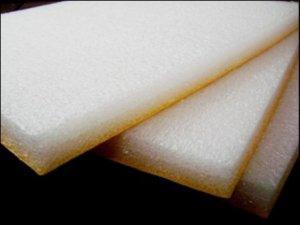
Tensile testing of foam materials encompasses both flexible and rigid foam, playing a critical role across industries from packaging and automotive to construction and aerospace. Determining properties like breaking force and elongation ensures material performance and structural integrity.
The ends of a foam specimen are attached to a grip fixture and then pulled along its axis, measuring breaking force and elongation. Due to the varied and unique properties of foam materials, some unique fixturing solutions can be necessary to eliminate slippage in the grips and reduce damage to the clamped end of the specimen, affecting test results. One solution that has been used with rigid cellular plastics is to use a cylindrical dumbbell shaped specimen that fits into top and bottom fixtures shaped to accept the specimen ends. This arrangement allows the specimen to be pulled in tension without applying any clamping force from the grips.
The biggest fixturing concern with flexible foam is the elimination of specimen failure near the grip jaws which result from sharp edges or non-uniform pressure across the jaw-specimen interface. Screw vice grips are suitable for most flexible foam applications, but when slippage is an issue, it is best to use grips that automatically tighten with increasing applied tensile load. ASTM and ISO have developed standard test methods for the tensile testing of different foam materials. These methods are designed to reduce the issues that can be involved with testing foam and to ensure that improper or poor fixturing and test conditions do not prevent the true tensile properties of the foam are being measured. One of the more popular test methods is ASTM D3574. To test soft, flexible foam materials, use Test E of ASTM D3574. It requires high elongation, constant rate of extension tensile test machines capable of testing at a grip separation rate of 20 in/min. Because of the comparatively low strength of foam materials, low force machines, grips, and load cells are commonly used. Rigid foams can vary greatly in tensile strength, depending on their base polymer. Foams used for packaging materials are likely to have lower tensile strengths while structural foams can be much stronger in tension. To meet this wide range of force needs, TestResources offers a variety of machines ranging from low to high force capacities. To determine the test equipment appropriate for tensile testing a specific type of foam material or a specific ASTM or ISO test method, contact a TestResources application engineer.
Applicable Testing Standards
Recommended Test Machines
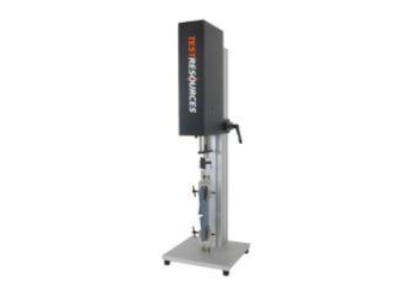
100 Series Universal Test Machines
Forces up to 10 kN (2,250 lbf)
Low force tabletop systems
Modular series of five frame options with adjustable test space
Affordable testing option for tension, compression, bend, peel and much more
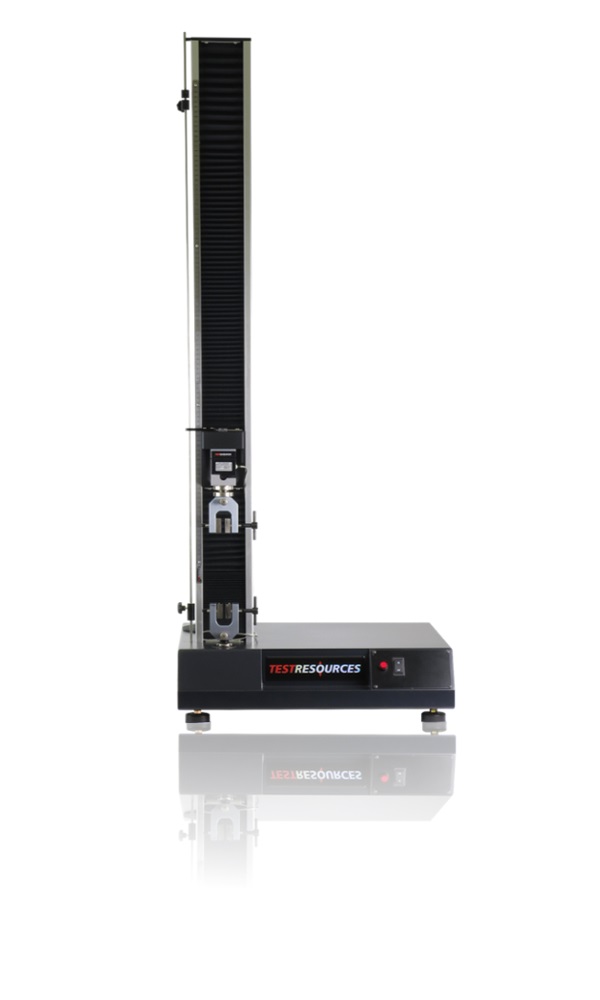
200 Series Electromechanical Universal Test Machines
Forces up to 5 kN (1,125 lbf)
Low force tabletop systems
Tests at speeds up to 2,500 mm/min (100 in/min)
Best for high travel or high elongation test requirements
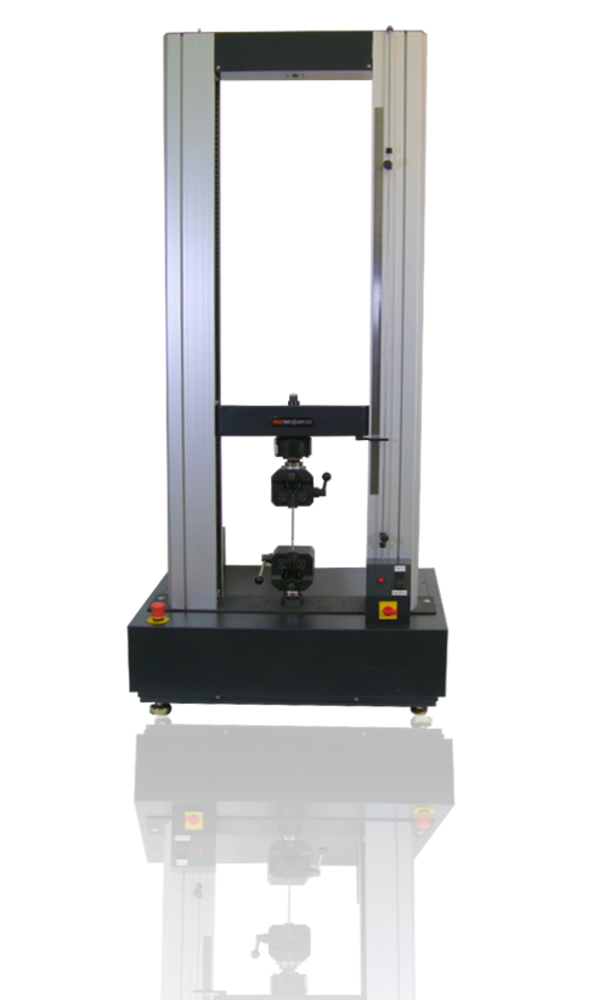
300 Series Electromechanical Universal Test Machines
Force range of 5 kN to 600 kN (1,125 lbf to 135,000 lbf)
Adjustable test space
The most popular choice for static tension and compression tests
These dual column testers are available in both tabletop and floor standing models
Recommended Testing Accessories

ISO 1926 Tensile Grip for Testing Rigid Cellular Plastics
Designed in accordance with ISO 1926

ASTM D1623 Method B Tensile Adhesion Fixture for Foam Tests
Designed in accordance to ASTM D1623 method B
Bonding plates are mounted to universal joints, ensuring proper alignment

G240K Mechanical Vice Grip
Rated to 1 kN (225 lbf)
Maximum specimen thicknesses from 10 mm to 50 mm (0.39 in. to 2.0 in.)
Simple design can be used for a multitude of tensile applications
Inexpensive and reliable
