Torsion Testing of Bone Screws | Equipment
Bone screws are a widely used in orthopaedic surgery for fracture fixation. Many times bone screws are used in combination with bone plates, but they can also be used to hold together larger bone fragments in comminuted fractures. Bone screws can be made of many different materials, most common are stainless steel and titanium, however progress is being made on the development of bioactive resorbable screws. There are a variety of tests used to characterize the torsional properties of bone screws. Beyond simply testing the breaking torque and torsional rigidity of screws, it's necessary to characterize the force and torque required to drive a bone screw and the self-tapping performance of self-tapping bone screws.
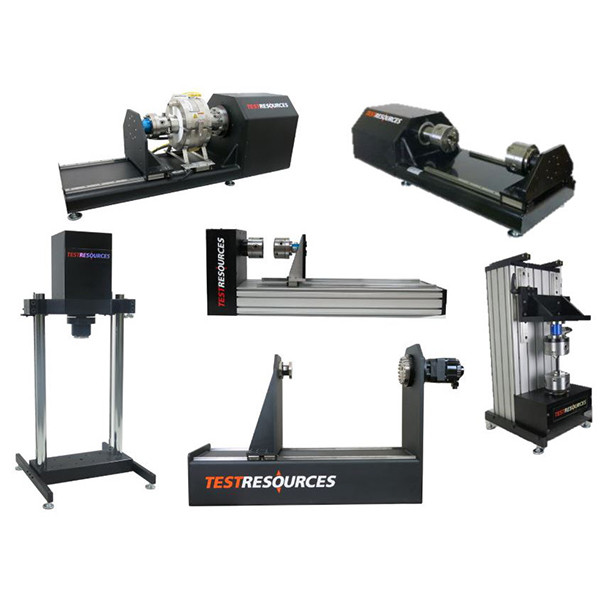
Tests that load bone screws to failure often utilize collet style grips to apply uniform loads without and prevent slipping without damaging the specimen. Driving and self-tapping tests generally use a medium, providing similar properties to natural bone tissue, such as the rigid polyurethane foam specified in ASTM F1839. ASTM and ISO have developed standardized test methods for testing the torsional properties of bone screws. These test methods are primarily intended to measure the uniformity of products and to compare the mechanical properties of different type bone screws and bone screw materials. ASTM F543 contains four test methods for torsional properties of metallic bone screws, driving torque of medical bone screws, axial pullout strength of medical bone screws, and self-tapping performance of medical bone screws. ISO 6475 contains a single test for the breaking torque and angle of rotation at failure for metal bone screws. TestResources offers a wide range of electromechanical, electrodynamic, and servo-hydraulic torsion and axial-torsion test machines for testing the torsional properties of bone screws. The torque capacity of these machines ranges from 62 to 17,750 in-lb. Axial-torsion test machines are necessary if the capacity is needed to conduct all tests contained in ASTM F543.
Specialized Test Machines
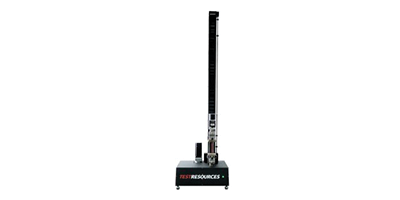
Static Universal
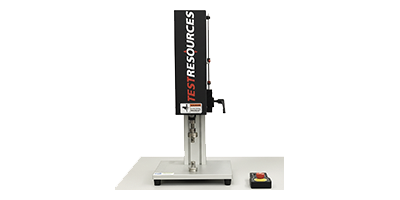
Static and Dynamic