
You’ve selected your grip but now you’re unsure which jaw you should get. The first thing to consider is what material you will be working with. Are you working with fiberglass or plastic? If so, make sure the jaw is designed to grip these materials without the test sample slipping or breaking in the jaws. Metals, composites, or biomedical samples? Make sure you have the right jaw.
Need help choosing? Contact us!
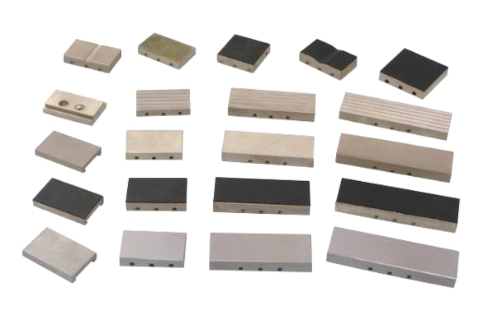
Important Consideration When Selecting a Jaw
A typical grip consists of a grip body, jaw faces (or jaws) and a test machine adapter. There are many variables to consider when selecting your jaws.
Jaw WidthUnless your test method specifies otherwise, the minimum jaw width needs to be as wide as the test sample. If the sample is not required to be a specific size, then wider samples (and jaws) can produce better results because you are minimizing edge effects.
Jaw HeightThe grip body itself should be chosen so that its jaw height is sized properly. The clamped test sample length ought to be at least 50% of the jaw height, or you may experience sample slippage in the gripping process.
Jaw InsertsJaw inserts are available on a wide range of grip families. They feature a carrier base jaw with interchangeable jaw inserts that makes changing out of all jaw faces to be done in seconds without the use of tools or pins. They are ideal if there are multiple jaw types that are used for your applications or when performing high volume tests where the jaws can wear down.
Jaw SurfacesJaws faces or surfaces are selected to avoid two opposing goals:
- To avoid sample slippage (jaw clamp forces that are too loose)
- To avoid jaw breaks or samples breaking in the jaw region of the sample (too tight)
Examples
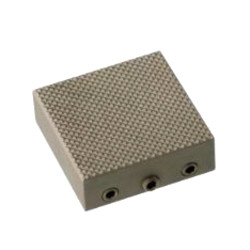
for materials that require a ‘bite’ such as paper, plastic, rubber, fabric, aluminum, copper, board, steel, wire and soft steels. The serrations are milled from hardened steel (58 HRC) in a pyramid cut (45 degrees) and the bases range in size from 0.8, 1.0,or 1.2 mm, or 20, 25 and 30 teeth per inch (TPI) respectively. They are nickel plated.
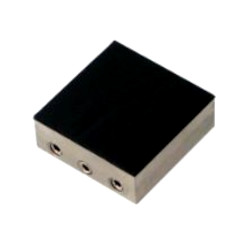
Smooth jaws are coated with 1 mm thick Nitrile butadiene rubber (NBR) which is temperature limited to -30C to 70C (-22F to 158F) operating range. They are useful for relatively fragile samples that are weakened by pinching at the edge of the grip face including monofilaments, wire, film, single fibers, aluminum, thread, and plastic tape.
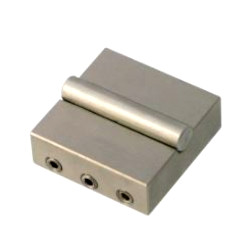
These special jaws clamp the sample on a straight line across the full width of the test sample. This jaw set is supplied with an accompanied smooth surface jaw and helps measure the clamped length in applications where sample displacement is desired, including paper, thin film, elasticated fabrics, and rubber coated fabrics.
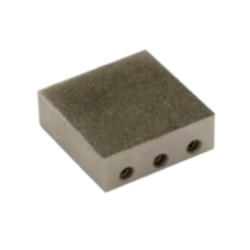
Nickel-plated jaw surface coated with synthetic diamonds D91 (170/200 mesh) aggressive surface for thin hard materials such as metal foils, paper, board, hardened steel and thin fibers - both flat or round.
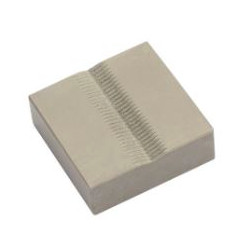
Nickel-plated V-jaws are used in a variety of grip families. They are used for all kinds of round samples and have tooth pitches that range from 0,8 mm to 1.2 mm. The finer the pitch the smaller the bite. The jaws are hardened (58HRC) steel and handle large rounds, thick metal wire, tubes, hard plastic.
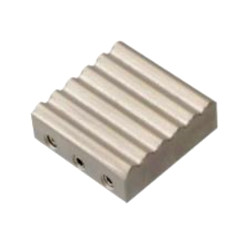
Wave cut jaws typically are 5 mm (0.2 in) deep, and are useful for slippery (low COF) samples. They are machined from hardened (58 HRC) steel and nickel plated. They are the best solution for testing geotextiles, coated fabrics, tough foils, and biological tissues.
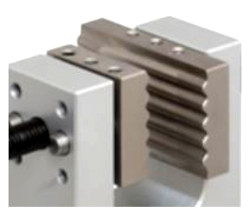
A wide range of models are ideal for textiles, leather and fabrics to meet ASTM D2208, D5034, D1683 and D4632. For these applications we have jaws made to the unique standards requirements. We also can make custom jaws such as those shown.
There are so many options and it can get confusing. Contact us and an application expert will help you select the best one.
