
Low Cycle Fatigue (LCF) of Metals at High Temperature
Applications where materials undergo significant thermal variations resulting in high mechanical stresses between rigid components require rigorous high-temperature, low-cycle fatigue (LCF) characterization.
Recent testing system innovations make it fully practical to execute high-force static tensile, compression, and dynamic fatigue profiles using all-electric actuators. These modern electromechanical systems are not only substantially less expensive to acquire initially, but they also offer dramatically lower operating and utility overhead over long-term project lifecycles compared to hydraulic machinery.
Low-cycle fatigue evaluation is performed under either active strain-controlled or load-controlled feedback configurations. For specialized axial strain control protocols, operators should follow guidelines mapped in ASTM E606 or ISO 12106. For high-reliability force-controlled testing paths, reference the parameters detailed within ASTM E466 or ISO 1099.
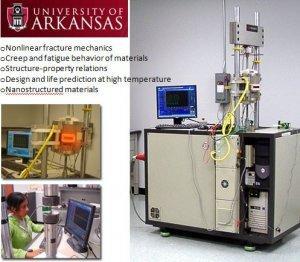
Applicable Testing Standards
Recommended Test Machines
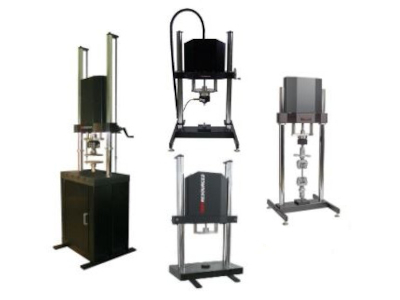
800 Series Fatigue Test Machines
Static and dynamic fatigue forces up to 50 kN (11,250 lbf) paired with frequency capabilities reaching 15 Hz. Employs a completely oil-free, all-electric drive layout engineered for clean clinical lab rooms, lowering structural purchase, operating, and maintenance cross-over costs compared to hydraulic platforms.
Recommended Testing Accessories
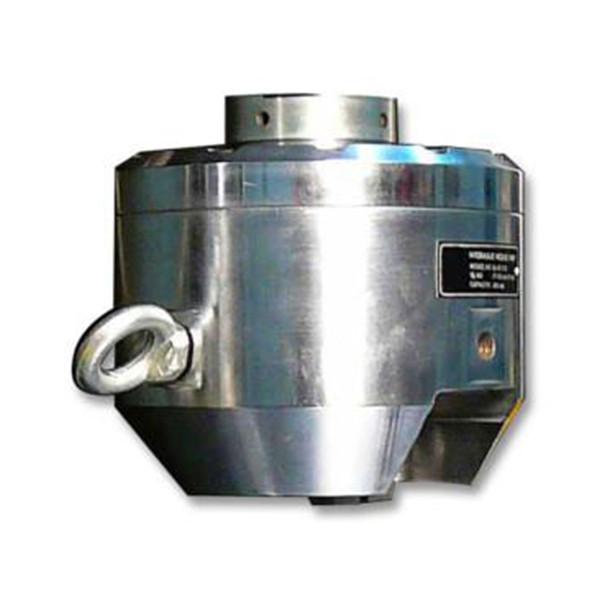
Hydraulic Wedge Grips
Self-centering hydraulic fatigue grips ensuring precise specimen centerline alignment with zero backlash across load reversals. Structural capacity configurations span from 30 kN (6,750 lbf) up to 300 kN (67,500 lbf) to eliminate raw clamping slippage.
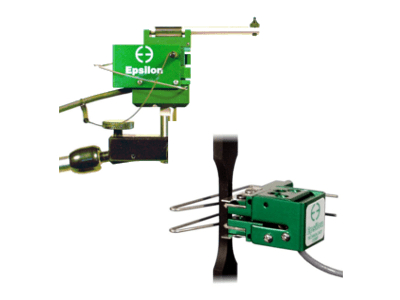
Extensometers
High-accuracy axial displacement sensors designed to directly measure true specimen deformation profiles (extension, compression, or bending). Vital for providing steady feedback signals during closed-loop LCF strain control tracking.
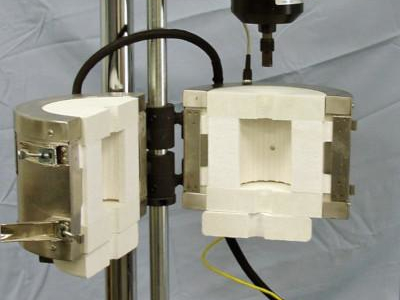
High Temperature Furnace
Engineered with premium heating arrays yielding operational maximums of 500°C or 1200°C (930°F or 2,200°F), with a low threshold limit of 300°C (570°F). Governed via an independent, intelligent PID controller setup matched with standard 120 V or 240 V line power connections.
