
Newton Characterization
Advanced Material Characterization & Stress-Strain Analysis
Newton Characterization is TestResources' Tier 2 materials testing software for engineers who need strain measurement, stress-strain analysis and calculated material properties beyond basic strength and break testing.
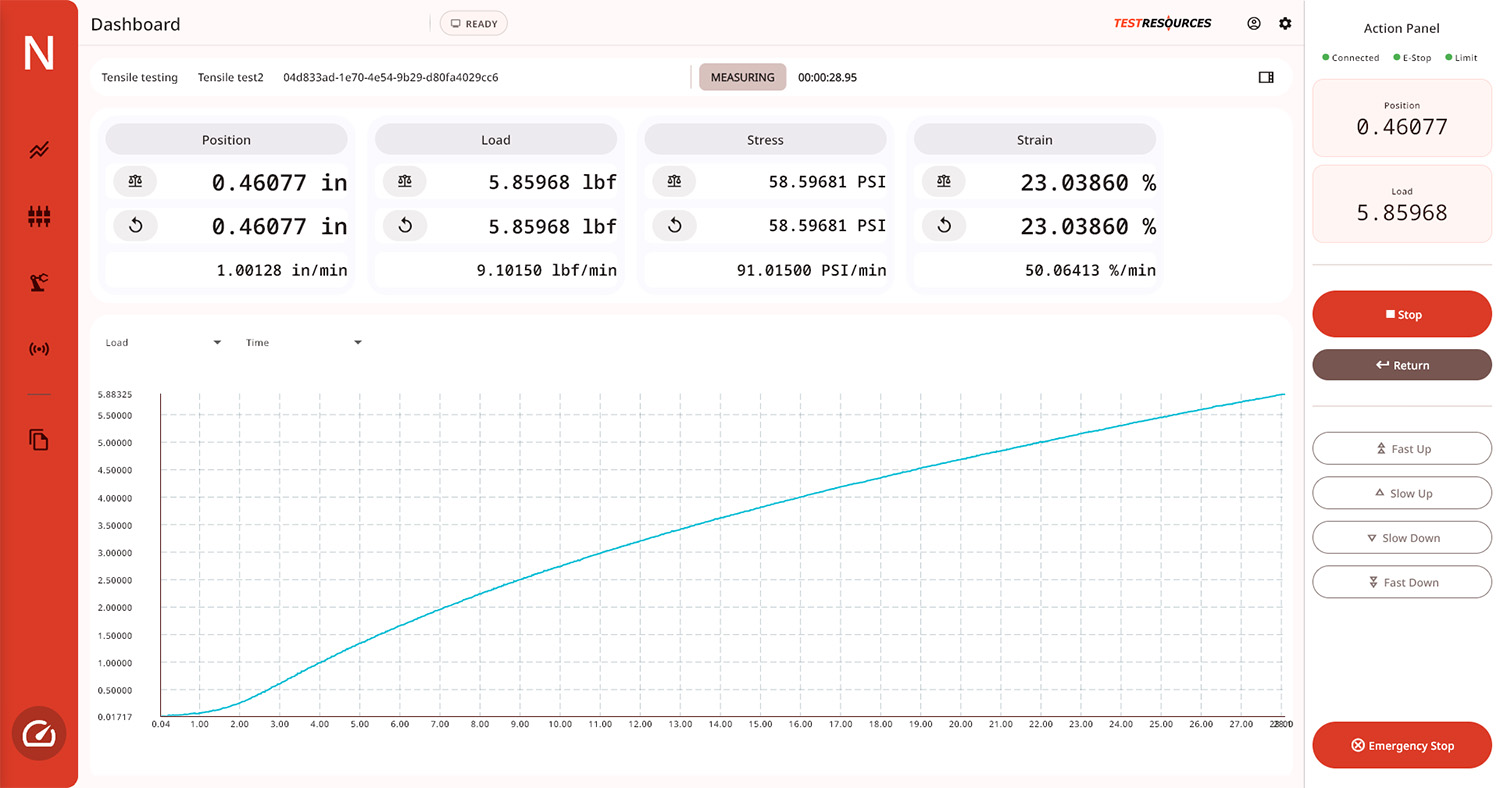
Measure load, position and strain while analyzing material behavior throughout the test - including properties such as yield, modulus and other application-specific characterization results.
32-Bit Control
Measurement Resolution
256×
Digital Measurement Resolution
5,000 Hz
Data Acquisition
100,000:1
Signal-to-Noise Ratio
Go Beyond Pass/Fail Testing
Newton Characterization captures how a material behaves throughout the test—not simply the point where it breaks.
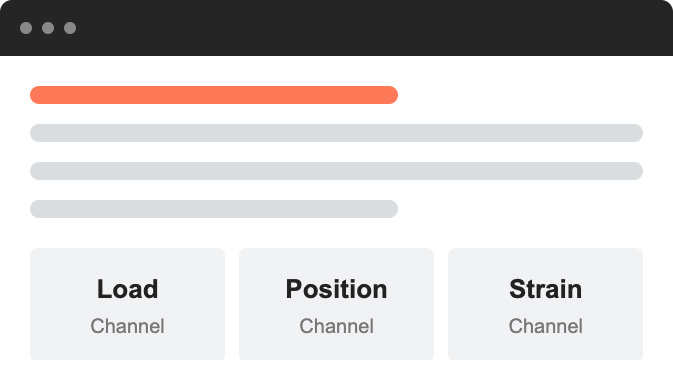
Configure the Test
Define the test method, specimen geometry, measurements and calculations required for the material and application.
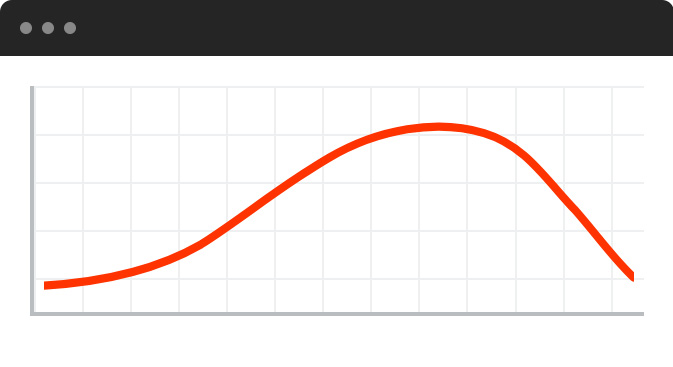
Capture Material Behavior
Record load, position and strain data throughout the test to build the complete stress-strain response.
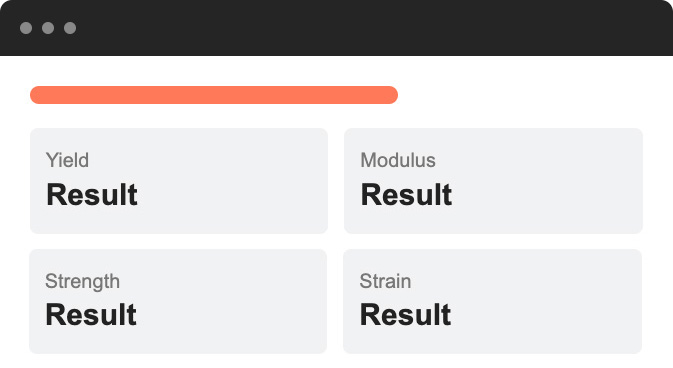
Analyze Material Properties
Review the stress-strain curve and calculate the material properties required by your test method.
See More Than Maximum Strength
Characterization testing helps engineers understand how a material behaves across its full stress-strain response.
Stress-Strain Analysis
Build and analyze the material response throughout the test rather than relying on a single break value.
Strain Measurement
Integrate compatible strain measurement devices to characterize deformation accurately.
Yield + Modulus
Calculate properties such as yield and modulus when required by the material and test method.
Multiple Measurement Channels
Add compatible auxiliary measurements when the characterization application requires additional data.
When Do You Need Newton Characterization?
Newton Strength answers "How strong is it?" Newton Characterization helps answer "How does the material behave?"
Newton Strength
Designed for routine strength, break and quality-control testing.
- Load + position measurements
- Constant-speed testing
- Peak and break results
- Routine production and QA testing
Newton Characterization
Adds the measurements and analysis needed to understand material behavior.
- Load + position + strain
- Full stress-strain analysis
- Yield and modulus calculations
- R&D and advanced QA applications
Newton Characterization Specifications
Key measurement, analysis and integration capabilities for the Newton Characterization Tier 2 package.
| Software Package | Characterization |
|---|---|
| Newton Tier | Tier 2 |
| Typical Applications | Advanced tensile, compression and flexural material characterization, research, development and advanced quality assurance |
| Primary Measurements | Load, position and strain |
| Measurement Resolution | 32-bit measurement architecture |
| Digital Measurement Levels | 4,294,967,296 |
| Digital Resolution Compared with 24-Bit | 256× higher digital resolution |
| Data Acquisition | Up to 5,000 data points per second |
| Signal-to-Noise Ratio | Up to 100,000:1 |
| Characterization Analysis | Stress-strain analysis with application-specific material-property calculations |
| Common Calculated Properties | Depending on the test method: ultimate strength, yield strength, modulus, strain or elongation and other application-specific results |
| Extensometry | Supports compatible contact and non-contact strain measurement configurations |
| Auxiliary Measurements | Additional compatible sensor channels can be configured when required by the application |
| Video Integration | Synchronized video and advanced optical measurement capabilities available through compatible Newton modules and configurations |
| Standards-Based Testing | ASTM, ISO and other test methods supported through configured Newton application modules |
| Best Fit | Materials research, product development, engineering laboratories and advanced quality-control applications |
| Dynamic / Cyclic Testing | Applications requiring fatigue or cyclic testing should also consider Newton Fatigue |
and selected Newton configuration.
Turn Test Data Into
Material Properties
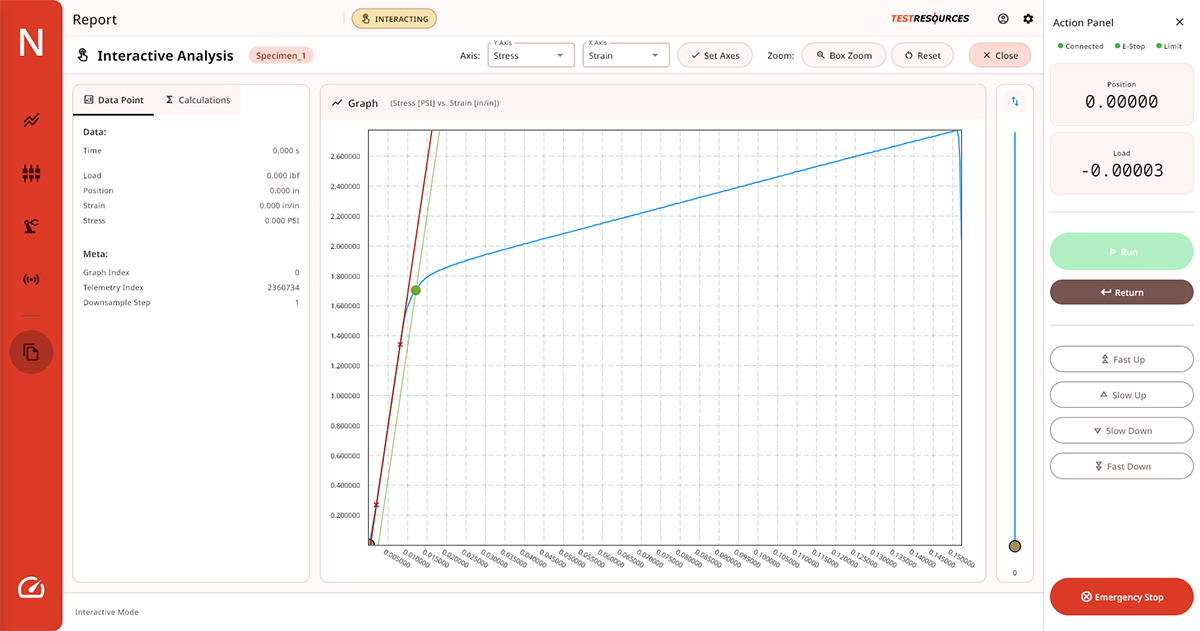
Strength testing identifies how much load a specimen can withstand. Characterization adds strain measurement and analysis so engineers can understand how the material responds throughout loading.
- Analyze the complete stress-strain response
- Identify application-specific yield behavior
- Determine modulus and material stiffness
- Evaluate strain or elongation behavior
Configure Characterization Around Your Material
The machine, load cell, strain measurement system, fixtures and software calculations should be selected around the test method and material - not treated as one universal package.
Strain Measurement
Configure compatible contact or non-contact extensometry around the strain range, gauge length and accuracy required by your test.
Additional Signal Channels
Add compatible auxiliary measurement channels when the application requires additional load, strain or other sensor data.
TestVideo & Optical Measurement
Add compatible Newton modules for synchronized video or optical strain measurement when visual correlation is valuable to the test.
Configure the Test Around
the Standard
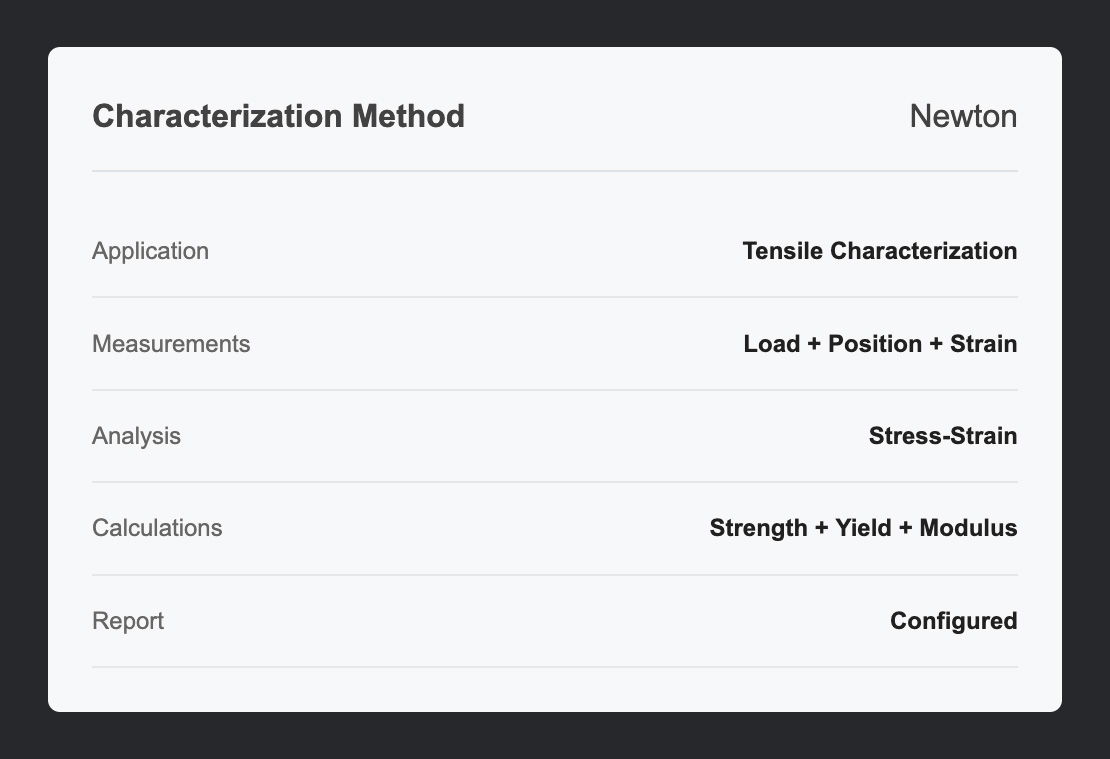
Newton application modules can be configured around ASTM, ISO and other test methods with the measurements, parameters, calculations and reporting workflow required for the application.
- Defined test parameters
- Required measurement channels
- Application-specific calculations
- Repeatable reporting workflow
Is Newton Characterization Right for Your Lab?
Characterization is designed for engineers who need to understand material properties and behavior - not simply determine whether a specimen passes, fails or breaks.
Newton Characterization is a strong fit for:
- Stress-strain testing
- Modulus measurement
- Advanced tensile characterization
- Yield-strength analysis
- Strain or elongation analysis
- Compression characterization
- Advanced quality assurance
- Material research & development
Explore Newton Fatigue
If your testing requires cyclic loading or dynamic fatigue capability, Newton Fatigue can be configured for those applications. Characterization capabilities can be considered alongside the fatigue requirements of the system.
Compare Newton PackagesFrequently Asked Questions
Common questions about characterization testing, strain measurement and the Newton software lineup.
Newton Characterization is TestResources' Tier 2 materials testing software for engineers who need strain measurement, stress-strain analysis and calculated material properties beyond basic strength and break testing.
Newton Strength is designed for routine strength and break testing. Newton Characterization adds strain measurement, stress-strain analysis and advanced material-property calculations such as yield and modulus.
Depending on the test method and system configuration, characterization testing can determine properties such as ultimate strength, yield strength, modulus, strain or elongation and other results derived from stress-strain data.
Yes. Newton Characterization can be configured with compatible extensometers and strain-measurement devices, including contact and non-contact options, depending on the application.
Newton application modules can be configured to support ASTM, ISO and other test methods by defining the appropriate test parameters, measurement channels, calculations and reporting workflow.
Newton Characterization is primarily focused on advanced static material characterization. Applications requiring dynamic or cyclic fatigue testing should also consider Newton Fatigue.
Configure Newton Around the
Material You Need to Understand
Configure Newton Around the Material You Need to Understand
Tell us what material you're testing, which properties you need to measure and which test method you need to follow. A TestResources application engineer can help configure the machine, sensors, extensometry, fixtures and Newton software around the application.
