
Blog
- Details
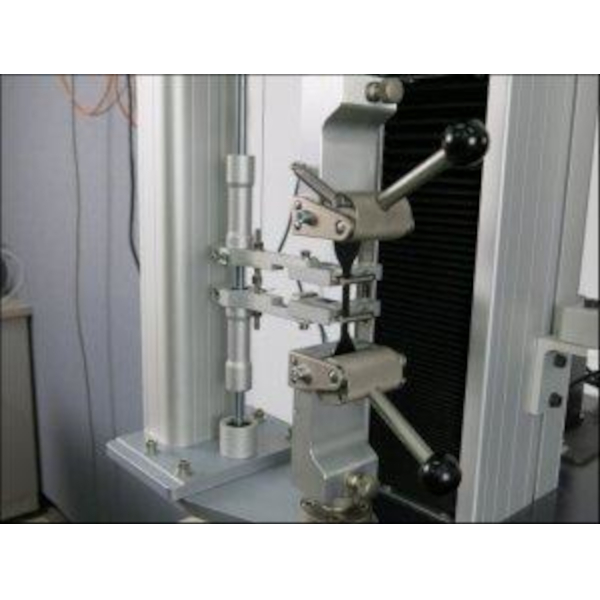
Test Method A of ASTM D412 is a very popular testing standard. It applies to tensile testing of vulcanized thermal set rubber materials and thermoplastic elastomers. Test Method A applies specifically to dumbbell shaped specimens and straight specimens. One confusing issue in planning this test is deciding which specimen geometry to use because the specimen table in the standard offers several geometries without clearly describing where to apply each.
Straight specimens can be used but are discouraged because with these types of materials they will almost always break prematurely along the edges of the grips. You should use straight specimens only if you are unable to make dogbone geometries through the use of a cutting die or other means.
Anisotropy or grain directionality may be an issue with these kinds of materials. Therefore your specimen size should be chosen such that you are able to orient and cut your specimens lengthwise in the grain direction.
There are two tables in Figure 2 of the standard that define the detailed dimensions of dogbone specimens for ASTM D412. One has the detailed dimensions of specimens in metric units. The other has detailed dimensions of specimens in English units. The metric and English units specimens are not identical so choose one or the other.
Determine the Force Capacity needed in the Test Machine:
Specimen thickness should be in the range of 1.3 mm (0.05 in) to 3.3 mm (0.13 in) if possible.
Dimension W in the tables is the width of the specimen in the gage length section where it will break. Use the thickness and width to determine the cross sectional area in the gage length region. Multiply that by the nominal tensile strength to calculate an estimate of the force at which the specimen will break. Alter your specimen width and thickness to an appropriate cross-sectional area such that your test machine has the force capacity necessary to break your test specimen. We recommend about 25% extra force capacity in case there is some variability in the strength of your specimen material.
Determine the Vertical Travel and Vertical Space needed in the Test Machine:
Sections 10.2 and 10.3 and Section 11.1.2 of the standard describe how to identify and mark the gage length of your test specimen. For Dies C and D the gage length shall be 25 mm (0.98 in). For all of the other dies the gage length shall be 50 mm (1.97 in).
The vertical test space analysis for ASTM D412 testing is complicated. First determine the nominal elongation of your specimen material. Multiple that by the initial gage length to determine the travel you need for your extensometer. Add about 20% more because the neck-down portion of your specimen will also be elongated by the test machine. Your test machine must have at least this much crosshead travel capacity plus a little more. Your extensometer will only measure the gage length elongation but must also travel upward enough to accommodate the elongation of the specimen material in the lower neck-down area. One other factor to take into consideration is that the vertical space from the base of your test machine to the crosshead must also have enough space to fit the grips load cell and any connector fixtures in addition to the travel described above.
At TestResources we know elastomer tensile testing. We can provide all of the test equipment and accessories you need for ASTM D412 based elastomer tensile testing including the test machine long-travel extensometer appropriate grips and specimen cutting dies.Visit the links below for some additional information and contact us with any questions one of our experienced application engineers will be happy to help you.
- Details
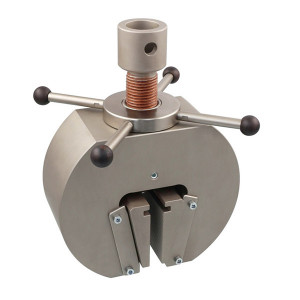
In order to correctly test your specimen, you have to ensure that the only stress that it is under is the stress of the load you are testing. If the specimen is held too loosely or perhaps worse too tightly then other forces will be acting on it that your testing procedure won’t be accounting for.
Different types of testing will require different fixturing and the material being tested will also play a big part in the kind of grip that you use. Ceramics metals plastics and foams all have different needs.
Given the wide variety of materials you need to test and the various types of test that you’ll be running on them offers a number of different that allow you to hold your specimens securely without subjecting them to undue stress that will skew your results. This might be especially important when your test subjects are small and/or fragile already.
And if you’re not sure exactly what you need? Well that’s what we’re here for. The experienced engineers that we employ can help you find what you need or even devise a custom solution for a custom problem. Give us a call or browse our online store today.
- Details
Peel tests are performed at a constant test speed to evaluate the peel strength of two bonded materials. TestResources’ peel testers are configured from a modular product line of low force tabletop universal test machines. Universal test machines are capable of performing many different test types. The universal test machine controller software load cells actuator force and speed specifications load frames and peel fixtures are all configured to meet both immediate and future needs. Due to the versatility of our universal test machines our peel testers are the most cost effective solution for any testing application.
Our most popular test machines are the 100 series electromechanical universal test machines. The 100 series is popular because of the numerous configurations available for different test applications including peel tests. This series includes your choice of five load frames four actuators two controllers three software levels and load cells to your test requirements.
What factors determine the cost of a peel tester?
- Controller/Software requirements
- Load frame type
- Actuator stroke/force/speed
After a few simple questions our experienced engineers can provide you with an estimated cost depending on your testing needs. Give us a call today!
- Details
Get the Highest Value Universal Test Machines
The term ‘universal’ generally means that it is versatile enough that it can be used in all applications. It means that our machines can be easily modified to fit the unique testing needs and requirements of your company.
The versatility of our Universal Testing Machines allows you to select the maximum force the testing space and the type of accessories that you need for your different tests. These testing machines can be modified to fit any application. As your testing needs change the Universal Testing Machine can change with you.
You might have previously thought that your testing needs are so unique that no one can provide a solution. However we have proven that the “impossible” is possible with our Universal Testing Machines.
How Does a Universal Testing Machine Work?
A Universal Testing Machine (UTM) is a test machine used to test the mechanical properties of a sample by applying a tensile compressive or transverse load. A universal test machine is designed to meet a wide range of tests by simply switching out different grips and fixtures.
Why Universal Testing Machines Are Called Universal?
Universal Test Machines are "universal" because they are extrememly versatile. With one machine you can perform a wide variety tests just by simply switching out the grips and fixtures.
What Tests Can Be Performed On a Universal Testing Machine?
- Bend Test
- Bond Test
- Compression Test
- Flexural Test
- Fracture Test Indentation (IFD)
- Peel test
- Shear Test
- Tear Test
- Tensile Test
- Stress Relaxation & Creep
What Are the Parts of a Universal Testing Machine?
Start with your frame of choice then complete your system by selecting your controller software and accessories. Choose from a wide range of controller software packages grips fixtures chambers video extensometers and more are all designed to perform thousands of ASTM ISO EN DIN and JEDEC industry standard test methods.
How Much Is a Universal Testing Machine?
In 2023, the price of a universal test machine ranges from $12,900 to $150,000. The 3 main factors that affect the cost are force, test space, and controller, with force capacity having the most impact. Low force (ranging from 1 kN to 25 kN max force) universal test machines range in price from $12,900 to $30,000. Medium force (ranging from 50 kN to 150 kN max force) universal test machines range in price from $32,000 to $57,000. High force (ranging from 300 kN to 2,000 kN max force) universal test machines range in price from $77,000 to $150,000.
More Articles …
- Used Instron® Test Machine with New Controller
- Control Upgrades for Instron® Test Machines
- Instron® 3300/5900 Compared to TestResources 300 Series
- Grips and Test Fixtures for Instron® Test Machines
- Comparing electrodynamic fatigue test machines to servohydraulic test machines
- Compare Dynamic Rated Fatigue Test Machines to Static Rated Universal Test Machines
- Selecting a Fatigue Test Machine
- Stroke and Poke Testing
- LabVIEWⓇ Programmable Controller for Universal Test Machines
- ISO 13485 - How Our Test Machines Fit in your Manufacturing Process Validation
- TestResources, Inc. announces major facility expansion in 2014
- Innovative Solutions for Testing Geotextiles
- How to Configure a Tensile Test Machine in Three Steps
- Selecting the Proper Angle for Your Peel Test
- Bending at High Temperatures
- Creative Solutions for Compression Testing
- How to Configure a Planar Biaxial Test System?
- Can I Trust Strain Data from Crosshead Position or must I Use an Extensometer?
- How to Build a 510k Test Plan to Speed your Time to Market
- Can I perform cyclic tests with my universal test machine?
Need Help?
Talk to one of our Application Engineers to help you find the right solution for your test applications

When you work with us, you get the best engineers to solve your testing and budgetary challenges. Whether you’re new to testing or a testing expert yourself, we can help you optimize your system AND YOUR BUDGET.
Contact us and see for yourself why TestResources is the best choice for your testing needs!