
Blog
- Details
800 Series all electric dynamic test systems are the most popular machine for test requirements ranging up to 50 kN (11 250 lb). They perform slow speed static high speed dynamic and fatigue tests to 15 hz. The 900 series servohydraulic test systems cover similar load ranges but deliver higher test speeds. The 900 series servohydraulic test systems perform tests at higher forces and higher speeds.
If we compare all electric dynamic test machines to servohydraulic test machines the differences are significant:
- No messy oil Low energy requirements
- Low noise for office use
- Smaller footprint
- Low purchase price
- Low maintenance effort and cost
- Lower frequency range
- Details
Dynamic fatigue test machines have some distinctive attributes when compared to static test machines:
- They operate at speeds 10 to 100 times faster than the majority of UTM's.
- They are engineered to be especially robust reliable and to produce heavy duty fatigue loads for a long time. UTMs are not engineered for high load high speed fatigue.
- They typically cost 2 to 4 times more than a comparable UTM.
- Our fatigue test machines also perform static tests.
TestResources offers two approaches to uniaxial fatigue test machines – electrodynamic and servohydraulic.
- Details
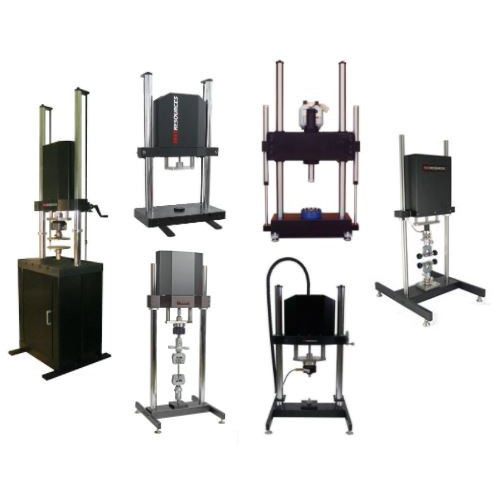
Start by selecting the series based on the maximum force you need. Confirm maximum test speed requirements (linear or cyclic performance) which establishes the size of the actuator and power pack. Each series has modular attributes and expandable and has a wide variety of compatible accessories. All of our controllers work with all of our load frames load cells and extensometers.
Our test systems are based on servohydraulic and electrodynamic drive technologies which cover the vast majority of servocontrolled fatigue dynamic and static testing applications including testing materials or devices that fail due to high-cycle fatigue strain controlled fatigue tests thermo-mechanical fatigue fracture mechanics crack propagation crack growth fracture mechanics high strain rate quasi-static creep stress-relaxation and other types of tests.
- Details
Stroke and poke testing is a term which describes versatile testing products that can easily be reconfigured for a variety of tests. Many people prefer stroke and poke testing so they can perform numerous tests without spending a ton of money on extra test equipment. Research and development labs often find this type of testing very valuable.
Stroke and Poke Testing for Research & Development
Stoke and poke testing is valuable for research and development labs because it can be difficult to predict specific future testing needs and many tests are short-term in nature – to answer a specific research question and quickly move on to the next question. It is often a waste of time and money to purchase an entirely new test machine for a tentative upcoming test.
We have had test engineers tell us “I know testing and can make my own frame and specimen fixture. Can you supply me with an actuator which I can configure for different tests on different days? And can you supply me with a controller which is easy to program for a variety of different tests?”
Our answer is yes! TestResources makes several different actuators and controllers that can be used for stroke and poke testing. Each actuator is configured with an integral displacement transducer and load cell so you can run your test in load control or displacement control or a combination of the two. You can also record and analyze load and displacement information. Take a look at our page for building your own test system for a deeper description of our configurable actuators and controllers.
On the other hand test frame fitting and specimen fixturing can be more difficult than it appears. Keep in mind requirements for test space load capacity balance and more. Our application engineers are happy to advise you on your test frame fixtures actuator and controller. Just call or send an email to discuss your stroke and poke testing requirements.
More Articles …
- LabVIEWⓇ Programmable Controller for Universal Test Machines
- ISO 13485 - How Our Test Machines Fit in your Manufacturing Process Validation
- TestResources, Inc. announces major facility expansion in 2014
- Innovative Solutions for Testing Geotextiles
- How to Configure a Tensile Test Machine in Three Steps
- Selecting the Proper Angle for Your Peel Test
- Bending at High Temperatures
- Creative Solutions for Compression Testing
- How to Configure a Planar Biaxial Test System?
- Can I Trust Strain Data from Crosshead Position or must I Use an Extensometer?
- How to Build a 510k Test Plan to Speed your Time to Market
- Can I perform cyclic tests with my universal test machine?
- Five Big Differences Between Electrodynamic and Servo Hydraulic Fatigue Test Machines.
- Making Dogbone Tensile Test Samples
- Comparing Tension Testing to Tensile Testing
- Tensile Stress Strain Curve
- The Difference between Tensile Test and Compression Test Equipment
- Tensile Test Properties
- Is a THREE Point Test the Same as a THIRD Point Test?
- Differences Between Three Point and Four Point Bending Tests
Need Help?
Talk to one of our Application Engineers to help you find the right solution for your test applications

When you work with us, you get the best engineers to solve your testing and budgetary challenges. Whether you’re new to testing or a testing expert yourself, we can help you optimize your system AND YOUR BUDGET.
Contact us and see for yourself why TestResources is the best choice for your testing needs!