
Low-Force Dynamic & Fatigue Test Machines
< 0.5 kN to 2.5 kN
Precision fatigue testing for delicate materials. Low-force systems deliver accurate, low-noise cyclic testing for biomaterials, polymers, and micro-electronics.
Request a Free Consultation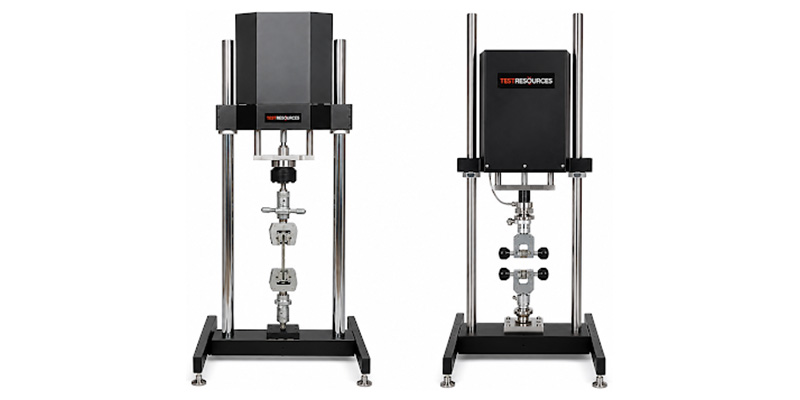
Why Choose Our Low-Force Systems?
Precision Dynamic Testing for Delicate Materials and Components
The Low-Force Fatigue Test Machine series is specifically engineered for high-accuracy cyclic testing of biomaterials, micro-electronics, polymers, and thin films. These systems provide the high-resolution control required for delicate specimens where even the slightest mechanical "noise" or backlash can compromise data integrity.
Designed as compact, all-in-one units, our low-force machines deliver premium dynamic performance with a footprint that fits easily into any research laboratory or clean-room environment.
Ultra-High Resolution
Capture minute changes in material behavior with position resolution optimized for low-displacement applications.
Backlash-Free Drive
Our gearbox-free, preloaded screw technology ensures a perfectly smooth transition through the zero-load point - critical for sensitive fatigue studies.
Clean & Quiet
100% electric operation means no hydraulic oil, no leaks, and no loud cooling fans. It is the ideal solution for sterile medical labs and university settings.
Plug-and-Play Power
Most models operate on standard 120V 4A power, requiring no specialized electrical installation.
Standard Dynamic & Fatigue Machines
Model 840D1
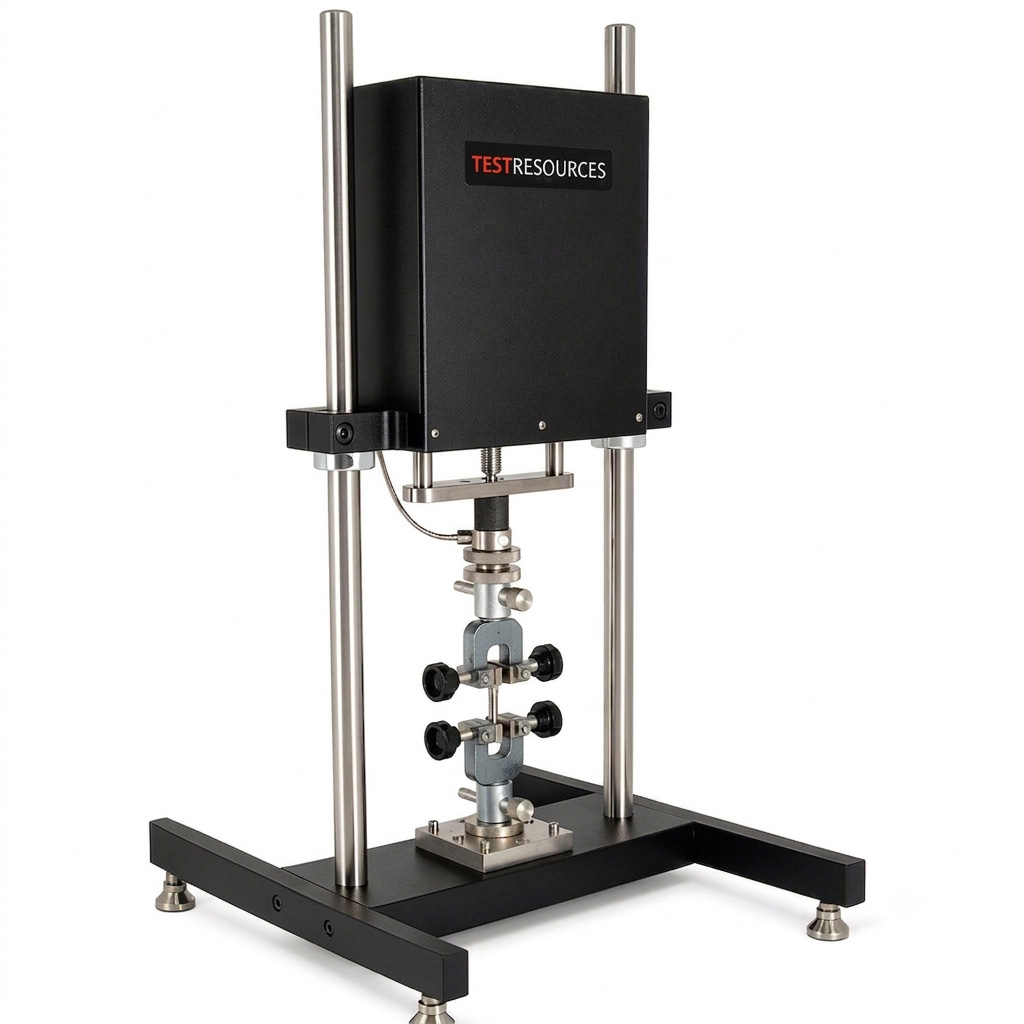
Ideal for:
- Extremely confined lab spaces
- Clean-room environments
- High precision at low forces
Model 510D1
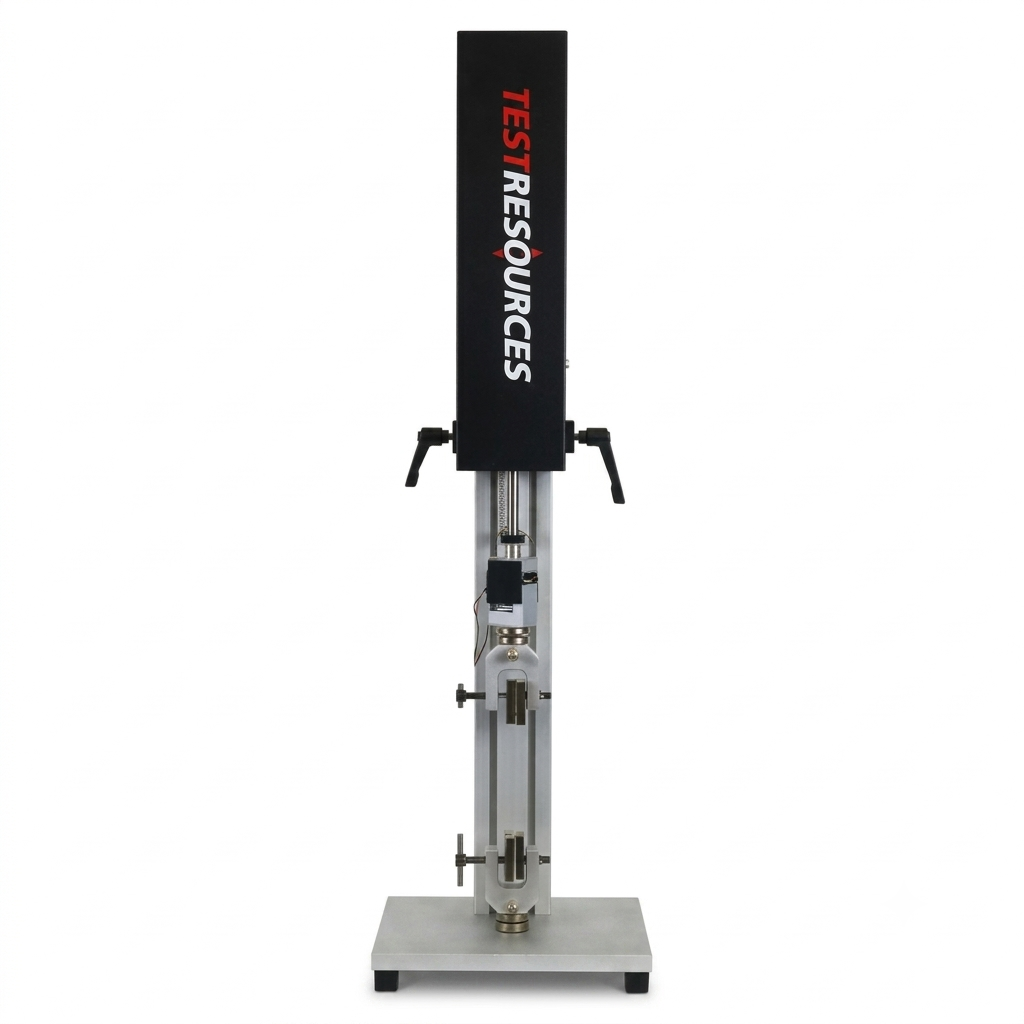
Ideal for:
- High-elongation materials
- Rubber and thin-film plastics
- Medical tubing
Model 510D2
Ideal for:
- "Best of both worlds" versatility
- Higher load capacity requirements
- Open test space (single column design)
Model 800D2
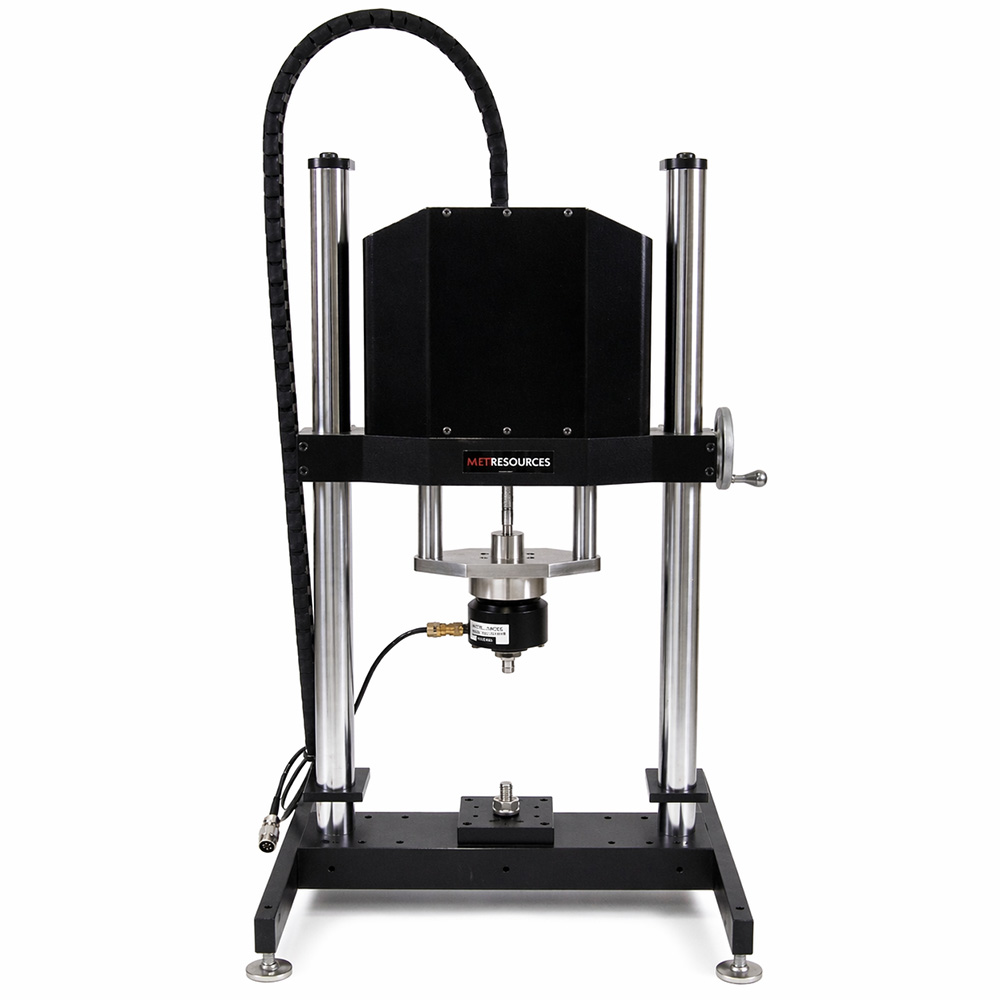
Ideal for:
- General-purpose low-force fatigue testing
- High frame rigidity
- Precise alignment
High Speed Dynamic & Fatigue Machines
Need higher cycle frequencies? Our High Speed variants double the maximum velocity (up to 510 in/min) to accelerate your testing throughput.
Model 840D1-HS
Ideal for:
- High-frequency testing of delicate materials
- Rapid cycling capabilities
- Designed for very low loads
Model 510D1-HS
Ideal for:
- Rapid dynamic mechanical analysis (DMA)
- High-speed cyclic testing
- Suitable for highly elastic and high-elongation materials
Model 510D2-HS
Ideal for:
- Dynamic impact testing
- Rapid fatigue testing
- Suitable for medium-strength components
Model 800D2-HS
Ideal for:
- High-frequency, continuous testing
- Suitable for rigid components
- Designed for low-load applications
Versatile Dynamic & Fatigue Testing Applications
These systems are optimized for precision and sensitivity, capturing the mechanical properties of specimens that would be crushed or "over-ranged" by larger industrial machines.
Common Industries
- Medical Devices, Micro-Electronics, Textiles, Tissue Engineering.
Common Materials
- Hydrogels, soft tissue, fine wire, solder joints, thin films, elastomers, and high-performance fibers.
Common Applications
- Medical: Cyclic durability of vascular stents, dental implants, and soft-tissue scaffolds.
- Electronics: Fatigue life of micro-solder balls and flexible circuit board (FPCB) bending.
- Adhesives: Micro-tensile fatigue and peel strength testing.
- Textiles: Tensile fatigue of high-modulus fibers and surgical sutures.
Common ASTM/ISO Standards
- ASTM F2118: Fatigue testing of bone cement.
- ASTM D3822: Tensile properties of single textile fibers.
- ISO 14801: Dynamic loading test for endosseous dental implants.
- ISO 25539: Cardiovascular implants and endovascular devices.
Low-Force Range Comparison
Our low-force machines are available in single-column, mini-dual, and standard dual-column frame styles to match your specific rigidity and space requirements.
| Model | Max Force (kN / lbf) |
Max Speed (mm/s) |
Stroke (in) | Frame Style | Power | Details |
|---|---|---|---|---|---|---|
| 840D1 | 556 N / 125 | 108 | 8.0 | Mini Dual | 120 V 4A | Learn more |
| 840D1-HS | 278 N / 63 | 216 | 8.0 | Mini Dual | 120 V 4A | Learn more |
| 510D1 | 556 N / 125 | 108 | 8.0 | Single | 120 V 4A | Learn more |
| 510D1-HS | 278 N / 63 | 216 | 8.0 | Single | 120 V 4A | Learn more |
| 510D2 | 2.2 kN / 500 | 108 | 6.0 | Single | 120 V 4A | Learn more |
| 510D2-HS | 1.1 kN / 250 | 216 | 6.0 | Single | 120 V 4A | Learn more |
| 800D2 | 2.2 kN / 500 | 108 | 6.0 | Dual | 120 V 4A | Learn more |
| 800D2-HS | 1.1 kN / 250 | 216 | 6.0 | Dual | 120 V 4A | Learn more |
| Custom | Made per requirements. | Contact us | ||||
Need Higher Forces?
Step up to our medium or high-force fatigue testers. Built for heavier demands, they deliver the same precision and reliability at much greater load capacities.
Mid-Range Fatigue Test Machines
2.5 kN to 15.5 kN
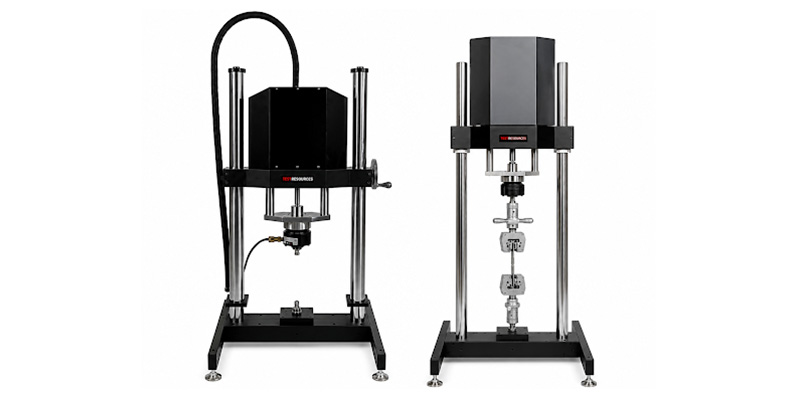
Ideal for: Plastics, Polymers, and Small Mechanical Components
The mid-range series is the workhorse of the modern R&D lab, balancing higher force capacities with the high speeds required for accelerated life testing.
Key Advantage: Designed for 90% of standard testing applications, these machines offer a superior total cost of ownership through low maintenance and high durability.
High-Force Fatigue Test Machines
15.9 kN to 51 kN
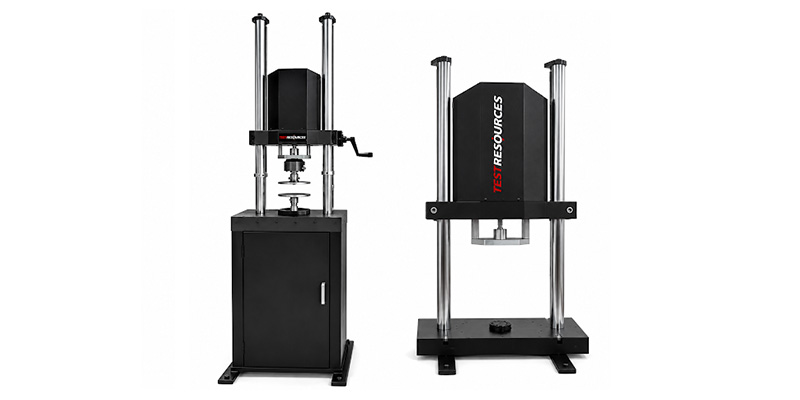
Ideal for: Structural Alloys, Composites, and Heavy Industrial Components
Our high-force machines deliver the tonnage required for structural testing while maintaining the precision of a much smaller system.
Key Advantage: These systems feature our highest resolution at 0.089 microns, ensuring that crack initiation and micro-strain are captured with absolute fidelity even under high-load conditions.
Consult with an Application Expert
Testing innovation shouldn't be limited by hardware. Whether you are developing a new composite for the energy sector or a revolutionary medical implant, we can tailor a dynamic system to your exact needs. Buying an "over-built" machine for a custom application often results in lost resolution. We help you size the system to ensure you have the maximum sensitivity for your specific research.
Request a Custom Application ReviewMaintenance and Reliability
Designed for the rigors of long-term fatigue testing, these machines feature backlash-free preloaded screws that offer a lifespan similar to high-end premium systems. If maintenance is ever required, the accessible design ensures shorter lead times and lower service costs, keeping your lab productive.
Warranty
We stand behind the engineering of every machine we build. To ensure your lab operates with total peace of mind during multi-million cycle tests, every system in our Dynamic and Fatigue series comes a standard warranty.
Trusted By
















Frequently Asked Questions
A low force dynamic and fatigue test machine is a specialized piece of materials testing equipment designed to apply cyclical, oscillating, or dynamic loads to a specimen at relatively low force capacities. These machines are used to characterize the durability, fatigue life, and dynamic properties of materials, components, and micro-structures under real-world stress conditions.
Low force fatigue testers are highly versatile and can perform a wide range of standard and custom testing protocols, including:
- High-Cycle Fatigue (HCF) & Low-Cycle Fatigue (LCF)
- Tension, Compression, and Bending fatigue
- Fracture mechanics (crack propagation and fatigue crack growth)
- Dynamic Mechanical Analysis (DMA)
- Creep and stress relaxation
Yes. Low force fatigue machines can be integrated with various environmental chambers and fixtures to simulate real-world conditions. Common additions include:
- Saline baths: For testing medical implants at body temperature (37°C).
- Temperature chambers: For evaluating materials in extreme heat or sub-zero freezing conditions.
- Humidity chambers: To test how moisture affects adhesives or composites over time.
When selecting a machine, evaluate the following criteria to ensure you get the best return on your investment:
- Maximum Load Capacity: Ensure the machine's load cell covers your peak expected forces without sacrificing low-end accuracy.
- Frequency Requirements: Determine how fast you need to cycle your specimens (e.g., 10 Hz vs. 100 Hz). Higher frequencies drastically reduce testing time.
- Displacement: Check the maximum stroke length required for your most ductile materials.
- Software Capabilities: Look for intuitive, compliant software that supports data export, automated reporting, and real-time graphing.

When you work with us, you get the best engineers to solve your testing and budgetary challenges. Whether you’re new to testing or a testing expert yourself, we can help you optimize your system AND YOUR BUDGET.
Contact us and see for yourself why TestResources is the best choice for your testing needs!