

A tensile test is a mechanical testing procedure that assesses how materials react to being subjected to pulling forces. By elongating a specimen until it fractures, this test offers vital information about the stress and strain limits a material can withstand. Understanding tensile testing is crucial for selecting materials and guaranteeing they fulfill essential safety and performance criteria.
In this comprehensive guide, you will learn more about tensile testing and how it works:
What Is a Tensile Test?
A tensile test is a fundamental materials science and engineering test that involves subjecting a sample to a controlled tension until failure. This process helps determine a material’s ultimate tensile strength, breaking strength, maximum elongation, and reduction in area. By analyzing these measurements, engineers can also derive other critical properties such as Young’s modulus, Poisson’s ratio, yield strength, and strain-hardening characteristics. Understanding these properties is essential for predicting how materials will perform under various types of stress, ensuring they meet the necessary specifications for their intended applications.
Understanding Tensile Testing
Tensile testing, also known as tension testing, is a fundamental method in materials science to evaluate a material’s behavior under tension. Tensile testing methods are crucial for accurately measuring plastics tensile properties, including standards like ASTM D638. This test involves applying a pulling tensile force to a material until it breaks, providing valuable insights into its tensile properties such as tensile strength, yield strength, and ultimate tensile strength (UTS). The data obtained from these tests are crucial for selecting materials, designing components, and ensuring quality and safety.
Tensile testing aids engineers and designers in predicting material performance under various forces, ensuring compliance with required standards, particularly in high-stakes industries like aerospace, automotive, and construction, where failures can have severe consequences.
Definition of Tensile Test
A tensile test is a mechanical testing method used to determine how materials behave when subjected to tension. This involves stretching a material sample, known as a tensile specimen, until it fractures. Materials such as metals, polymers, and composites can be evaluated using this method.
The test measures tensile stress (the force divided by the cross-sectional area) and strain (the ratio of change in length to the original length), providing a stress-strain curve that characterizes the material’s mechanical properties.
Importance of Tensile Testing
Tensile testing plays a vital role in various industries by ensuring that materials meet specific performance standards and safety requirements. For example, in the aerospace sector, it is crucial for evaluating high-strength materials like aluminum alloys and composites used in aircraft.
Accurate measurement requirements and high standards in tensile testing prevent failures that could result in property damage or loss of life.
Key Concepts in Tensile Testing
Understanding the core concepts of tensile testing, such as stress and strain, yield strength, ultimate tensile strength (UTS), and the differences between elastic and plastic deformation, is crucial. Each concept gives critical insights into material performance under stress, guiding engineering decisions.
Beyond breaking materials, tensile testing measures their response to tension, offering essential data for quality control and material characterization. This information helps engineers understand mechanical properties and ensures compliance with safety and performance standards.
Stress and Strain
Stress and strain are fundamental concepts in tensile testing. Stress is defined as the force applied per unit cross-sectional area of the material during the test, calculated using the formula Stress = Force (F) / Area (A). Strain refers to the ratio of the change in length. It compares this change to the original length of the material.
During a tensile test, the specimen is subjected to a gradually increasing load until it fails, allowing for the measurement of stress and strain. The stress-strain curve generated from this data provides insights into the material’s mechanical behavior, including properties such as Young’s modulus, yield strength, and strain-hardening characteristics.
Yield Strength and Ultimate Tensile Strength (UTS)
Yield strength is the stress level at which a material begins to undergo permanent deformation. It can be identified using the offset method, where the intersection of the offset line and the stress-strain curve determines the yield strength.
Ultimate Tensile Strength (UTS) is the maximum stress a specimen experiences during testing before failure. This is determined by pulling the sample to its breaking point, making the tensile strength test crucial for material selection in various applications.
Elastic Region and Plastic Deformation
In the elastic region, a material returns to its original shape after the load is removed, indicating reversible deformation. Beyond this, plastic deformation occurs, resulting in permanent changes to the material’s shape and structure.
Recognizing the differences between these regions helps predict material behavior under various stresses, ensuring their suitability for specific applications.
Equipment Used in Tensile Testing
Various specialized equipment is essential for conducting tensile tests accurately and reliably. The most common instrument is the tensile test machine, which includes components such as grips and load cells. This machine is crucial for evaluating the mechanical properties of various materials under tension and is configured to meet specific testing needs across numerous industries, including manufacturing, aerospace, and construction. Proper setup and alignment of the specimen within the machine are critical to obtaining accurate results.
Tensile testing machines come with various features and accessories to cater to different materials and test requirements. These include load cells for force measurement and extensometers for precise strain measurements. All components must function correctly, and the load cell should be zeroed before starting the test to ensure accuracy.
Tensile Testing Machines
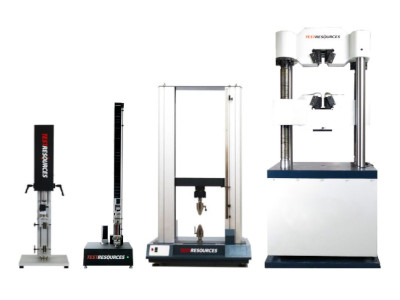
Tensile testing machines are usually universal testing machines which are versatile devices designed to perform various tests on different materials, making them essential for tensile characterization tests. They are available in different configurations, including electromechanical and servo-hydraulic options, and can be customized with various fixtures and accessories to accommodate specific test machine types.
Proper alignment and selecting the correct load cell capacity prevent damage to the load cell and ensure precise results.
Tensile Test Machines
Get the Highest Value Tensile Testers
Choose form 38 different models and two different technologies with 100's of configurations which allows you to optimize your testing capabilities and pick exactly what you need.
Select Tensile Test Machines
Newton Test Controller
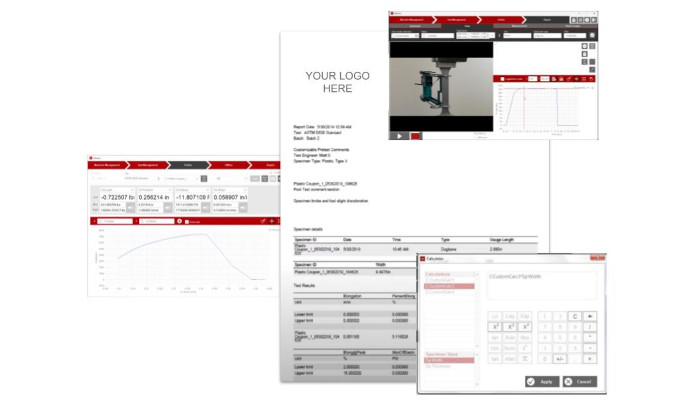
From simplified test setups to an intuitive controller software interface and pre-configured methods for industry standards - this innovative technology ensures that your test application are conducted seamlessly and with precision.
Accurate & Repeatable Test Results
- Simple test setup, operation, and reporting
- Flexible and scalable software packages - Get what you need now with room to grow!
- Prebuilt test methods for many of the most common application-specific testing standards
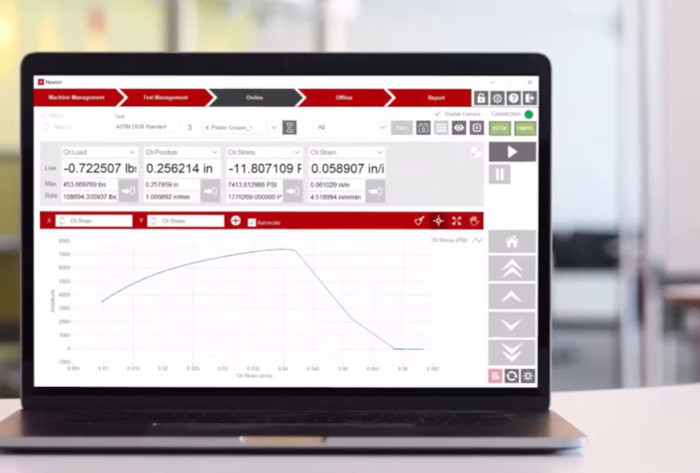
High-performance and easy-to-use controller with logical workflow design
With an intuitive interface, Newton makes it easy for users to navigate through various options and settings, ultimately enhancing the overall user experience. By streamlining complex procedures into user-friendly steps, this software serves both experienced test engineers and beginners alike to conduct tests with confidence and accuracy.
Load Cells
Load cells are critical components in tensile testing machines as they measure the force applied to the test sample.
Tensile Test Grips and Fixtures
They can be equipped with various tensile grips designed to securely hold different types of materials and shapes, enhancing the machine’s ability to maintain a secure hold during testing. These grips are essential for accommodating the diverse range of materials and specimen geometries encountered in tensile testing. From flat specimens to round cross sections, the right grip selection ensures that the material is held firmly without slippage or damage, which could compromise the test results.
Different grips and fixtures are available to suit specific testing needs, such as wedge grips for metals, pneumatic grips for thin films, and specialized grips for delicate or brittle materials. Additionally, fixtures can be customized to replicate specific conditions or simulate real-world applications, providing more accurate insights into how materials will perform under actual stress scenarios.
Proper grip selection is crucial for achieving reliable and repeatable test results. The choice of grips and fixtures should consider factors such as the material's mechanical properties, the test machine's capabilities, and the specific requirements of the test standard being followed. By ensuring that the grips are correctly aligned and tightened, the risk of introducing errors due to misalignment or uneven force distribution is minimized, leading to more precise and meaningful data.
Extensometers
Extensometers are crucial instruments used in tensile testing to provide accurate strain measurements, which are essential for evaluating material properties. These devices measure the deformation of the specimen, allowing for precise calculation of strain and other mechanical properties.
Get a Complete Test System for Your Test Application
Completing your material test system is easy. Simply start by choosing a test machine, choose your accessories, and select your controller software. We are your one-stop shop for all your application testing needs.
Request a QuoteHow to Perform a Tensile Test
Performing a tensile test involves several key steps, starting with preparing the test sample and setting up the testing machine. The test setup often includes environmental chambers to test materials under various conditions.
The process requires careful attention to detail to ensure accurate results. This includes selecting the appropriate tensile test method and ensuring the specimen is properly aligned to prevent bending stress due to off-centered loading.
Preparing the Test Sample
Standard tensile specimens have a standardized sample cross-section with two shoulders and a gauge section. The shoulders allow the specimen to be gripped securely, while the gauge section indicates deformation during testing.
Proper alignment of the sample is crucial to avoid bending stress and ensure accurate calculation of engineering stress.
Setting Up the Testing Machine
Selecting the right tensile test method is crucial for ensuring accurate results and material characterization. The recommended testing products table provides guidelines on suitable tensile testing methods based on material type and application.
Ensuring all components of the tensile testing machine are functioning correctly, and the load cell is zeroed before starting, is essential for accuracy.
Conducting the Test
A load is applied to the specimen during a tensile test. This load gradually increases until the specimen fails or is destroyed. The main measurements taken are the force applied and the elongation of the sample.
Recording accurate data, including the applied force and specimen elongation throughout the test, is crucial.
Analyzing Tensile Test Results
The analysis of tensile test results involves interpreting the data to determine key mechanical properties such as yield strength, ultimate tensile strength, ductility, strain hardening, Young’s modulus, and Poisson’s ratio. The stress-strain curve is a vital tool in this analysis, providing a visual representation of how the material behaves under tension.
The stress-strain curve helps engineers predict material behavior, ensuring appropriate material selection for safety-critical applications. This analysis confirms that materials meet performance standards and safety requirements.
Stress-Strain Curve
The stress-strain curve is crucial in analyzing how materials deform and fail under tension. The tensile testing machine applies a load gradually to the sample until it fails, allowing for the collection of data on its performance.
This curve aids engineers in predicting material behavior and selecting appropriate materials for safety-critical applications.
Calculating Mechanical Properties
Tensile testing provides critical mechanical properties such as ultimate tensile strength, yield strength, elongation, and modulus of elasticity. These properties are directly measured during the test and are essential for understanding the material’s behavior under stress.
Young’s modulus, which relates stress to strain under elastic deformation, is particularly important for determining material stiffness.
Identifying Failure Points
Identifying material failure points is vital for understanding mechanical behavior under stress. Failure modes like ductile fracture, brittle fracture, and necking reflect different behaviors. Recognizing these points ensures material reliability and safety, especially in the aerospace sector.
Applications of Tensile Testing
Tensile testing has a wide range of applications across various industries. It is commonly used to evaluate how materials behave under axial loading, revealing characteristics like ductility and brittleness. This information is crucial for ensuring that materials can withstand stress in real-world applications.
Knowing the mechanical properties of materials is essential for designing components that meet performance and safety standards. This is especially important in industries such as aerospace, automotive, construction, and manufacturing.
Aerospace and Automotive
In the aerospace and automotive industries, tensile testing is crucial for evaluating the mechanical properties of materials such as aluminum alloys, high-strength steel, and titanium. Understanding failure points helps in assessing the reliability and safety of materials in structural applications.
Construction and Manufacturing
Tensile testing ensures that materials used in construction and manufacturing meet strength and ductility standards. This includes evaluating materials such as steel rebar, plastics, polymers, adhesives, textiles, and electrical wires.
Medical Devices
Tensile testing plays a crucial role in the development and validation of medical devices. Ensuring that materials can withstand the forces and stresses they encounter during use is vital for patient safety and device reliability.
International standards organizations such as ASTM and ISO provide essential guidelines and criteria for tensile testing, which are critical for the validation process in the medical device industry.
Advantages and Limitations of Tensile Testing
Benefits of Tensile Testing
Tensile testing provides invaluable insights into a material’s mechanical properties, such as its strength, stiffness, and ductility. This test method is widely used across various industries, including aerospace, automotive, construction, and manufacturing. By conducting tensile tests, designers and manufacturers can select the most suitable materials for their products, ensuring they meet the required specifications and safety standards. The data obtained from tensile testing helps in optimizing material performance, enhancing product reliability, and preventing potential failures in critical applications.
Potential Drawbacks and Challenges
Despite its many benefits, tensile testing does have some limitations. One significant drawback is that it is a destructive test method, meaning the sample is damaged or destroyed during the process. This can be particularly challenging for materials that are difficult or expensive to produce. Additionally, tensile testing may not always accurately represent a material’s behavior under real-world conditions, such as high temperatures, corrosive environments, or dynamic loading scenarios. These factors can affect the material’s performance in ways that a standard tensile test might not capture, necessitating additional testing methods to fully understand the material’s properties.
Common Standards and Specifications
Adhering to established standards and specifications is fundamental to ensuring the consistency and reliability of tensile test results. The primary standards governing tensile testing are set by ASTM and ISO, which provide detailed guidelines for conducting these tests. These standards cover various aspects, including the preparation of test specimens and the methods used to measure mechanical properties.
There are plenty of tensile testing standards available. Some of the most common include:
ASTM Test Methods
-
ASTM E8 Tension Testing of Metals
-
ASTM D638 Tensile Properties of Plastics
-
ASTM D3039 Tensile Properties of Polymer Matrix Composites
-
ASTM D412 Tension Tests of Rubber and Elastomers
-
ASTM D882 Tensile Properties of Thin Plastic Sheeting
-
ASTM A370 Tensile Testing of Steel Products
-
ASTM E21 Elevated Temperature Tension Tests of Metals
-
ASTM D828 Tensile Properties of Paper and Paperboard
-
ASTM D5035 Breaking Force and Elongation of Textile Fabrics
ISO Test Methods
-
ISO 6892-1 Tensile Testing of Metals
-
ISO 527 Tensile Testing of Plastics
-
ISO 527-5 Tensile Properties of Fiber-Reinforced Plastic Composites
-
ISO 13934-1 Tensile properties of Textile Fabrics
-
ISO 1924-2 Tensile Properties of Paper and Paperboard
Selecting the Right Standard
Choosing the correct testing standard is a crucial step in obtaining accurate and relevant results for material properties. To find the appropriate test method for a specific material, one can refer to a table of recommended testing products and guidelines.
Even if there is no specific standard for a particular test, guidance can be provided to configure the testing machine appropriately for budget or purchase purposes.
Due to the massive selection of products that we offer, it can be difficult to narrow down what you need. Let us help you select and configure based on your testing application.
Frequently Asked Questions
The tensile test aims to assess the static tensile strength characteristics of materials, supplying essential data on properties such as strength, ductility, and ultimate tensile strength. This information is critical for determining material suitability for various applications.
Tensile testing is essential in the aerospace industry as it assesses the properties of high-strength materials, confirming their compliance with rigorous performance and safety standards critical for aircraft integrity.
Tensile testing commonly employs a universal testing machine, load cells, grips, and extensometers to facilitate precise force and strain measurements. These components are essential for obtaining accurate results in material testing.
Yield strength is determined by identifying the stress level where a material begins to experience permanent deformation, typically using the offset method to locate the intersection on the stress-strain curve.
Tensile testing procedures are primarily governed by standards set by ASTM and ISO, ensuring consistency and reliability in test results through detailed guidelines. Adhering to these standards is crucial for accurate material characterization.
